ROSS Garnaut made it clear in his interim report that his climate change review takes as a starting point – not as a belief but on the balance of probabilities – that the claims made in the fourth assessment report of the Intergovernmental Panel on Climate Change are correct.
Had he made even a cursory examination of the integrity of those IPCC claims he would have found a very troubling picture.
The IPCC encourages us to believe that about 2500 climate scientists supported the claim of a significant human influence on climate. It fails to clarify that the claim was made in chapter nine of the working group one contribution and that the contributions of working groups two and three were based on the assumption that the claim was correct. The first eight chapters of the WG1 contribution were mainly concerned with climatic observations and the authors expressed no opinion about the claim made in chapter nine, and chapters 10 and 11 assumed the claim to be correct. The entire IPCC thesis therefore stands or falls on the claims of just one chapter.
We are also led to believe that chapter nine was widely supported by hundreds of reviewers, but just 62 IPCC reviewers commented on its penultimate draft. Only five of those reviewers endorsed it but four of the five appear to have vested interests and the other made just one comment for the entire 11-chapter WG1 contribution.
As is the normal IPCC practice, chapter nine has co-ordinating lead authors, who are responsible for the chapter as a whole; lead authors, who are responsible for sections of the chapter; and contributing authors, who provide their thoughts to the lead authors but take no active part in thewriting.
The IPCC procedures state that the authors at each level should reflect a wide range of views, but this is not true of chapter nine.
The expansion of the full list of authors of each paper cited by this chapter reveals that 37 of 53 chapter authors form a network of people who have previously co-authored scientific papers with each other: or make that 38 if we include a review editor.
The two co-ordinating lead authors are members of this network. So are five of the seven lead authors. Thirty of 44 contributing authors are in the network and two other pairs of contributing authors have likewise co-authored scientific papers.
In other words, the supposedly 53 independent voices are in fact one dominant voice with 37 people behind it, two voices each with two people behind them, and perhaps 12 single voices. A closer check reveals that many of those 12 were academic or work colleagues of members of that larger network. One lead author was from the University of Michigan, as were three contributing authors, two of whom were not members of the network. Another lead author was associated with Britain’s Hadley Centre, along with eight contributing authors, one of whom was not included in that network of co-authors.
All up, the 53 authors of this chapter came from just 31 establishments and there are worrying indications that certain lead authors were the superiors of contributing authors from the same organisation. The very few viewpoints in this chapter might be alleviated if it drew on a wide range of references, but among the co-authors of 40 per cent of the cited material are at least one chapter author.
Scientists associated with the development and use of climate models dominate the clique of chapter nine authors and by extension the views expressed in that chapter.
Perhaps the increase in the processing power of their computers has increased their confidence in the software they have been nurturing for years. Imagine, though, the consequences were they to imply that the accuracy of the models had not improved despite the extra funding.
These models are said to require a human component to reasonably match historical temperatures and the modellers claim that this proves a human influence on climate, but the human factor is an input so a corresponding output is no surprise. A more plausible reason for the mismatch without this influence is that the models are incomplete and contain errors, but of course chapter nine could never admit this.
Garnaut didn’t need to evaluate the science behind the IPCC’s claim to find that its integrity is questionable and that the report’s key findings are the product of scientific cronyism.
The IPCC has misled us into believing the primary claims were widely endorsed by authors and reviewers but in fact they received little support and came from a narrow self-interested coterie of climate modellers.
We should now ask what else the IPCC has misled us about and why Garnaut, a skilled academic, so blithely accepted its claims.
John McLean is a climate data analyst and a member of the Australian Climate Science Coalition.
———————–
Republished from the The Australian with permission from the author.
Climate case built on thin foundation, John McLean, The Australian September 9, 2008

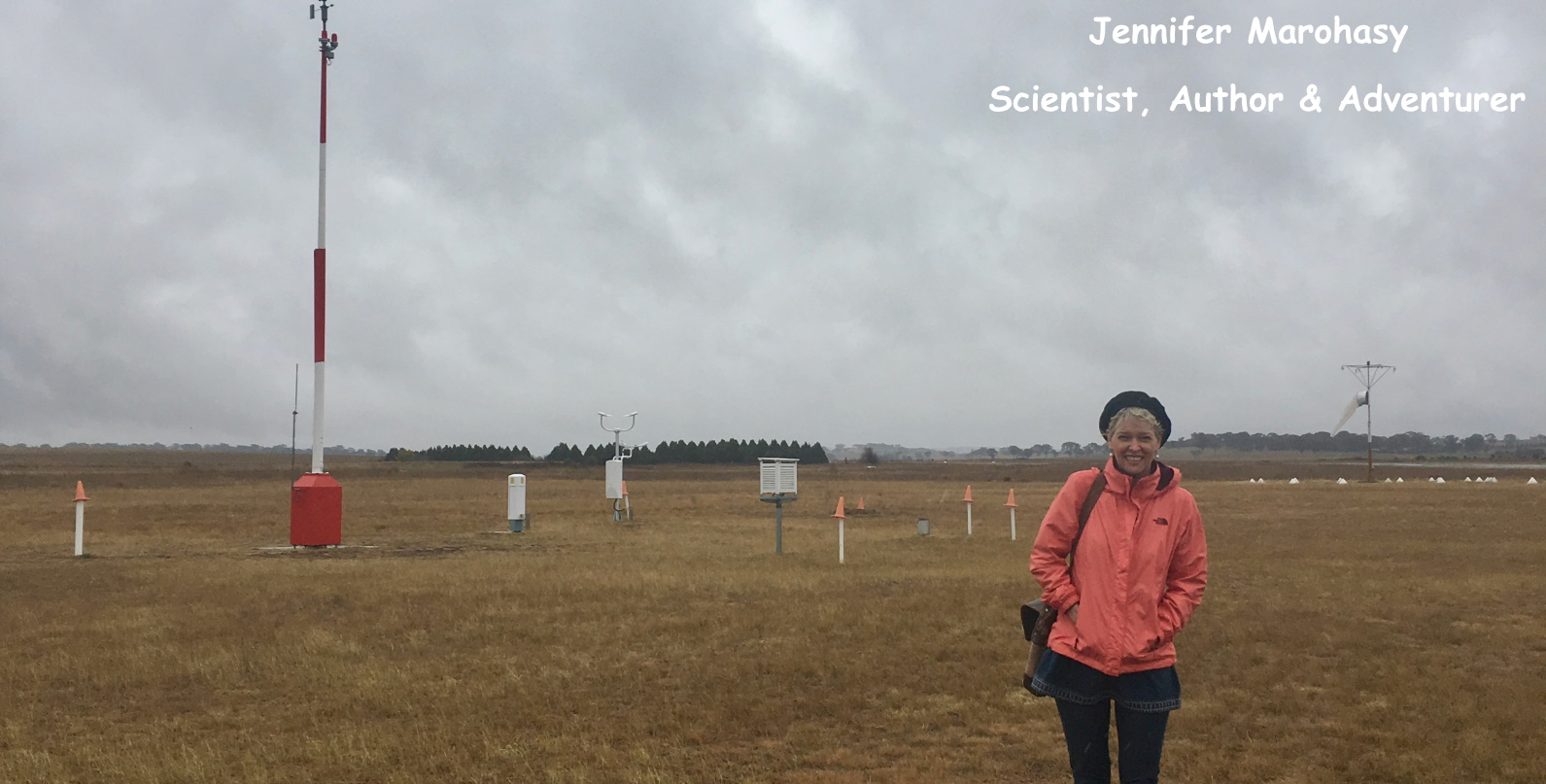
 Jennifer Marohasy BSc PhD has worked in industry and government. She is currently researching a novel technique for long-range weather forecasting funded by the B. Macfie Family Foundation.