After Bob Hawke suggested we should take the world’s nuclear waste, I agreed.
Geoff Hudson gives six good reasons why at Ockham’s Razor:
One. The site should be well away from any fault line. Storage sites would not be recommended for Japan, the San Andreas Fault, New Zealand or Indonesia. We should choose a country sitting in the middle of a large and stable tectonic plate.
Two. The site should be dry. Water can corrode metals given enough time, and time it will have. We want a site in a desert. This will also eliminate the risk of fire. Without vegetation you cannot have large naturally occurring fires which could destroy the safety systems you would want.
Three. The site should be well away from the sea. Preferably 100 kilometres inland. We have not seen tsunamis get 10km inland in recent history, but we need to think in terms of thousands of years, rather than hundreds.
The human risk to a repository of radioactive waste is more difficult to manage. One clear risk is the use of the waste by terrorists. Their objective would be to make a dirty bomb: conventional explosives mixed with radioactive waste. If this achieved the same effect as Chernobyl, but in London, New York or Paris, the consequences would be catastrophic. Imagine if the recent bombs in London had been radioactive. Mass evacuation, transport shutdown, businesses stopped. The effects would dominate the city and be felt as far away as Australia. In fact, this is the main threat which nuclear waste poses to Australians. Not to health or the environment, but to our economy. It might not cause a depression but it could come close. To prevent this, we need to impose further requirements on the site:
Four. The site should be very sparsely inhabited. If there are no people there, then there will be no infrastructure to support the people or the movement of people, so the chance that terrorists will get to the site and be able to remove waste from it will be limited.
Five. The site should be on an island, so a ship is needed to get the waste to a place where it could not do a lot of damage.
Six. The country governing the site must maintain the safety systems at the repository. It should have a stable government, preferably one with no history of civil war. The people in the country should be well educated and technologically advanced enough to know the risks of nuclear radiation, so that the protection of the site is preserved over changes in government.
Is there a place on earth which satisfies these six criteria?
The United States fails on three counts. The Yucca Mountain site, the intended US waste repository, is only 145 kilometres from Las Vegas and has three fault lines below it and volcanos nearby.
Japan, another heavy user of nuclear power, is also out. The whole country is on the geologically active Pacific Rim.
Europe has very few places where the population density is low, and equally fewer which are dry.
There are places in Africa which have few people and which are dry, but the continent is famous for civil unrest.
To my mind, the clear winner in this contest is Australia.

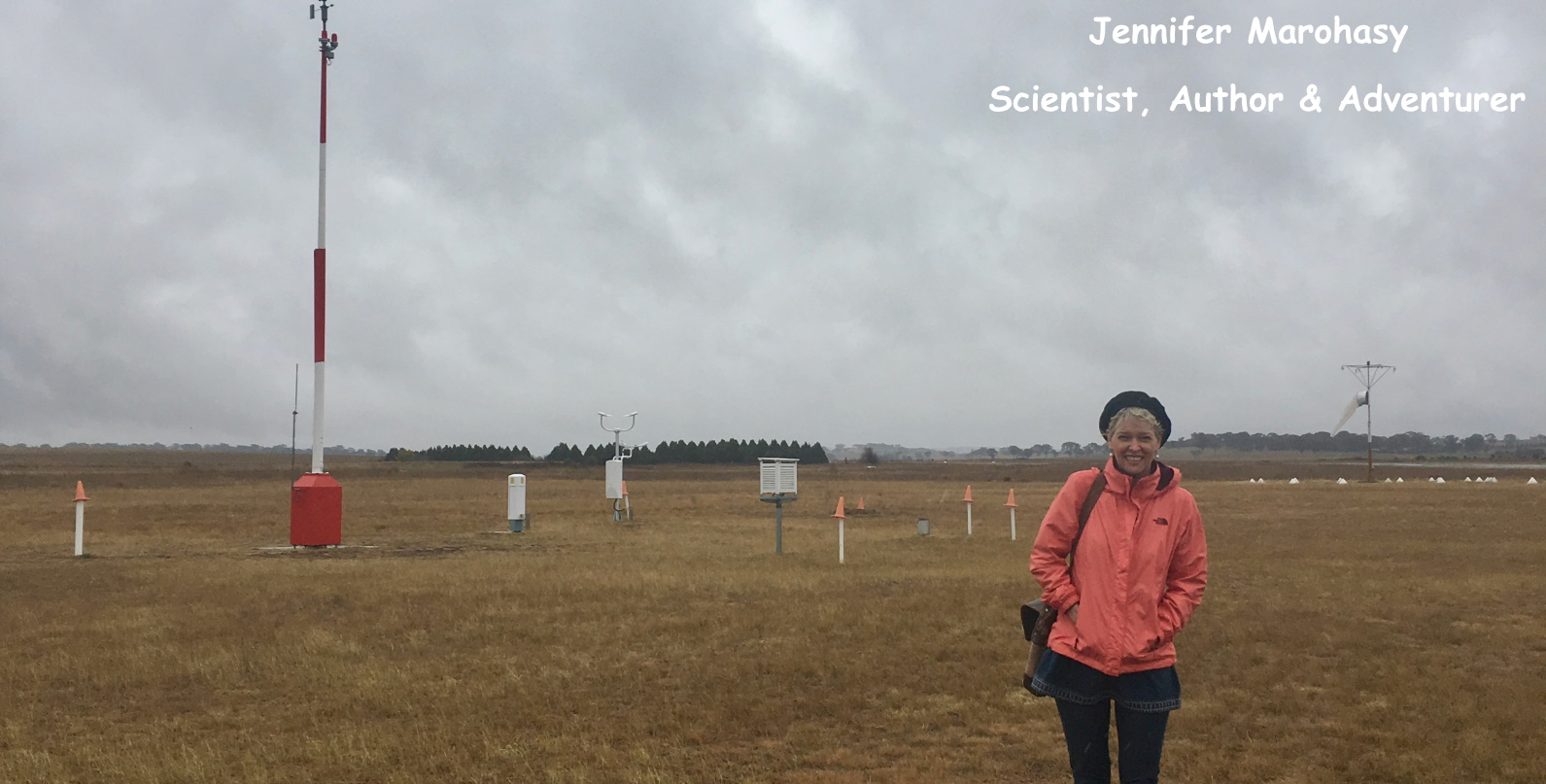
 Jennifer Marohasy BSc PhD has worked in industry and government. She is currently researching a novel technique for long-range weather forecasting funded by the B. Macfie Family Foundation.