I HAVE been a subscriber to the “Scientific American” for over 30 years. It used to be the most useful summary of the most important recent scientific discoveries. I have witnessed its slow and inexorable decline, to an organ of the environmental movement, an advocate of “global warming”, a peddler of extravagant cosmological theories, unflinching support for US Government political policies, and the persistent announcement of premature, unfulfilled scientific discoveries.
The latest issue (October 2009), gives me hope that the situation is changing for the better. Admittedly, they are still stuck on “global warming” but there are now several articles which indicate a change in some of the other obsessions.
We start with an article by Jeffrey Sachs. “The Crisis of Public Management” which has a good go at US Government incompetence, and the absence of sensible coordinated plans for security (the 9/11 fiasco), disaster control (hurricane Katrina), financial regulation,. health care, budget deficits, corruption in Iraq and Afghanistan, military procurement, energy, and, yes, climate change. The president is reduced to meaningless platitudes without effective action, because ther is no coordinated plan.. About time somebody says these things.
Next comes my favourite columnist, Michael Shermer (Skeptic) who debunks the idea that pirates are disorganized. He puts forward the view that successful activities of humans automatically develop discipline, in this case, quite strict. They promote a reputation for irresponsibility to scare their victims. It is a counter to the “Lord of the Flies” idea, and the principles apply not just to the Mafia, but also to Al Quieda and Somali pirates.
I pass the articles on black holes and on smart pills to the article by Leonard Maugeri on oil supplies which debunks the theory of “Peak Oil”, and shows that there is enough oil for at least 100 years, and that future prospecting and better recovery from existing sources is far from ended..
The next article “Lost Cities of the Amazon” debunks the idea of a “pristine rain forest” in Brazil. Parts of the area were once covered with densely populated, flourishing cities, surrounded by farms. Most of the people died of disease after European occupation and the forest took over.. But some are still there.
Later we have “Biotech’s Plans to Sustain Agriculture” which attacks the “organic” movement and insists that biotechnology can continue to supply adequate food.
Lastly, somebody asks “Why do whales beach themselves”. The answer is, a whole variety of reasons, some of which might involve humans. It is pointed out that there are records of whales beaching themselves at the time of Aristotle.
So, perhaps there is a future for genuine science.
Vincent Gray
Wellington, New Zealand.
Whales
Costing a Whale

LAST week the International Whaling Commission (IWC) met on the Portuguese island of Madeira and agreed that climate change is a threat to whales. A decision on the Danish proposal for Greenland to hunt 10 humpback whales a year was postponed. Australia’s Environment Minister was there and told the meeting that whale-watching is a growing industry worth more than whale hunting. Ian Mott disagrees:
“THE claim, by Australian Environment Minister Peter Garrett, that whales are worth more alive than dead betrays a breathtaking level of economic ignorance and a dangerous penchant for simplistic, “Cargo Cult” panaceas.
No! More Killer Whales!
Scientists fear melting sea ice could one day make killer whales the Hudson Bay’s top predator, a startling ecosystem shift and a blow for Inuit populations already reeling from dwindling polar bear numbers. Read more here.
Reject ‘Steve Irwin’: Whalers Plea to Australian Government
 The Japan Whaling Association (JWA) today called on the Australian and New Zealand governments to close their ports to a Dutch vessel committing criminal acts in the Antarctic.
The President of the JWA, Mr Keiichi Nakajima, said the Dutch vessel committing terror on the Antarctic high seas is running low on fuel and is apparently heading to either New Zealand or Australia to refuel.
“The request for port entry from the Sea Shepherd-Animal Planet crew on board the Dutch vessel must be rejected,” he said, “otherwise these countries will be complicit in any further attacks.”
[Read more…] about Reject ‘Steve Irwin’: Whalers Plea to Australian Government
‘Steve Irwin’ Attacks Japanese Whalers
 LAST night in The Southern Ocean, anti-whaling campaigners aboard The Steve Irwin rammed the Kaiko Maru from the starboard rear side.
According to the Japanese whalers:
The incident occurred when the Kaiko Maru was undertaking a detour in the ice pack area after completing the day’s research activities. The weather had deteriorated and fog had reduced visibility conditions to about 500m.
The Steve Irwin approached the Kaiko Maru from the starboard rear side and within two minutes the protesters aboard started throwing bottles, approximately 15 bottles of butyric acid.
After the ramming, the Dutch vessel pursued, repeatedly overtook and menacingly turned around the Kaiko Maru for approximately three hours, and thereafter changed course to the east where it disappeared from the Kaiko Maru radar.
I recently critiqued some of the campaigns against whaling, in particular the campaign in Albany, Western Australia, in the late 1970s, in an article* entitled ‘Imposing our preferences on whaling cultures’. In the same article I ask whether the last whaling cultures will survive.
************************
 Photos via the Institute of Cetacean Research, Tokyo
* ‘Imposing our preferences on whaling cultures’ by Jennifer Marohasy, IPA Review, Vol 60/5, November 2008, pgs 39-41. http://www.ipa.org.au/library/publication/1229552555_document_60_5-distro.pdf (after clicking on the link, scroll down to page 39).
Pilot Whale Stranding
At least 150 whales have died in a mass stranding off Tasmania’s west coast, Australian authorities said on Sunday, despite the efforts of rescuers who managed to shepherd a small number back to the ocean. Read more here.
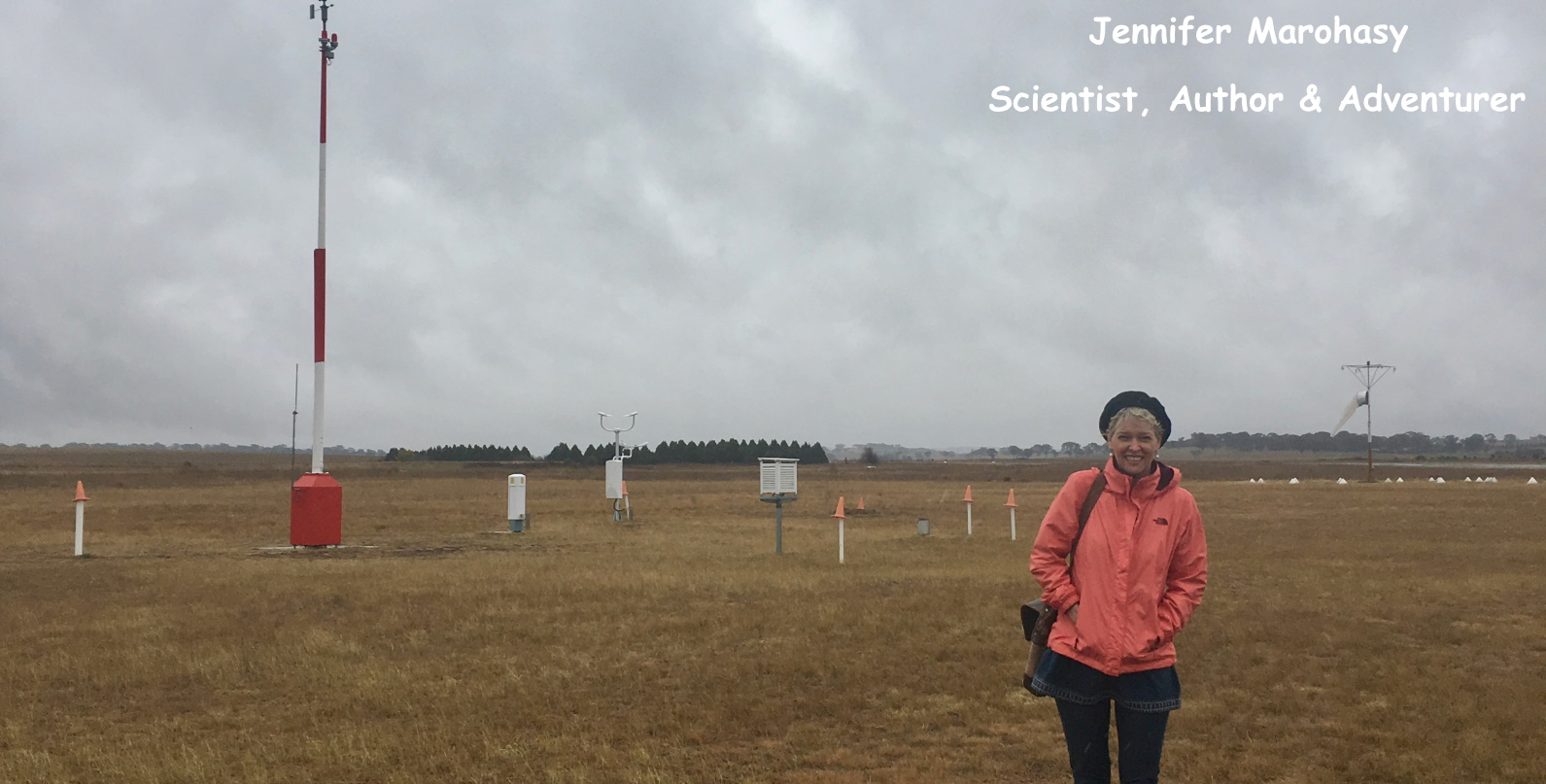
 Jennifer Marohasy BSc PhD has worked in industry and government. She is currently researching a novel technique for long-range weather forecasting funded by the B. Macfie Family Foundation.