• Skip to primary navigation
  • Skip to main content
  • Skip to primary sidebar
  • Skip to footer
Jennifer Marohasy

Jennifer Marohasy

a forum for the discussion of issues concerning the natural environment

  • Home
  • About
  • Publications
  • Speaker
  • Blog
  • Temperatures
  • Coral Reefs
  • Contact
  • Subscribe

Water

Land & Water Audit Got it Completely Wrong, But Who Cares?

March 17, 2006 By jennifer

According to National Water Commission Chairman Ken Matthews:

“Ground water, in my view, is the sleeper issue in Australian water management, and indeed all over the world,” Mr Matthews said.

“Ground water is very poorly understood in Australia and overseas.

“It is being over-exploited overseas and in some areas of Australia, and we need to improve our understanding and management.”

Mr Matthews sounded the alarm during a speech to the Australian Water Summit in Sydney on Monday.

He said a lack of knowledge of water resources was hampering water planning and that the quality of Australia’s water accounting was “not good at all“.

It is actually much worst than this. Reports prepared under the National Land and Water Audit have been wrongly claiming groundwater levels are rising.

It is now six years since the Natural Heritage Trust funded National Land and Water Audit published its report Australian Dryland Salinity Assessment 2000. The 129-page glossy warned that because of rising groundwater, including in the Murray-Darling Basin, the area with a high potential to develop dryland salinity would likely increase from 6 million hectares in 2000 to 17 million hectares in 2050.

Yet data did not support the notion that we had a situation of rising groundwater in the Murray-Darling Basin. Groundwater levels in the Murray, Murrumbidgee and Coleambally irrigation areas – the regions considered most at risk in eastern Australia – have generally fallen over the past ten years. They were rising in the 1970s but falling by the late 1990s.

In 2004 the CSIRO provided me with the following reasons for the general fall in groundwater levels: improved land and water management practices; relatively dry climate over the past ten years and increased deeper groundwater pumping and higher induced leakage from shallow to deeper aquifers.

How could they be so incompetent at the National Land and Water Audit? Or where they just too focused on salinity and generating worst case scenarios?

Filed Under: Uncategorized Tagged With: Water

Paying for No Water

February 25, 2006 By jennifer

There is nothing straight forward or logical about how water is allocated for irrigation in Australia. And every scheme and catchment has its own historical idiosyncrasies.

I am always amazed when I read that irrigators are paying for water they aren’t getting when there is a drought. Payment for a percentage of an allocation even if the dam is dry is a condition of many irrigation licenses.

Just yesterday ABC Online reported that:

“The NSW Government is under pressure to waive fixed water charges for Lachlan Valley irrigators.
Producers have started receiving bills for the 2004/5 financial year, despite not having a water allocation during that period.

Is it possible that some south east Queensland irrigators could one day have to pay for no water, because it has been sold to a power station?

A reader of this blog, Hasbeen, was extremely frustrated last week after attending the Community Reference Panel launch of the Logan Basin Draft Water Resource Plan. Logan is just south of Brisbane in south east Queensland, Australia.

Draft plans and reference panels are part of the jargon and process of resource planning in Australia. It has been my observation that they often reflect government’s commitment to consult, while its policy officers dabble in central planning.

I have edited the following note from Hasbeen, written after he attended that meeting:

“What a joke. We got over an hour of an ‘Environmental Investigations Report’ which said it is more important that the river is a wildlife corridor, than we do anything to reduce/prevent erosion and the invertebrates in the sand are much more important than the people who live, and work, on the river.

Then the real crunch, what it means to the people who have lived on, and depended on the river for much of their lives.

For irrigators on supplemented streams there will be not much change. They will still pay for their water allocation, whether or not ther is water. But there is a likelihood that this water will also be sold to higher payers, e.g. power stations, in future.

For those on unsupplemented streams, where not one cent of taxpayer funds has been spent, the story is bad. These people are on area licenses, dictating that they may irrigate so many hectares. These are to be converted to volume licences, but at a very low rate, varying between 4 and 4.5 ML/ha.

Department of Primary Industry figures state that it takes 5.6 ML/ha per year to maintain pasture grass, about the lowest user of irrigation. For dairy farmers it takes 6 ML/ha to produce 4 months of winter rye grass, then a similar amount to run summer feed. Lucerne growers could not survive on this allocation, and neither could small crops growers.

We were told this conversion figure was chosen after a survey of irrigators, but none of the community reference panel had been surveyed.

To make matters worse, a volumetric cap will be put on water harvesting. Harvesting is only allowed when the river is in ‘fresh’, and hundreds of megaliters per day is rushing out to sea.

To tell a farmer that he must watch a river, 30 meters wide, and 6 meters deep rush past his pump, with out taking any is stupid. When that water will be in Morton Bay in 6 hours, it’s criminal.

One of the water resource people I spoke to did not appear to understand our little river, it seemed as if we were talking about two different things.

Their thinking, and I suppose, training relates to our long, slow, inland rivers, where water can take weeks to meander down stream. He found it almost impossible to believe that if we all pumped, with all our pumps, we could not make a dent in the flow of our river during a fresh.

He would not believe that a rain drop, from our head water, would be in Morton Bay in 24 hours.

After EIGHT years of community input we have got a total ‘stuff up’.

None of the pain this plan will impose on our community will, or can, have any benefit for anyone. We will pay for our water, even if there isn’t any, and probably go broke doing it.

How can they get it so wrong, unless there is a hidden agenda, and this plan is to be used as a basis for other plans, which can advantage urban water supply.”

End of note from Hasbeen.

Filed Under: Uncategorized Tagged With: Water

Environmental Priorities Wrong & Reef Not at Risk: Peter Ridd

February 23, 2006 By jennifer

Dr Peter Ridd from James Cook University gave a lecture in Townsville yesterday and it was reported in The Age. Not bad given that he wasn’t pushing a doom and gloom message and doesn’t believe the reef is at risk from global warming. He’s some of what The Age reported:

Risks to the Great Barrier Reef have been overstated and Australians should be more worried about population growth and noxious weeds, a physicist says.

Dr Peter Ridd from Townsvilles James Cook University (JCU) today challenged the widely held view that one of the world’s most important natural assets is in serious decline.

He said the reef, which other scientists predict could be wiped out within 30 years due to global climate change, was in “first rate condition”.

“It’s probably one of the best preserved ecosystems in the whole world,” Dr Ridd, of JCU’s Faculty of Science, Engineering and Information Technology, said.

“I think the only place that’s probably better is Antarctica, and that is because it’s a long way away from any significant population centre.”

His comments came only weeks after scientists warned of a new coral bleaching threat following the discovery of blanched corals off the central Queensland coast.

Dr Ridd said although the reef suffered extensive bleaching in 1998 and 2002, most of it was unaffected and the parts that were damaged “completely recovered”.

“I think some of it is a beat-up and I think we’ve got our priorities wrong,” he said.

“We have around the country some serious environmental issues associated with weeds and indeed with things like population and the growing of our cities.

“We’re not worried about all these other things which are potentially far more important and definitely there, whereas you can argue about the Great Barrier Reef being in jeopardy.”

Dr Ridd, who formerly worked with the Australian Institute of Marine Science – a body which has long sounded warnings about threats to the reef – said coral bleaching was an “adaptation to changing environmental temperature”.

Additionally, pollution from sediment and agricultural run-off was negligible given the reef’s size and how rapidly it was flushed by tides, he said.

In a draft policy paper for new environment group the Australian Environment Foundation (AEF), Peter Ridd outlines and discusses the various environmental issues he sees confronting Australia. The paper can be accessed from the home page of the AEF, click here.

I have listed nine reasons why Peter Ridd doesn’t consider the reef is at risk from global warming at an earlier blog post, click here.

Filed Under: Uncategorized Tagged With: Water

Sydneysiders Prefer Water from Hidden Source

February 9, 2006 By jennifer

I was amazed at the level of opposition to the planned desalination plant in Sydney, but even more amazed to find there is praise some support from Sydneysiders for the idea that water should come instead from an underground aquifer.

Read all about it in the Sydney Morning Herald, click here.

There are other options of course, including new dams and water recycling.

Does anyone know of a good study/report comparing the, at least, four options for water for Sydney?

Filed Under: Uncategorized Tagged With: Water

X-Democrat Senator Heads Queensland Farm Lobby

January 3, 2006 By jennifer

In March last year one-time Australian Democrat Senator John Cherry became CEO of the Queensland Farmer’s Federation, click here for ABC news report.

At the time I wondered how an x-Democrat who has been an outspoken critic of GM food crops could be appointed to head a farm lobby know to be very dependent on the cotton industry which is very dependent on GM. I have been sort-of watching for Cherry to say something positive about GM – but haven’t noticed anything. When he was a Senator he seemed to have a close relationship with Greenpeace and I note they are still running his old press releases, click here.

Yesterday the Courier-Mail newspaper ran a story about the new Paradise Dam – built following a lifetime of lobbying from sugar industry leaders in the Bundaberg region of SE Queensland.

The dam is apparently already at 30 per cent capacity, having captured about 70,000 megalitres from the Burnett River system.

According to the newspaper report: Queensland Farmers Federation chief executive officer John Cherry said the dam was good for the region but farmers were concerned its water might be too expensive.

Who would have imagined, say just one year ago, that John Cherry would be speaking on behalf of irrigators in favour of a dam and possibly in favor of cheaper water? Then again, what was he really saying in the newspaper report?

Now what is the QFF/John Cherry position going to be on GM – or is the QFF going to ignore this most important of rural issues? I can’t find anything at their website on GM – but I’ve only had a quick look.

Filed Under: Uncategorized Tagged With: Water

Victorian Government : Water & Energy Use Up

December 8, 2005 By jennifer

I have previously written about the Victorian Government’s push to make us more sustainable including by only washing our hair once a week, click here for more information and my earlier blog piece is here.

Now, according to ABC Online, the Victorian Government is not practising what it preaches, when it comes to saving water and electricity. Apparently:

New figures show the Department of Sustainability and Environment (DSE) used 13 per cent more water and six and a half per cent more electricity over the past year.

The Nationals says the DSE’s annual report also shows it has overspent its budget by $500,000 a day over the past three years.

The Nationals Leader, Peter Ryan, says the Government should be leading by example.

“There is no justification for this, the Government talks the talk about saving water, saving energy, and I think it’s got to walk the walk, it’s got to comply with what it’s urging other Victorians to do,” he said.

“And as for over spending the budget, well, like the rest of us, they have got to live within their budgets.”

I wonder how other state governments compare?

Filed Under: Uncategorized Tagged With: Energy & Nuclear, Water

  • « Go to Previous Page
  • Go to page 1
  • Interim pages omitted …
  • Go to page 14
  • Go to page 15
  • Go to page 16
  • Go to page 17
  • Go to page 18
  • Go to page 19
  • Go to Next Page »

Primary Sidebar

Recent Comments

  • Ian Thomson on Vax-ed as Sick as Unvax-ed, Amongst My Friends
  • Dave Ross on Vax-ed as Sick as Unvax-ed, Amongst My Friends
  • Dave Ross on Vax-ed as Sick as Unvax-ed, Amongst My Friends
  • Alex on Incarceration Nation: Frightened of Ivermectin, and Dihydrogen monoxide
  • Wilhelm Grimm III on Incarceration Nation: Frightened of Ivermectin, and Dihydrogen monoxide

Subscribe For News Updates

  • This field is for validation purposes and should be left unchanged.

December 2025
M T W T F S S
1234567
891011121314
15161718192021
22232425262728
293031  
« Jan    

Archives

Footer

About Me

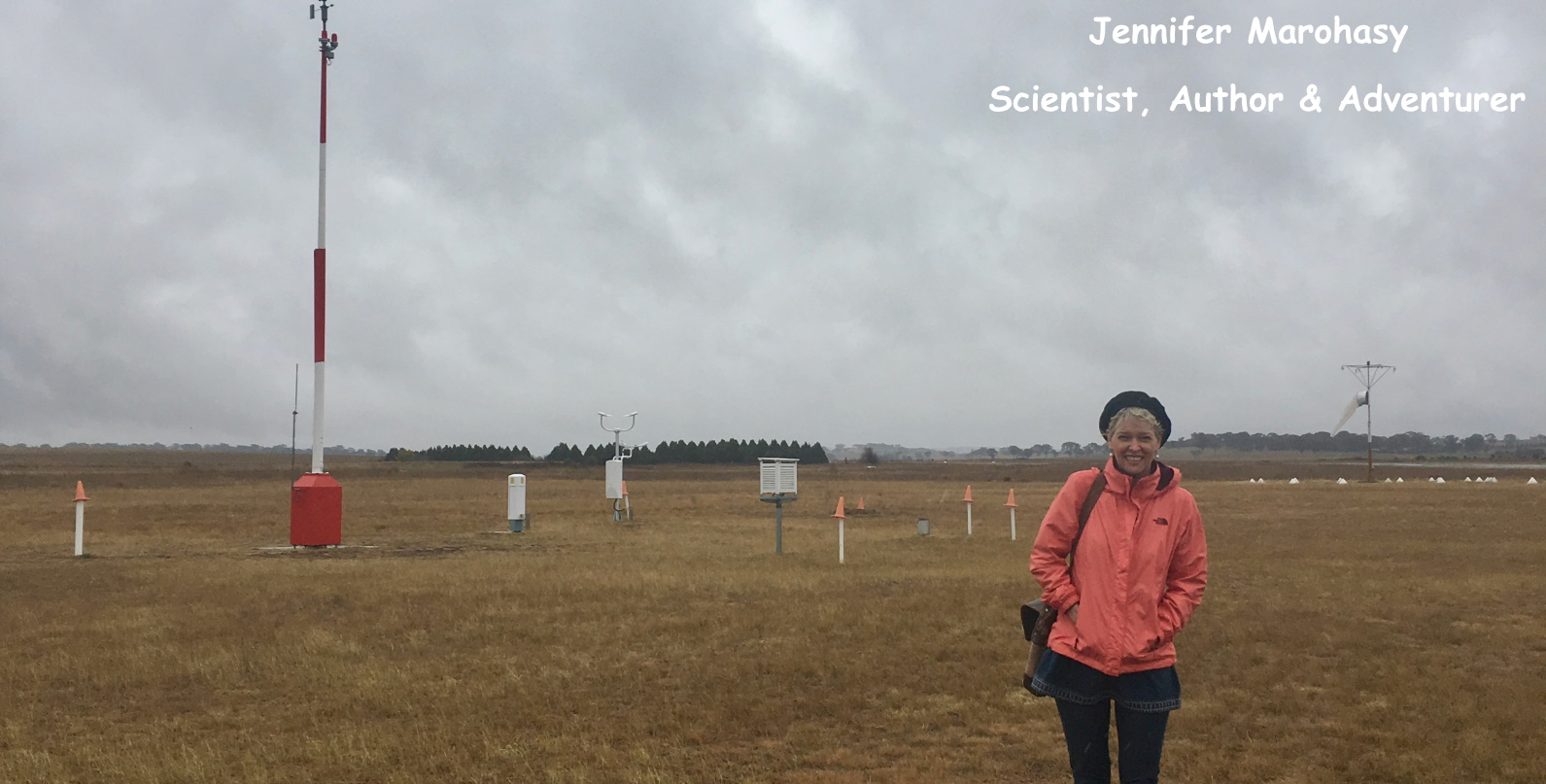
Jennifer Marohasy Jennifer Marohasy BSc PhD has worked in industry and government. She is currently researching a novel technique for long-range weather forecasting funded by the B. Macfie Family Foundation. Read more

Subscribe For News Updates

Subscribe Me

Contact Me

To get in touch with Jennifer call 0418873222 or international call +61418873222.

Email: jennifermarohasy at gmail.com

Connect With Me

  • Facebook
  • LinkedIn
  • RSS
  • Twitter
  • YouTube

Copyright © 2014 - 2018 Jennifer Marohasy. All rights reserved. | Legal

Website by 46digital