• Skip to primary navigation
  • Skip to main content
  • Skip to primary sidebar
  • Skip to footer
Jennifer Marohasy

Jennifer Marohasy

a forum for the discussion of issues concerning the natural environment

  • Home
  • About
  • Publications
  • Speaker
  • Blog
  • Temperatures
  • Coral Reefs
  • Contact
  • Subscribe

Plants and Animals

Journalist Ross Coulthart Legitimises Farmer Woody Weed Concerns

August 6, 2006 By jennifer

Not so many years ago Australian farmers where forced to clear their land of trees, it was a condition of many leases. Some areas were over-cleared particularly in Western Australia.

Over the last 10 years the pendulum has swung in completely the other direction, with legislation now essentially outlawing tree clearing on both leasehold and freehold land.

In Queensland and NSW the new legislation has been driven, at least in part, by relentless campaigning from the Wilderness Society. As their name suggests, this environment group believes in ‘wilderness’ and is against the active management of landscapes. Yet, to quote, Deborah Bird Rose :

“A definition of wilderness which excludes the active presence of humanity may suit contemporary people’s longing for places of peace, natural beauty, and spiritual presence, uncontaminated by their own culture. But definitions which claim that these landscapes are ‘natural’ miss the whole point. Here on this continent, there is no place where the feet of Aboriginal humanity have not preceded those of the settler. Nor is there any place where the country was not once fashioned and kept productive by Aboriginal people’s land management practices.”

The reality is that before white pastoralists moved into western NSW and Queensland the country was “kept productive” by aboriginals and their firesticks. They burnt the land which favoured some grasses and limited the establishment of what many pastoralists now refer to as “woody weeds” including species of native cypress pine and acacia.

Current land management practices compounded by government regulations, policies and expectations, have resulted in large areas of western Queensland and NSW being over run by invasive native scrub, also known as ‘woody weeds’, and this is having a negative economic and environmental impact in many areas.

While the rural press has run hard on the issue it has been ignored by the mainstream media. It has perhaps been assumed that farmers have exaggerated the ‘woody weed’ issue because they want to keep clearing trees until there are none left? Interestingly when I tried to get a piece published by the Courier Mail some years ago, I was told that my suggestion that there were more trees regrowing than being cleared in Queensland was offensive.

But, at last a respectable metropolitan journalist has discovered the issue. This morning Channel Nine’s Sunday Program ran ‘The Great Land-Clearing Myth’ as their cover story. Ross Coulthart made the comment:

ROSS COULTHART: Another reason to be skeptical about the Wilderness Society’s alarming land clearing figures — they don’t include regrowth in their estimate of 100,000 hectares of clearing because no-one is measuring it.

WILDERNESS SOCIETY CAMPAIGNER: That figure doesn’t include regrowth.

ROSS COULTHART: You say a lot of people say to us if you took the regrowth of native vegetation into account the amount of regrowth would far exceed the clearing.

WILDERNESS SOCIETY CAMPAINGER: Sure but the native bush can’t regenerate at the moment as fast as it’s being cleared.

In fact last time I looked native bush was regenerating faster than it was being cleared. That’s not to say that there is not a need for some restrictions on broad scale tree clearing or that woody weed regrowth is equivalent to high value remnant scrub. But until this morning it seemed not a single respectable journalist would explore the issue – there was not honest discussion in the mainstream metropolitan media.

Earlier this year Ross Coulthart went further than anyone has ever gone in exposing the politics of salinity in Australia. This morning he legitimised many landholder’s concerns about woody weed regrowth and perhaps opened the door to a discussion that needs to be had.

You can read the full transcript here: http://sunday.ninemsn.com.au/sunday/cover_stories/article_2039.asp .


Filed Under: Uncategorized Tagged With: Plants and Animals, Rangelands, Weeds & Ferals

Large Mammal Extinctions: Libby Eyre

July 28, 2006 By jennifer

I asked Libby Eyre for some information on modern large mammal extinctions and this was her list in reply:

Steller’s sea cow,
sea mink and Carribbean monk seals,
the Thylacine,
Toolache wallaby and lesser bilby,
the Falkland Island fox,
aurochs (stunning bovines),
tarpans (a type of wild horse) and quaggas (amazing ‘half zebra, half-horse’ animals),
the Barbary and Cape lions,
the Bali,
Caspian and Java tigers,
the Caucasian moose,
Irish elk and European ass,
the Atlas bear,
Guam flying fox (not really very big),
the Arabian gazelle, and
the Wisconsin cougar.

Other readers might like to comment on, and add to this list.

Filed Under: Uncategorized Tagged With: Plants and Animals

How to Save the Baiji?

July 23, 2006 By jennifer

The Yangtze River Dolphin, also known as the baiji, is perhaps the most endangered of the world’s large mammals. The last confirmed sighting was of a single adult in September 2004.

The journal Conservation Biology recently published three short papers [1] on the current state of baiji conservation and plans to save the species.

There is no single agreed plan, rather several disputed and contentious plans which can perhaps be summarized as four options:
1. Leave the baiji where they are.
2. Move individuals to the Institute of Hydrobiology dolphinarium in Wuhan, Hubei Province.
3. Move individuals to a 21-km oxbow lake originally part of the Yantze River at Tian-e-Zhou, Hubei Province.
4. Move individuals somewhere else.

The first option has been advocated by Professor Guang Yang and colleagues [1] on the basis that the chances of successfully finding, capturing and establishing a genetically viable ex situ population of baiji is unlikely. They argue that the baiji is essentially a lost cause, that available resources should be prioritized, and would be better spent on saving the finless porpoise population of the Yangtze river.

Drs Randall Rheeves and Nick Gales [1] reject the notion of leaving the baiji in situ. They claim that the baiji will surely go extinct if left in the Yangtze because of harmful fishing practices as well as increasingly river traffic, water pollution and habitat loss. They claim that it is more important to save the baiji than the finless porpoise. They explain that finless porpoises can be found from Japan to Iran in a narrow band of coastal continental shelf water while the baiji are only found in the Yangtze and “their disappearance would be like snapping off a complete branch from the tree of mammalian radiation.” They claim it should not come down to a choice between finless porpoises and baiji, that both can be saved.

There seems general agreement that moving baiji to the dolphinarium at Wuhan (Option 2) is not a good idea because previous attempts to establish a breeding colony there have failed.

Guang Yang et al. argue that moving baiji to the Tian-e-Zhou seminatural reserve (Option 3) is not a good idea because it “potentially compromises not only the future of the currently increasing finless porpoise population but would represent a major risk to the baiji due to potential for agonistic interactions, disease transmission, and competition for limited resources.”

A single baiji female released there in 1995 died of entanglement (presumably in fishing nets) but was already emaciated.

In contrast Drs Reeves and Gales argue that moving baiji to the Tian-e-Zhou reserve is the best option because finless porpoises have similar requirements to the baiji and the reserve has proven success for breeding the porpoises.

Drs Reeves and Gales propose that the population of finless porpoises now in the reserve be moved elsewhere, so there is no potential for competition with the baiji.

But, what about moving the baiji elsewhere – finding another seminatural reserve (Option 4)?

I’m inclined to think that if the finless porpoise population is doing well in the Tian-e-Zhou reserve, leave it alone. Find somewhere else for the baiji and begin preparing this new environment in anticipation of finding enough individuals to capture for translocation.

If enough baiji are never found for translocation, if the species does go extinct, then the new reserve could be used for the hopefully expanding finless porpoise population.

————————————————————
[1] Thanks to Libby for sending me the papers:

* Guang Yang et al. 2006 ‘Conservation Options for the Baiji: Time for Realism?’ Conservation Biology Volume 20, Number 3, pgs 620-622

* Randall Reeves & Nicholas Gales. 2006 ‘Realities of Baiji Conservation’ Conservation Biology Volume 20, Number 3, pgs 626-628

* Ding Wang et al. 2006 ‘Conservation of the Baiji: No Simple Solution’ Conservation Biology Volume 20, Numbers 3, pgs 623-625

I’ve previously posted ‘Worrying About the Baiji’ .

Filed Under: Uncategorized Tagged With: Plants and Animals

Humane Society To Sue Japanese Whalers

July 20, 2006 By jennifer

The Australian Federal Court ruled last friday that environment group the Humane Society International (HSI) could sue Japanese whaling company Kyodo Senpaku Kaisha Ltd to get an injunction forcing the Australian government to stop whaling within the Australian Whale Sanctuary in Antarctica.

According to Channel Nine News:

“In May last year, Federal Court Justice James Allsop refused the group permission to proceed with the case, after federal Attorney-General Philip Ruddock raised concerns it could spark a diplomatic incident between Australia and Japan.

But the court’s full bench found Justice Allsop made an error in deciding HSI’s case should not have gone ahead because it might have been ignored by the company, as Japan did not recognise the sanctuary.

Chief Justice Michael Black and Justice Ray Finkelstein also said in their judgment that too much consideration was given to Mr Ruddock’s concerns.

HSI wildlife and habitat program manager Nicola Beynon said it was an important decision that allowed the group to “take the fight” directly to the company.“

————————-
Thanks Ann for sending me the link.

Filed Under: Uncategorized Tagged With: Plants and Animals

Whaling – Con & Pro: Klaus Barthelmess

July 10, 2006 By jennifer

According to German historian Klaus Barthelmess it is “Pure presumptuousness!” to suggest that world opinion is against whaling. He writes:

“This opinion [against whaling] is almost exclusively found in densely populated urban Western societies, where people have become alienated from nature and where care for pet animals compensates for weakened family ties and social bonds. These societies – perhaps 20% of the world population – may be the most outspoken and influential, but by no means do they represent ‘World Opinion’.”

Barthelmess has just updated a brochure entitled ‘Whaling – Con & Pro’ that he wrote 12 years ago for the annual meeting of the International Whaling Commission in Puerto Vallarta.

Judging from the content of the brochure the arguments for and against whaling have not changed or progressed much over the last 12 years.

The brochure now available online, passionately argues the case for whaling and is illustrated from Barthelmess’s collection of ‘whaling-related art’ including pictures of what he describes as the ‘fastest-killing device ever invented’, the Norwegian penthrite harpoon grenade.

Barthelmess killing devices whales.jpg
[Norwegian penthrite harpoon grenade, prototype parts and models. Photo Barthelmess 2005]

————-
Apologies to those who unsuccessfully tried to post a comment at this blog over the weekend. We were all (me included) accidentally ‘locked’ out over the weekend when some files on the server where ‘cleaned up’ on Friday. All is working again now.

Filed Under: Uncategorized Tagged With: Plants and Animals

Norwegian Whalers Show Tourists How It’s Done

July 6, 2006 By jennifer

Tourists on a whale watching expedition in Norwegian waters were not impressed when some eager whalers, taking advantage of the nice weather, harpooned one of the whales they were watching.

Read the story in the Aftenposten, click here.

—————
Thanks to Ann for sending us the link.

Filed Under: Uncategorized Tagged With: Plants and Animals

  • « Go to Previous Page
  • Go to page 1
  • Interim pages omitted …
  • Go to page 37
  • Go to page 38
  • Go to page 39
  • Go to page 40
  • Go to page 41
  • Interim pages omitted …
  • Go to page 54
  • Go to Next Page »

Primary Sidebar

Recent Comments

  • Ian Thomson on Vax-ed as Sick as Unvax-ed, Amongst My Friends
  • Dave Ross on Vax-ed as Sick as Unvax-ed, Amongst My Friends
  • Dave Ross on Vax-ed as Sick as Unvax-ed, Amongst My Friends
  • Alex on Incarceration Nation: Frightened of Ivermectin, and Dihydrogen monoxide
  • Wilhelm Grimm III on Incarceration Nation: Frightened of Ivermectin, and Dihydrogen monoxide

Subscribe For News Updates

  • This field is for validation purposes and should be left unchanged.

November 2025
M T W T F S S
 12
3456789
10111213141516
17181920212223
24252627282930
« Jan    

Archives

Footer

About Me

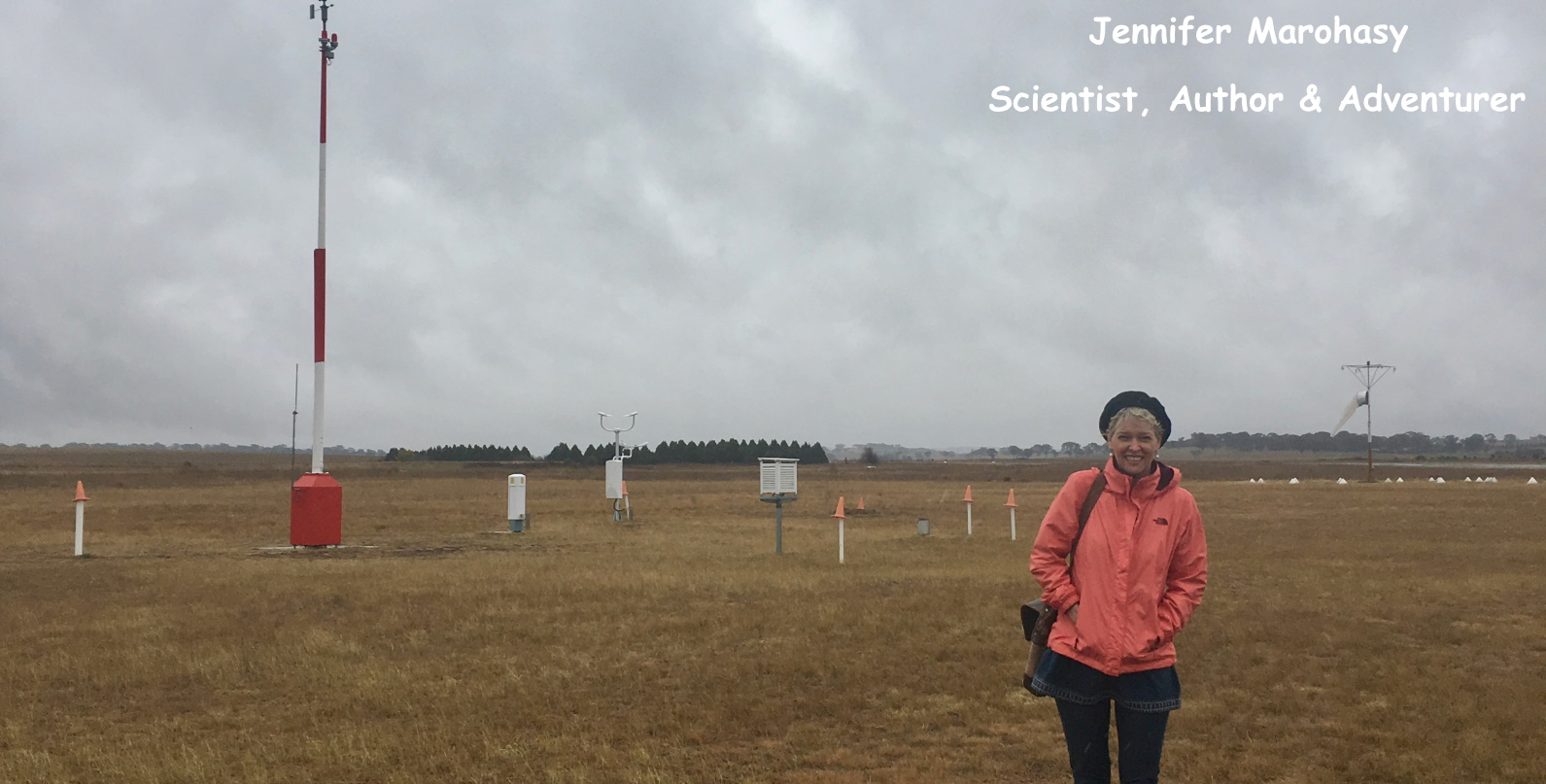
Jennifer Marohasy Jennifer Marohasy BSc PhD has worked in industry and government. She is currently researching a novel technique for long-range weather forecasting funded by the B. Macfie Family Foundation. Read more

Subscribe For News Updates

Subscribe Me

Contact Me

To get in touch with Jennifer call 0418873222 or international call +61418873222.

Email: jennifermarohasy at gmail.com

Connect With Me

  • Facebook
  • LinkedIn
  • RSS
  • Twitter
  • YouTube

Copyright © 2014 - 2018 Jennifer Marohasy. All rights reserved. | Legal

Website by 46digital