• Skip to primary navigation
  • Skip to main content
  • Skip to primary sidebar
  • Skip to footer
Jennifer Marohasy

Jennifer Marohasy

a forum for the discussion of issues concerning the natural environment

  • Home
  • About
  • Publications
  • Speaker
  • Blog
  • Temperatures
  • Coral Reefs
  • Contact
  • Subscribe

National Parks

How Aborigines Made Australia: Bill Gammage

November 15, 2011 By jennifer

A new book, The Biggest Estate on Earth, by historian Bill Gammage explodes the myth that pre-settlement Australia was an untamed wilderness revealing the complex, country-wide systems of land management used by Aboriginal people.

According to the publisher’s website:

“Early Europeans commented again and again that the land looked like a park. With extensive grassy patches and pathways, open woodlands and abundant wildlife, it evoked a country estate in England. Bill Gammage has discovered this was because Aboriginal people managed the land in a far more systematic and scientific fashion than we have ever realised.

“For over a decade, Gammage has examined written and visual records of the Australian landscape. He has uncovered an extraordinarily complex system of land management using fire and the life cycles of native plants to ensure plentiful wildlife and plant foods throughout the year. We know Aboriginal people spent far less time and effort than Europeans in securing food and shelter, and now we know how they did it.

“With details of land-management strategies from around Australia, The Biggest Estate on Earth rewrites the history of this continent, with huge implications for us today. Once Aboriginal people were no longer able to tend their country, it became overgrown and vulnerable to the hugely damaging bushfires we now experience. And what we think of as virgin bush in a national park is nothing of the kind.”

This book must challenge the myth of virgin “remnant” vegetation that currently underpins significant land management legislation in Queensland and NSW.

Bill Gammage is a historian and adjunct professor in the Humanities Research Centre at the Australian National University.

Filed Under: Books, Information Tagged With: Forestry, National Parks

A Note from the Daintree

May 8, 2011 By jennifer

Hello Jennifer,

Tourism in the Daintree Rainforest is continuing to decline, partly because of the relative value of the Australian dollar.

Recent upturns in the global economy have been met with a proportionate recovery in other parts of Australia, but the far north seems to have suffered the double whammy of natural disasters which have been overly-publicised to the extent that many travellers to Australia are still shying away from Queensland.

The challenge for the people of the Daintree Rainforest is to get the word out that we are enjoying unobstructed accessibility, are open for business and waiting to showcase the rich diversity of experiences that make a great nature-based holiday in the oldest rainforest in the world.

If you feel inclined to assist, kindly forward this eNewsletter onto a friend who may be considering travelling in the not too distant future…
[Read more…] about A Note from the Daintree

Filed Under: History, News Tagged With: National Parks, Plants and Animals, Wilderness

Exotic Disease Threatens Australian Eucalyptus

February 17, 2011 By jennifer

Exotic diseases represent a significant threat to Australia’s unique fauna and flora.

Dramatic declines in frog numbers in the 1970s were initially blamed on habitat destruction associated with logging.  It was not until twenty years later that the disease Chytridiomycosis caused by the fungal pathogen Batrachochytrium dendrobatidis was positively identified and is now officially recognized as the cause of four species extinctions.  The disease is thought to have spread from Africa.

The Myrtle rust is an exotic disease from South America with the potential to infest many Australian native plants including Eucalyptus.  The disease was first detected in Australia on the Central Coast of New South Wales in April 2010.   Recently it was found in southeastern Queensland.   In an attempt to stop the spread of the disease it is rumoured some National Parks could be closed to visitors.

[Read more…] about Exotic Disease Threatens Australian Eucalyptus

Filed Under: News, Opinion Tagged With: National Parks, Weeds & Ferals

Britain’s Forests for Sale

February 4, 2011 By jennifer

In Australia the general trend is for governments to lock-up more and more forest often through the conversion of land managed as forest reserve into national park.   The conversion of land into national park is often accompanied by a reduction in the level of active management of the area.

Australia has vast areas of both forest reserve and forest in national parks.    Not so in the United Kingdom where there are only 15 national parks and a relatively small area of state owned forest commission. 

Now, in the UK, the new conservative government is planning to sell-off the state-owned forest commission estate and apparently without placing caveats on how this land is used after its sale.

According to The Guardian’s environment blog late last year:

“We now know, thanks to the junior environment minister Jim Paice’s frank evidence to a recent House of Lords select committee, that the government is considering the sale of not just “some”, or even “substantial”, amounts of woodland as the public was originally led to believe, but of all state-owned English trees across the commission’s 635,000-acre Forestry Commission estate. This includes many royal forests, state-owned ancient woodlands, sites of special scientific interest, heathland, campsites, farms and sporting estates.”

Various campaigns have sprung up and it was recently report that the National Trust is planning to buy much or the forest:

“The initiative, says the trust’s director, Dame Fiona Reynolds, could protect in perpetuity not just large areas of heritage areas such as the Forest of Dean and the New Forest, but other woodland expected to be offered for sale to communities and commercial enterprises in the biggest change in land ownership for more than 80 years.”

What is it that governments in Australia and the UK no longer want a part in forestry – they don’t want to be involved in active land management – perhaps reflecting the popular mood which sees such areas as either wilderness or with commercial potential – but not able to reconcile that they can be a source of income and recreation and wildlife refuges and have historically been successfully managed as such by government forestry services?

***********

http://www.guardian.co.uk/environment/blog/2010/dec/22/tory-privatisation-all-state-forests 

http://www.guardian.co.uk/environment/2011/jan/28/national-trust-save-english-woodlands

Filed Under: News, Opinion Tagged With: Forestry, National Parks

The National Parks: America’s Best Idea

December 30, 2010 By jennifer

ONE of the best Christmas presents I received this year is a film by Ken Burns and Dayton Duncan entitled ‘The National Parks: America’s Best Idea’ – as twelve episodes contained in a case of five DVDs.

So far I’ve watched episodes one to four which begin with John Muir’s campaign to protect Yosemite in the Sierra Nevada Mountains of California from commercial development and ends with his failure to stop the flooding of Yosemite’s Hetch Hetchy Valley.

As the case cover explains: “Nearly a decade in the making, The National Parks: America’s Best Idea…  is a breathtaking journey through the nation’s most spectacular landscapes and a celebration of the people – famous and unknown – who fought to save them for future generations to treasure.”

The first four episodes provide tremendous insight into not only the environmental campaigns lead by John Muir, who founded the Sierra Club, but also the important role of President Theodore Roosevelt in establishing and protecting national parks and also national monuments in the US.  

The film is a reminder of how much was at risk before there was environmental legislation and protection.  The story of the slaughter of bison in Yellowstone National Park to the verge of extinct is particularly harrowing.  

John Muir would nowadays be called an environmentalist, or conservationists, but one hundred years ago he was recognized as a preservationist.   In losing the fight to protect Hetch Hetchy Valley it may have appeared that the preservationists had lost to the conservationists.  

In fact John Muir may have lost the battle, but won the war: Most of today’s environmental and conservation groups campaign for preservation, rather than conservation.    And of course the management of national parks today in Australia, is mostly in accordance with the preservationist’s philosophy.

The film is narrated from the perspective of the preservationists with a deep respect for natural history and natural landscapes.  

*******************
Following is an explanation of the difference between preservation and conservation. 
from Wikipedia… 

“In July 1896, [John] Muir became associated with Gifford Pinchot, a national leader in the conservation movement. Pinchot was the first head of the United States Forest Service and a leading spokesman for the sustainable use of natural resources for the benefit of the people. His views eventually clashed with Muir and highlighted two diverging views of the use of the country’s natural resources.

Pinchot saw conservation as a means of managing the nation’s natural resources for long-term sustainable commercial use. As a professional forester, his view was that “forestry is tree farming,” without destroying the long-term viability of the forests.

Muir valued nature for its spiritual and transcendental qualities. In one essay about the National Parks, he referred to them as “places for rest, inspiration, and prayers.” He often encouraged city dwellers to experience nature for its spiritual nourishment. Both men opposed reckless exploitation of natural resources, including clear-cutting of forests. Even Muir acknowledged the need for timber and the forests to provide it, but Pinchot’s view of wilderness management was far more utilitarian.

Their friendship ended late in the summer of 1897 when Pinchot released a statement to a Seattle newspaper supporting sheep grazing in forest reserves. Muir confronted Pinchot and demanded an explanation. When Pinchot reiterated his position, Muir told him: “I don’t want any thing more to do with you.” This philosophical divide soon expanded and split the conservation movement into two camps: the preservationists, led by Muir, and Pinchot’s camp, who co-opted the term “conservation.” The two men debated their positions in popular magazines, such as Outlook, Harper’s Weekly, Atlantic Monthly, World’s Work, and Century.

Their contrasting views were highlighted again when the United States was deciding whether to dam Hetch Hetchy Valley. Pinchot favored the damming of the valley as “the highest possible use which could be made of it.” In contrast, Muir proclaimed, “Dam Hetch Hetchy! As well dam for water-tanks the people’s cathedrals and churches, for no holier temple has ever been consecrated by the hearts of man.”

http://en.wikipedia.org/wiki/John_Muir

Filed Under: History, Opinion Tagged With: National Parks, Plants and Animals

Dawn, North Keppel Island, Central Queensland

August 8, 2009 By jennifer

Yeppoon Aug09 021 cut 2APOLOGIES for not posting so much over the last week:   I have been driving north along the east coast of Australia and this morning I woke up to this magnificent view across to North Keppel Island.  It’s a National Park Island within the Great Barrier Reef World Heritage Area.

Filed Under: News Tagged With: National Parks

  • Go to page 1
  • Go to page 2
  • Go to page 3
  • Interim pages omitted …
  • Go to page 5
  • Go to Next Page »

Primary Sidebar

Recent Comments

  • Ian Thomson on Vax-ed as Sick as Unvax-ed, Amongst My Friends
  • Dave Ross on Vax-ed as Sick as Unvax-ed, Amongst My Friends
  • Dave Ross on Vax-ed as Sick as Unvax-ed, Amongst My Friends
  • Alex on Incarceration Nation: Frightened of Ivermectin, and Dihydrogen monoxide
  • Wilhelm Grimm III on Incarceration Nation: Frightened of Ivermectin, and Dihydrogen monoxide

Subscribe For News Updates

  • This field is for validation purposes and should be left unchanged.

December 2025
M T W T F S S
1234567
891011121314
15161718192021
22232425262728
293031  
« Jan    

Archives

Footer

About Me

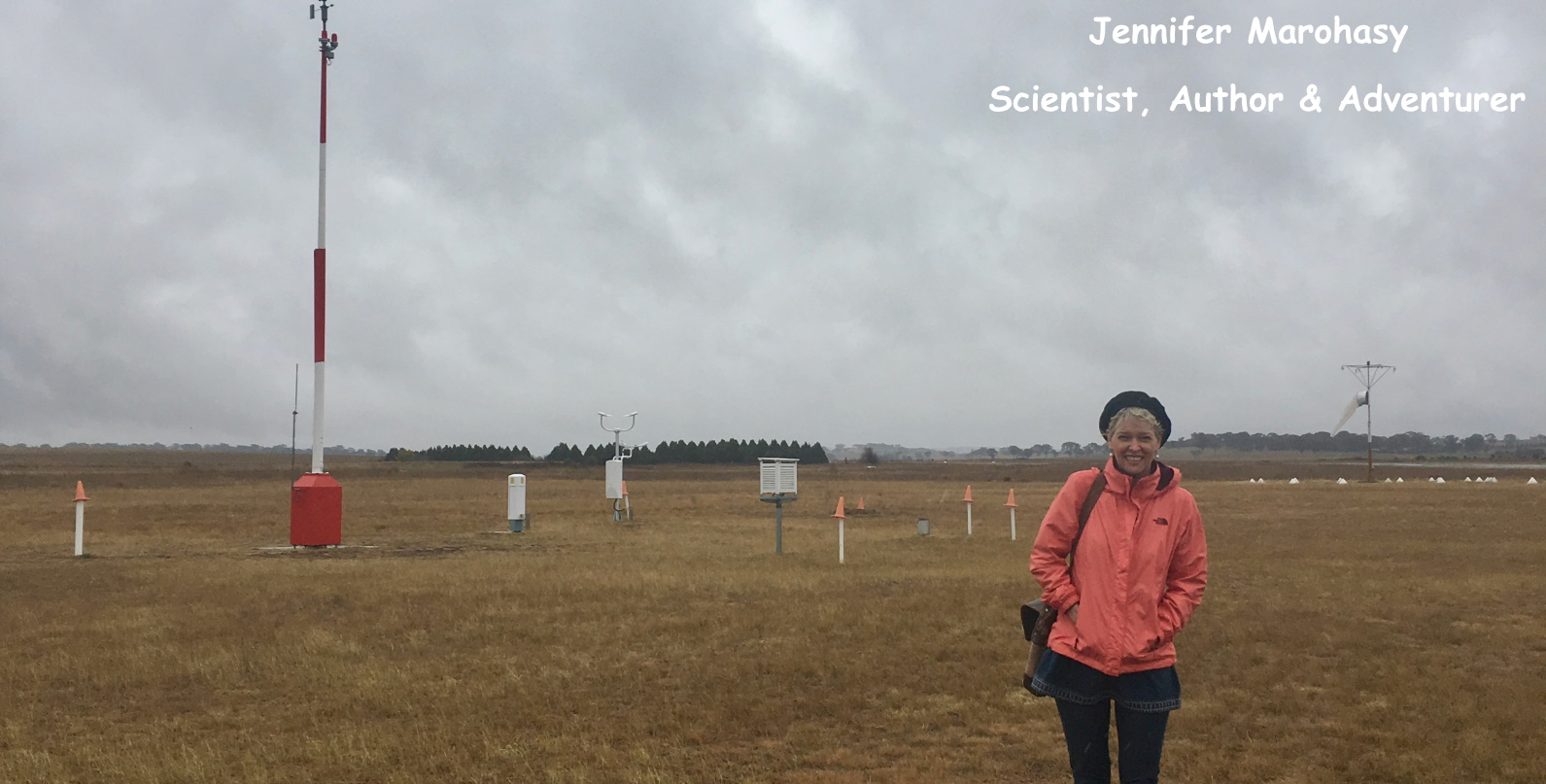
Jennifer Marohasy Jennifer Marohasy BSc PhD has worked in industry and government. She is currently researching a novel technique for long-range weather forecasting funded by the B. Macfie Family Foundation. Read more

Subscribe For News Updates

Subscribe Me

Contact Me

To get in touch with Jennifer call 0418873222 or international call +61418873222.

Email: jennifermarohasy at gmail.com

Connect With Me

  • Facebook
  • LinkedIn
  • RSS
  • Twitter
  • YouTube

Copyright © 2014 - 2018 Jennifer Marohasy. All rights reserved. | Legal

Website by 46digital