• Skip to primary navigation
  • Skip to main content
  • Skip to primary sidebar
  • Skip to footer
Jennifer Marohasy

Jennifer Marohasy

a forum for the discussion of issues concerning the natural environment

  • Home
  • About
  • Publications
  • Speaker
  • Blog
  • Temperatures
  • Coral Reefs
  • Contact
  • Subscribe

Fishing

Shifting the Environmental Impact of Fishing Somewhere Else

August 29, 2006 By jennifer

“Australia has the third largest fishery zone of any nation. It also has the most over-managed, heavily restricted and least productive fishery sector in the world,” according to marine biologist Dr Walter Starck.

“The total Australian wild caught fishery harvest is less than half that of New Zealand and less than a tenth that of Thailand which has a fisheries zone only 5 percent the size of Australia’s.

“Seventy percent of the seafood we consume is imported, all of it from regions far more heavily fished than our own.”

Dr Walter Starck will be in Brisbane on 23rd September to speak at the inaugural Australian Environment Foundation conference.

Show your support for the new more evidence-based approach to environmental issue advocated by the AEF and register for the conference: http://www.aefweb.info/display/conference2006.html .

AEF_conf_large_ad.gif

——————–
I’m a director of the AEF.

Filed Under: Uncategorized Tagged With: Fishing

More Tuna Than Agreed?

August 12, 2006 By jennifer

The Australian Fisheries Management Authority’s managing director, Richard McLoughlin, claims Japan has been exceeding its quota of southern bluefin tuna for the last 20 years and not just by a few fish. In an article in today’s Sydney Morning Herald entiled ‘Revealed: how Japan caught and hid $2b worth of rare tuna’ he claims they have been catching 3 times their quota.*

But last time I read-up on the issue, it was apparent Japan never agreed to operate within the quote that it had been allocated. This is what I wrote at this blog on 1st June last year:

“I was concerned to learn that the Southern bluefin tuna fishery is shared with Japan, Indonesia, Taiwan, Korea and New Zealand. The total global catch peaked in 1961 at 81,605 tonnes and was then in general decline for three decades. Since 1990 the total catch has ranged from between 13,231 tonnes (1994) to 19,588 tonnes (1999). Stock assessments suggest that the parental biomass is low but stable and unlikely to recover to target levels unless all countries agree to abide by national allocations as determined by the Commission for the Conservation of Southern Bluefin Tuna. While Australia apparently operates within its allocation, Japan has not agreed to operate within its allocation, and Indonesia does not recognise the Commission.”

The Sydney Morning Herald article does not appear to have been properly research and it doesn’t look like the Japanese were given an opportunity to tell their side of the story? Furthermore, is it appropriate for Mr McLoughlin to describe the Japanese action as ‘fraud’ if they never agreed to a quota?

—————–
*According to the Sydney Morning Herald article: Mr McLoughlin was speaking at an ANU seminar in a speech recorded and posted on the internet and the official findings of an inquiry into the issue were presented at an international meeting in Canberra in July, but kept confidential. I’ve had a quick look for the speech on the internet but couldn’t find it. If you can, please post the url as a comment or send me an email jennifermarohasy@jennifermarohasy.com.

Filed Under: Uncategorized Tagged With: Fishing

No Fishing, Just Feeding The Fish in Darwin

June 25, 2006 By jennifer

There was some comment earlier today by Luke and Ann about feeding fish following my blog post on lungfish. Anyway, I was fascinated to learn last year that at Doctors Gully, Darwin, Australia, fishing is banned, but feeding is encouraged.

A friend feeds the fish:

fish bread b.JPG

My daughter Caroline feeds the fish:

fish caroline c.JPG

The message on bottom sign in the following picture includes: “It has taken years to tame the fish. Please do not frighten them by grabbing, kicking or picking them up.”

fishing prohibited b.JPG

Fish that come to be fed include: milkfish, mullet, catfish, bream, barramundi, cod and mangrove jack.

Filed Under: Uncategorized Tagged With: Fishing

More Oil Equals More Fish

May 18, 2006 By jennifer

The 3,739 oil Platforms in the Gulf of Mexico make for great fishing according to Humberto Fontova writing in Brookes News. He claims that 85 percent of fishing trips from Louisiana offshore are to the platforms, that there is 50 times more marine life around the platforms than in surrounding areas, and he has some harsh words for armchair greenies:

“Environmentalists” wake up in the middle of the night sweating and whimpering about offshore oil platforms only because they’ve never seen what’s under them. This proliferation of marine life around the platforms turned on its head every “expert” opinion of its day. The original plan, mandated by federal environmental “experts” back in the late ‘40s, was to remove the big, ugly, polluting, environmentally hazardous contraptions as soon as they stopped producing. Fine, said the oil companies.

About 15 years ago some wells played out off Louisiana and the oil companies tried to comply. Their ears are still ringing from the clamor fishermen put up. Turns out those platforms are going nowhere, and by popular demand of those with a bigger stake in the marine environment than any “environmentalist.”

Every “environmental” superstition against these structures was turned on its head. Marine life had EXPLODED around these huge artificial reefs. Louisiana produces on third of America’s seafood In fact a study by Louisiana State University shows that 85 percent of Louisiana offshore fishing trips involve fishing around these structures and that there’s 50 times more marine life around an oil production platform than in the surrounding Gulf bottoms. Louisiana produces one-third of America’s commercial fisheries — because of, not in spite of, these platforms.

All of this and not one major oil spill in half a century — not one. As more assurance, today’s drilling technology compares to the one used only 20 years ago about like the Kitty Hawk compares to a jumbo jet. The one that gave us the Santa Barbara Oil Spill in 1969 compares to today’s like a fossil.”

What did happen when Hurricane Katrina struck? Where there no oil spills and accidents then?

Filed Under: Uncategorized Tagged With: Fishing

Let’s Import Our Fish

November 26, 2005 By jennifer

‘Getting in Deeper?’ was the title of a letter to the Courier Mail on Friday which read:

Now that we are going to have to import more fish because of cutbacks to commercial fishing we can expect an increase in Indonesian illegal fishing in our waters to meet the extra demand for imports.

So cynical!

When I read in the The Australian and The Courier Mail last Thursday that a $220 million Federal Government package will be offered to more than 1,000 commercial fisherman as an inducement to exit the fishing industry, I emailed Dr Walter Stark and asked what he thought about it all. I commented that I thought some fisheries were under real stress including the orange roughy, not to mention southern bluefin tuna.

Walter emailed back:

Orange Roughy are very slow growing, have a restricted habitat range on the continental slope and gather in schoals above the bottom where they are easy to detect and catch. Needless to say they are very vulnerable to overfishing. As to the broader issue of halving the Commonwealth licensed fleet because of overfishing, it’s nonsense.

Here are some fishery production figures (in metric tonnes) for 2003, the first is aquaculture the second for wild caught.
Australia 38,559 / 219,473
Vietnam 937,502 / 1,666,886
Malaysia 167,160 / 1,287,084
Thailand 772,970 / 2,817,482
Mexico 73,675 / 1,450,000
Bangaladesh 856,956 / 1,141,241
Philippines 459,615 / 2,169,164
Burma 257,083 / 1,349,169
U.S.A. 544,329 / 4,938,956

The figures speak for themselves, especially in view of our much larger and less impacted coastline and marine environment.

Australia has the world’s third largest Exclusive Economic Zone, behind the United States and France, but ahead of Russia, with the total area actually exceeding that of its land territory. France is so large because of its overseas departments.

In terms of EEZ area Australian fisheries harvest rate is about 1/20 that of the U.S. Australia ‘s continental EEZ area comes to 6,048,681 Km2 and the island territories bring the total to 8,148,250 Km2. Disregarding the latter the wild caught harvest comes to just under 40 Kg/ Km2 per year or 0.4 Kg/Ha.

I don’t think overfishing is much of a threat. The strong impression I received from some pretty impassioned fishermen at the Seafood Directions conference at Sydney in September was that poor catches are not the difficulty. The real problem causing the widespread malise in fisheries is government imposed restrictions, demands and charges.

Tom Marland has commented:

As a result [of the restrictions] retailers will be forced to import more seafood under the Howard Government plan to replenish Australia’s vulnerable fish stocks.

Fisheries Minister Ian Macdonald commented yesterday that “It is a fact well accepted by the industry that there are too many boats chasing too few fish in many of our fisheries.”

Under the proposed plan The Australian Fisheries Management Authority will reduce the allowed catch in 17 key fisheries in southern, eastern and northern waters from next year, and enforce more sustainable fishing practices.

Australian Conservation Foundation marine campaign co-ordinator Chris Smyth said the package was long overdue, given that the number of over fished species had risen from three to 17 since the Howard Government came to power in 1996.

While the fish caught in Australian waters will be reduced, especially in the ‘exploited and depleted’ Great Barrier Reef region it does not make any mention about a decrease in consumer demand for seafood in Australia.

In a recent article written by Walter Stark titled Threats to the Great Barrier Reef it was stated that in regards to the over fishing of the GBR the evidence does not quite stack up.

For instance the GBR currently has a harvest rate of 17kg/km2 compared to other pacific reefs which average 7,700 kg/km2. This may be put down to the fact that the GBR covers a large area. However, currently only 30% of the reef is available to commercial fishing operators which corresponds to 60kg/km2.

So while the bans on commercial fishing will be implemented to ‘rejuvenate’ a comparably under utilised resource in Australian water other reef environments in the Pacific, South East Asia and the Caribbean will be placed under increased pressure from the increased demand from Australian imports.

This position smacks of out of sight out of mind and is a direct ‘exportation’ of Australian environmental responsibility. While Australians will sit down to a smorgasbord over over-priced, over seas imported seafood this Christmas they can sleep well in the knowledge that the GBR and other Australian marine resources are safe to the detriment of over-exploited and environmentally unsustainable international fishing zones.

……….

Thanks to Tom Marland and Walter Stark for most of the information for this post.

Filed Under: Uncategorized Tagged With: Fishing

Food Fashion & Fisheries

October 24, 2005 By jennifer

There is much ‘food for thought’ in the following piece, from ABC Online:

Marine historians picking through 200,000 US restaurant menus since the 1850s, schooner logs and archaeological sites are finding that capricious human tastes have let some species thrive while other stocks have been over-fished for centuries.

Americans scorned lobster until the 1880s while the ancient Romans loved fish so much that their catches depleted the Mediterranean, according to the study that may give clues about how to restore damaged world fish stocks.

“We can only model the future of the oceans based on past evidence,” said Poul Holm, a Danish environmental researcher who is leading a team of about 80 experts in an international project on the History of Marine Animal Populations.

US restaurant menu prices back 150 years, for instance, chart sometimes inexplicable swings in tastes and prices of seafood including swordfish, lobster, abalone, oysters, halibut, haddock and sole.

“Back in the 1860s no one wanted to eat lobster,” said Glenn Jones, a researcher at Texas A&M University at Galveston, who leads the menu project.

Giant lobsters weighing nine kilograms were common in New England.

Read more here ….

Filed Under: Uncategorized Tagged With: Fishing

  • « Go to Previous Page
  • Go to page 1
  • Interim pages omitted …
  • Go to page 4
  • Go to page 5
  • Go to page 6
  • Go to page 7
  • Go to Next Page »

Primary Sidebar

Recent Comments

  • Ian Thomson on Vax-ed as Sick as Unvax-ed, Amongst My Friends
  • Dave Ross on Vax-ed as Sick as Unvax-ed, Amongst My Friends
  • Dave Ross on Vax-ed as Sick as Unvax-ed, Amongst My Friends
  • Alex on Incarceration Nation: Frightened of Ivermectin, and Dihydrogen monoxide
  • Wilhelm Grimm III on Incarceration Nation: Frightened of Ivermectin, and Dihydrogen monoxide

Subscribe For News Updates

  • This field is for validation purposes and should be left unchanged.

December 2025
M T W T F S S
1234567
891011121314
15161718192021
22232425262728
293031  
« Jan    

Archives

Footer

About Me

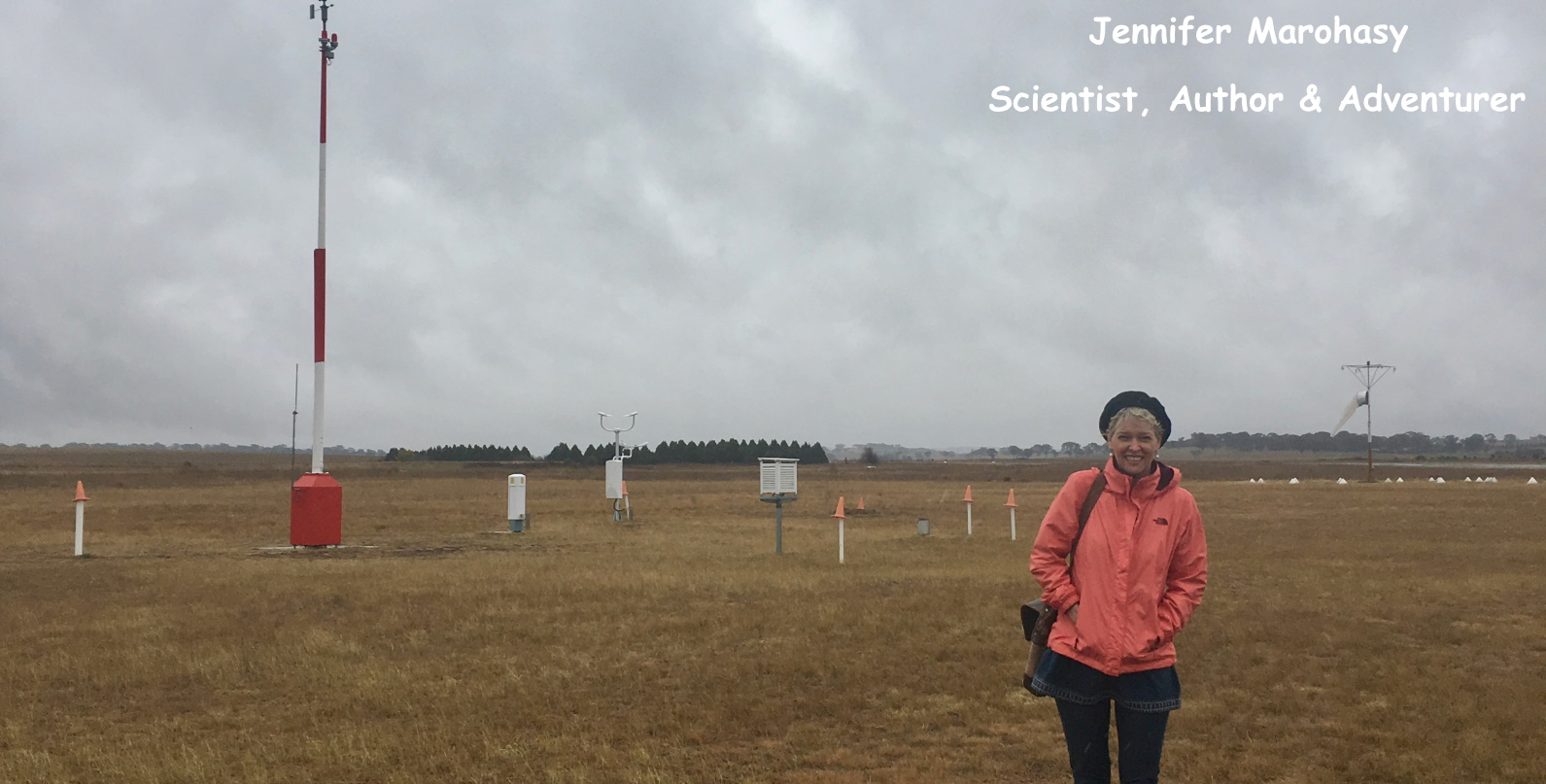
Jennifer Marohasy Jennifer Marohasy BSc PhD has worked in industry and government. She is currently researching a novel technique for long-range weather forecasting funded by the B. Macfie Family Foundation. Read more

Subscribe For News Updates

Subscribe Me

Contact Me

To get in touch with Jennifer call 0418873222 or international call +61418873222.

Email: jennifermarohasy at gmail.com

Connect With Me

  • Facebook
  • LinkedIn
  • RSS
  • Twitter
  • YouTube

Copyright © 2014 - 2018 Jennifer Marohasy. All rights reserved. | Legal

Website by 46digital