• Skip to primary navigation
  • Skip to main content
  • Skip to primary sidebar
  • Skip to footer
Jennifer Marohasy

Jennifer Marohasy

a forum for the discussion of issues concerning the natural environment

  • Home
  • About
  • Publications
  • Speaker
  • Blog
  • Temperatures
  • Coral Reefs
  • Contact
  • Subscribe

Fishing

Shark Baiting Already a Reality in Queensland

January 25, 2014 By jennifer

THERE has been much commotion in the Australian media about the Western Australian government’s plans to introduce drum lines to cull an increasing shark population.

While the ABC has been interviewing experts from around the world about the potential impact of this program on shark populations, I’m yet to hear any mention of the current program that has been in place for decades now off the east coast of Australia.

Indeed just off Lammermoor Beach, near where I live some of the time in central Queensland, you can see yellow plastic floats. They are attached to chains with large hooks and fresh meat designed to lure and kill sharks. yellow float with text

The local paper proudly announces the kill at the end of each year. A total of 111 sharks were caught off the combined Capricorn Coast beaches of central Queensland in 2013. The breakdown is as follows:
43 bull whalers
23 long-nose whalers
18 tiger sharks
12 blacktip reef whalers
9 spot-tail whalers
3 great hammerheads
2 sandbar whalers
1 bronze whaler

I often walk along Lammermoor Beach but I don’t much swim there. I find the yellow plastic floats off-putting, along with the stingers, stingrays, and I worry about encountering a wandering crocodile. In fact very few people swim at Lammermoor beach so I wonder why they even bother with the baiting program?

The history of the Queensland program is detailed here:

“The Queensland (QLD) Shark Control Program was introduced to the Gold Coast, Sunshine Coast and Cairns in 1962 and was extended to include Townsville and Mackay in 1963. Since then, the Program has been extended to include Rockhampton (Capricorn Coast) (1969), Bundaberg (1973), Rainbow Beach (1974), Tannum Sands (1983) and Point Lookout (1984) (QLD DPI, 2003). There have been frequent changes to the location and configuration of shark control equipment (mesh nets and drum lines) within each of these areas since the Queensland Shark Control Program was implemented in 1962 (Anon, 1998). The most recent major change to the configuration of shark control equipment occurred in 1992 and 1993, following a review of the operation and maintenance of shark meshing equipment in Queensland (Anon, 1992). In 1992 and 1993, mesh nets were replaced with drum lines in many areas, in order to reduce the catch of non-target marine species, such as dugongs, dolphins and whales.

In Queensland, mesh nets and/or drum lines are currently used on 84 beaches, within 10 districts (known as contract areas). The Queensland Government reports that a total of 338 drum lines are deployed across the 10 contract areas and a total of 37 mesh nets are deployed across 5 contract areas (Cairns, Mackay, Rainbow Beach, Sunshine Coast and Gold Coast). Nets are replaced with drum lines during whale migration and turtle seasons in some areas (Anon, 1998). In Queensland, shark control equipment remains in the water the entire year round, except in Cairns and Rockhampton (Capricorn Coast) where equipment is seasonally removed (Anon,1998; Queensland Shark Control Program). Each piece of equipment used in the Shark Control Program is serviced every second day, weather permitting (QLD DPI, 2003). Regular servicing of equipment means that non-target marine species caught on shark control equipment are more likely to be released alive.”

***
Picture of Lammermoor beach with yellow float taken sometime over the last year.
Filed Under: Information Tagged With: Fishing

Fishing Lobby Trumps Murray Cod Recovery (The Native Fish Strategy for the Murray Darling Ten Years On: Part 3)

June 18, 2013 By jennifer

THE key recommendation in the Native Fish Strategy for the Murray Darling Basin 2003-2013 – a document developed by the Murray Darling Basin Commission, (MDBC) and adopted by the Murray Darling Basin Authority (MDBA) – was the need to address the issue of cold water pollution in particular from the Hume dam.

The strategy, published ten years ago, includes comment that cold-water pollution abatement is a “clearly definable, tangible, cost-effective intervention” that can be completed for the major storages in the Murray Darling Basin within ten years, through a combination of engineering and operating changes. The strategy was to run from 2003 to 2013 with the objective of returning native fish to 60 per cent of their pre-European levels.

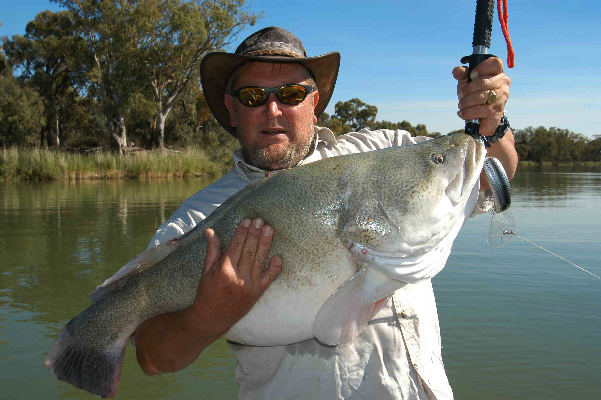
Hume Dam, like most of the dams throughout the Murray Darling, have outlets for irrigation positioned at depth, so water release occurs as a jet of cold water. Releases are typically made in spring and this is the same time Murray cod and other native fish like to spawn. Murray Cod Wikipedia

[Read more…] about Fishing Lobby Trumps Murray Cod Recovery (The Native Fish Strategy for the Murray Darling Ten Years On: Part 3)

Filed Under: Information, News, Opinion Tagged With: Fishing

The Native Fish Strategy for the Murray Darling Ten Years On (Part 2)

June 8, 2013 By jennifer

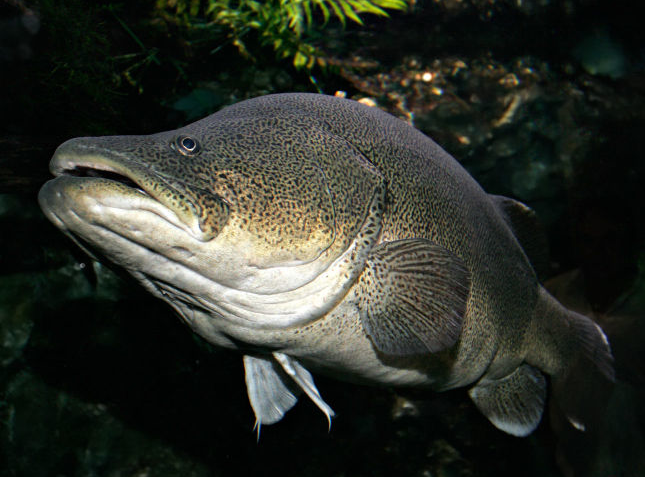
HUNDREDS of millions of dollars have been spent on fishways, resnagging, riparian revegetation, not to mention the billions for water buyback, all recommendations of the Native Fish Strategy for the Murray Darling Basin 2003-2013 [1]. Those who implemented the program, however, claim no progress, in particular that numbers of Murray cod are still in decline [2]. Murray Cod

Interestingly there has been no review of the program of works over the last ten years against the original recommendations in the strategy. Yet such a review could throw light on why, despite all the money spent, Murray cod numbers are still apparently in decline.

[Read more…] about The Native Fish Strategy for the Murray Darling Ten Years On (Part 2)

Filed Under: Information Tagged With: Fishing, Murray River

The Native Fish Strategy for the Murray Darling Ten Years On (Part 1)

June 6, 2013 By jennifer

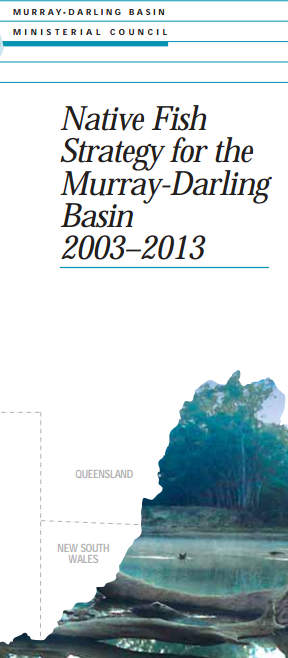
IT is ten years since the launch of the ‘Native Fish Strategy for the Murray Darling Basin 2003-2013’ [1]. Hundreds of millions of dollars have been spent on the program including to re-snag the main channel of the Murray River with microchip embedded logs, building fish-ways and of course returning hundred of gigalitres of water. All of these initiatives should have helped restore populations of native fish, the objective of The Strategy. Native Fish Strategy Cover

In January I asked the Murray Darling Basin Authority, MDBA, if there would be a formal assessment of the effectiveness of The Strategy ten years on. It was suggested that I consult Edition 34 of RipRap, a publication of the Australian River Restoration Centre dedicated to highlighting many of the achievements of The Strategy. [Read more…] about The Native Fish Strategy for the Murray Darling Ten Years On (Part 1)

Filed Under: Information Tagged With: Fishing, Murray River

How Scientific Ideas Become Fashionable (Part 2)

July 29, 2012 By jennifer

MICHAEL Crichton wrote the Oscar-winning science fiction adventure Jurassic Park. But screen writing was not his first career, he studied medicine at Harvard, and later in life became very concerned about environmentalism and science, and the difficulty of sorting fact from fiction. In a lecture to the Commonwealth Club in San Francisco in September 2003 he said:

“The greatest challenge facing mankind is the challenge of distinguishing reality from fantasy, truth from propaganda. Perceiving the truth has always been a challenge to mankind, but in the information age (or as I think of it, the disinformation age) it takes on a special urgency and importance.”

For sure every day we are bombarded with information from the internet, radio and television and making sense of it can be difficult.

Scientists are meant to know the difference between fact and fiction and as a first check of the reliability of a source of information they will often ask if it has been “peer-reviewed”. Peer-review means that research findings are conducted and presented to a standard that other scientists working within that field consider acceptable. This is normally achieved through publication in a scientific journal and involves the editor of the journal asking for comment on the validity, significance and originality of the work from other scientists before publication. In short, the system of peer-review means scientific research is subject to independent scrutiny but it doesn’t guarantee the truth of the research finding.

In theory rebuttals play an equal or more important role than peer review in guaranteeing the integrity of science. By rebuttals I mean articles, also in peer-reviewed journals, that show by means of contrary evidence and argument, that an earlier claim was false. By pointing out flaws in scientific papers that have passed peer-review, rebuttals, at least theoretically, enable scientific research programs to self-correct. But in reality most rebuttals are totally ignored and so fashionable ideas often persist even when they have been disproven.

[Read more…] about How Scientific Ideas Become Fashionable (Part 2)

Filed Under: Information, Opinion Tagged With: Fishing, Philosophy

Time to Investigate ‘Green’ Media Spin: Mark Poynter

March 26, 2012 By Mark Poynter

BIASED media coverage of natural resource use issues should be fertile ground for the ABC’s Media Watch, but despite efforts to draw their attention to this have displayed little or no inclination to cover it in the past. Then again, as some of the worst examples of biased coverage of environmental issues have emanated from the ABC, this is perhaps not so surprising.

Most notably, the double-episode of the ABC’s Australian Story – ‘Something in the Water’ in February 2010 – springs to mind. It claimed that eucalypt plantations occupying just 4% of a Tasmanian town’s water catchment were toxic to humans, animals, and marine life. Screened just 3-weeks before the Tasmanian state election, the program sparked a controversy that was not backed by credible science yet resulted in the unseating of the government’s Health Minister and quite likely contributed to the formation of the current Labor-Greens minority government which has a distinctly anti-forestry agenda.

If the ABC is to ever rid itself of the perception that it caters to a primarily Green-Left audience, its supposedly independent investigative journalists need to start examining the excesses of mainstream environmentalism and the damage it is doing both to the wider environment and regional and rural communities. A good start would be for Media Watch to investigate arguably the most prominent form of media spin which is seen on an almost daily basis – that is the coverage of natural resource usage promulgated at the behest of mainstream environmental groups.

Read more here: http://www.onlineopinion.com.au/view.asp?article=13417

Filed Under: Information, Opinion Tagged With: Australian Broadcasting Corporation, Fishing, Forestry

  • Go to page 1
  • Go to page 2
  • Go to page 3
  • Interim pages omitted …
  • Go to page 7
  • Go to Next Page »

Primary Sidebar

Recent Comments

  • Ian Thomson on Vax-ed as Sick as Unvax-ed, Amongst My Friends
  • Dave Ross on Vax-ed as Sick as Unvax-ed, Amongst My Friends
  • Dave Ross on Vax-ed as Sick as Unvax-ed, Amongst My Friends
  • Alex on Incarceration Nation: Frightened of Ivermectin, and Dihydrogen monoxide
  • Wilhelm Grimm III on Incarceration Nation: Frightened of Ivermectin, and Dihydrogen monoxide

Subscribe For News Updates

  • This field is for validation purposes and should be left unchanged.

December 2025
M T W T F S S
1234567
891011121314
15161718192021
22232425262728
293031  
« Jan    

Archives

Footer

About Me

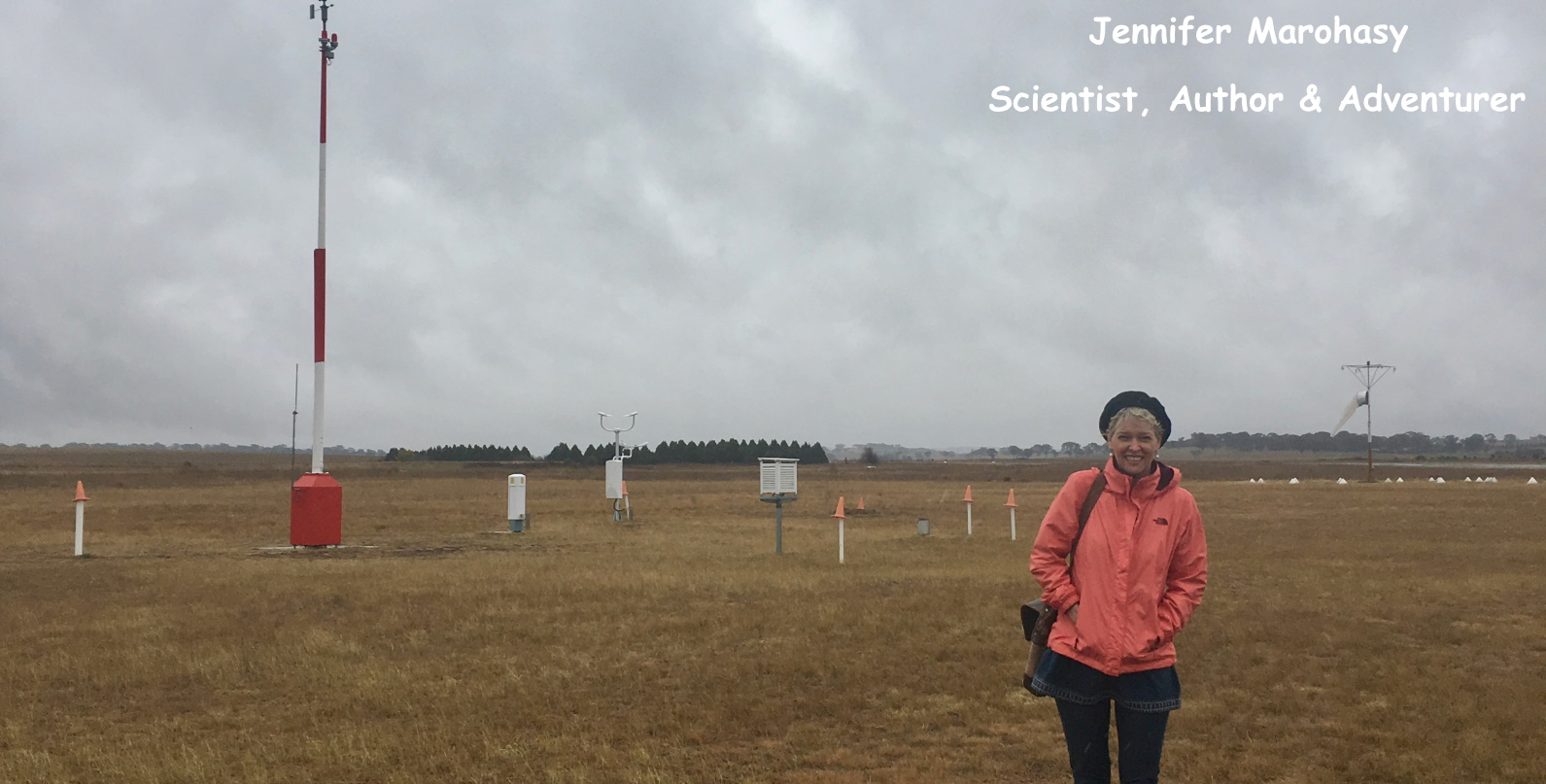
Jennifer Marohasy Jennifer Marohasy BSc PhD has worked in industry and government. She is currently researching a novel technique for long-range weather forecasting funded by the B. Macfie Family Foundation. Read more

Subscribe For News Updates

Subscribe Me

Contact Me

To get in touch with Jennifer call 0418873222 or international call +61418873222.

Email: jennifermarohasy at gmail.com

Connect With Me

  • Facebook
  • LinkedIn
  • RSS
  • Twitter
  • YouTube

Copyright © 2014 - 2018 Jennifer Marohasy. All rights reserved. | Legal

Website by 46digital