• Skip to primary navigation
  • Skip to main content
  • Skip to primary sidebar
  • Skip to footer
Jennifer Marohasy

Jennifer Marohasy

a forum for the discussion of issues concerning the natural environment

  • Home
  • About
  • Publications
  • Speaker
  • Blog
  • Temperatures
  • Coral Reefs
  • Contact
  • Subscribe

Energy & Nuclear

Massive Wind Farm Plan Blown Away

April 21, 2008 By Paul

Plans to construct one of Europe’s largest onshore wind farms has been refused by the Scottish Government.

It said Lewis Wind Power’s (LWP) 181-turbines for Lewis on the Western Isles did not comply with European law protecting sensitive environments.

The scheme had the backing of the local authority and business, but attracted almost 11,000 objections.

BBC News website: Massive wind energy plan refused

Filed Under: Uncategorized Tagged With: Energy & Nuclear

European Commission Cut from Reality? PR from Bellamy and Duchamp

April 20, 2008 By Paul

Three cheers ! At last the peddlers of doom have seen the light : bio-fuels do displace food crops and rain forests !
Starving the poor and destroying biodiversity to give us good conscience as we pour cereal-based ethanol into our tanks is not a smart thing to do. Even Greenpeace admitted it, while avoiding to mention they had much to do with that fiasco.

But Eurocrats are not as smart : “there is no question for now of suspending the target fixed for bio-fuels,” said Barbara Helfferich, spokeswoman for EU Environment Commissioner Stavros Dimas (1).
– In other words, they’d rather cause starvation, and destroy rain forests, than admit they goofed.

Their rationale boggles the mind : “you can’t change a political objective without risking a debate on all the other objectives,” which could see the EU climate change and energy package disintegrate, an EU official said (1).
– It is all very clear : allowing a debate on public policy is what the European Commission fears most ; more than starvation in poor countries, more than widespread destruction of biodiversity, and more than economic havoc caused by their cherished “climate change” policy.

Will we, Europeans, tolerate this neo-stalinist behaviour ? It is not just a matter of bureaucratic arrogance : this time it has become obvious that we are dealing with dangerous lunatics.

The Eurocrats have everything to lose if they stick to their smoking guns any longer. A debate is dearly needed on everything they’ve been doing wrong, from bio-fuels to carbon trading, and from climate change hysteria to the destruction of peat and designated areas by expensive and redundant windfarms.

(1) http://news.yahoo.com/s/afp/20080414/sc_afp/euunfarmpovertyenergypoliticsbiofuel_080414143918

European Commission cut from reality ?

Co-signed on April 20th 2008 by :

Professor David Bellamy
and Mark Duchamp

Filed Under: Uncategorized Tagged With: Energy & Nuclear

Republicans Ask for Investigation Into Carbon Offset Programs

April 18, 2008 By jennifer

WASHINGTON – Two top Republicans on the House Energy and Commerce Committee today asked committee Chairman John Dingell, D-Mich., and U.S. Rep. Bart Stupak, D-Mich., to open an investigation into carbon offset programs.

U.S. Reps. Joe Barton, R-Texas, ranking member of the House Energy and Commerce Committee, and John Shimkus, R-Ill., ranking member of the Oversight and Investigations Subcommittee, asked Dingell and Stupak, chairman of the Oversight and Investigations Subcommittee, to investigate various aspects of the programs, focusing on the lack of oversight in offset marketing schemes.

Recent reporting in The Wall Street Journal indicates that the fast-growing market for carbon offset programs may be producing little real gain in greenhouse gas reduction.

“A key concern is carbon ‘offsets’ that would have happened anyway are being sold as additional reductions, undercutting the whole point of the program,” Barton and Shimkus wrote. “If this is the case, the only additional greening taking place may be in the bank accounts of the people selling the offsets.”

A copy of the letter to Dingell and Stupak can be found here: http://republicans.energycommerce.house.gov/Media/File/News/041708_Carbon_Offset_Investigation.pdf

LInk and press release via Marc Morano. Thanks.

Filed Under: Uncategorized Tagged With: Energy & Nuclear

Birmingham University Opens England’s Only Hydrogen Fuelling Station

April 17, 2008 By Paul

The University of Birmingham will unveil the only hydrogen gas fuelling station in England on its Edgbaston campus on Thursday 17 April 2008 at 11.30am.

Press Release: Fuel for Thought: University Opens England’s Only Hydrogen Fuelling Station

Watch the Video report on the BBC News wesite: Hydrogen car filling station

The Air Products Series 100 fuelling station is situated at the University’s Department of Chemical Engineering where research projects are being carried out to ascertain the viability of hydrogen in transport applications as part of Birmingham’s Science City hydrogen energy project.

Birmingham engineers will be comparing five hydrogen powered vehicles with the University’s own fleet of petrol, diesel and pure ‘electric’ vehicles so that they can learn more about their efficiency and performance. The researchers will determine how these vehicles need to be adapted in order to make hydrogen an attractive and cost effective option as a future fuel.

As a direct result of this research it is hoped that the public sector will start to buy into these new technologies, providing support to companies in the supply chain who are moving from the technology demonstration phase into the early stages of commercialisation.

The Series 100 station has been specially designed by Air Products, a leading producer and supplier of hydrogen with over 50 years experience in hydrogen applications, to meet the fuelling needs of the first hydrogen vehicles to appear on the roads. The fueller comprises an integrated compression, hydrogen storage and dispensing system, and is optimised to fuel up to approximately six vehicles per day. Minimal onsite utilities are required for the fueller, which can be easily moved from site to site, making it ideal for hydrogen fuelling start up stations.

Professor Kevin Kendall, lead investigator from the University’s Department of Chemical Engineering, says, ‘We are delighted to be the home of England’s only hydrogen gas filling station. It is absolutely necessary that we have the means to refuel our fleet of hydrogen powered cars so that we can carry out our research project into the feasibility of hydrogen in a transport context.’

Ian Williamson, Hydrogen Energy Systems Director, Europe, Middle East and Africa from Air Products says, ‘We are extremely proud to provide the first hydrogen fuelling station to a UK university. Air Products is the market leader in the development of hydrogen fuelling stations. We have already installed 21 mobile fuellers and built more than 80 stations worldwide. Over 50,000 vehicle fuellings have already safely taken place thanks to Air Products technology.’

Dr Bruno Pollet, from the University’s Fuel Cells Group says, ‘We are starting to take the necessary steps to gear up towards a hydrogen and fuel cell infrastructure, so it is essential, now, that we begin to develop a supply chain of businesses which can generate jobs and growth in these new technologies. Hydrogen powered vehicles will help to create new working partnerships and to bring about a sense of cohesion among those already working in the industry.’

Dr Waldemar Bujalski of the University’s Fuel Cell Group says, ‘We fully appreciate the initial capital investment from Advantage West Midlands which has enabled us to expand the scope of our long standing activities in the hydrogen and fuel cell research areas. This investment was crucial for securing further funds from a variety of sources for establishing and maintaining the necessary manpower and resources to carry out this exciting research.’

The research is part of the hydrogen energy project which has received funding from Regional Development Agency Advantage West Midlands to develop the use of hydrogen energy as a green fuel in collaboration with the University of Warwick. The project has been approved as part of the Science City Initiative.

Ends

Notes to Editors

The event will start at 11.30am at will take place at the Department of Chemical Engineering on the University of Birmingham’s Edgbaston campus. If you would like to send a representative to the launch please contact Kate Chapple, Press Officer, University of Birmingham, tel 0121 414 2772 or 07789 921164 or email: k.h.chapple@bham.ac.uk

1. Hydrogen Supply for the filling station

The hydrogen comes from Green Gases Ltd. The hydrogen is produced by ‘green’ means – therefore it is manufactured from renewable energy, resulting in a considerable reduction in greenhouse gas emissions when compared with conventionally produced hydrogen – http://www.green-gases.com/index.htm

2. Microcab

Five hydrogen powered vehicles have been purchased by the University from Microcab Industries Limited. The Microcab is the product of entrepreneur John Jostins who visualised a small, urban vehicle with zero emissions suitable for use as a taxi or light freight carrier – the result is a vehicle powered by a hydrogen fuel cell, pollution free and virtually silent in operation. The only emission is water. It weighs 500kg and has a maximum speed of 40mph with a range, on a full hydrogen tank, of approximately 160km (100miles).

3. Air Products

Air Products (NYSE:APD) serves customers in industrial, energy, technology and healthcare markets worldwide with a unique portfolio of atmospheric gases, process and specialty gases, performance materials, and equipment and services. Founded in 1940, Air Products has built leading positions in key growth markets such as semiconductor materials, refinery hydrogen, home healthcare services, natural gas liquefaction, and advanced coatings and adhesives. The company is recognized for its innovative culture, operational excellence and commitment to safety and the environment. Air Products has annual revenues of $10 billion, operations in over 40 countries, and 22,000 employees around the globe. For more information, visit www.airproducts.com.

For further information about Air Products and the fueller contact Guenaelle Holloway on 01932 249245. Email: hollowg1@airproducts.com

4. Birmingham Science City

Birmingham Science City is a widely drawn partnership of industry, business, education and the public sector, working together to establish the West Midlands region as a centre for world-class scientific research. By building on the region’s well established reputation for innovation, working closely with the knowledge base and bringing partners together through supported projects and communications, Birmingham Science City aims to promote the value of science and innovation in improving Quality of Life.

For more information please visit www.birminghamsciencecity.co.uk

5. University of Birmingham Fuel Cell Group

The Fuel Cell Group was set up in 2000 in the Department of Chemical Engineering by Professor Kevin Kendall who jointly, with Dr Waldemar Bujalski and Dr Bruno Pollet, is leading the research projects in hydrogen vehicles and Combined Heat and Power systems stemming from a range of AWM funding including the Science City initiative.

6. Hydrogen hybrid canal boat

A zero-emission hydrogen hybrid canal boat has also been developed by engineers at the University of Birmingham and was unveiled in September 2007. The boat is fully operational and demonstrates how a combination of magnet and fuel cell technologies could be used to power inland waterways craft.

For further information

Kate Chapple, Press Officer, University of Birmingham, tel 0121 414 2772 or 07789 921164.

Filed Under: Uncategorized Tagged With: Energy & Nuclear

Re-examine Kyoto Commitment: Eric Anning to Australia’s 2020 Summit

April 16, 2008 By jennifer

This weekend one thousand of Australia’s best and brightest will gather in Canberra, the national capital, to consider the challenges facing us over the next decade. There is a website dedicated to the 2020 Summit and Prime Minister Rudd has asked that ordinary Australians contribute:

“The new century has thrown up enormous challenges, as well as breathtaking opportunities. The ground rules of economic success are being re-written with the rise of nations like China and India. New technologies are continuing to transform our work lives, our social lives and everything from health care to entertainment. Our own society is changing rapidly as well as we live longer and expect greater fulfilment in our older years.

“I invite all Australians to contribute their ideas as we look ahead to how Australia will tackle all these challenges. This website is a great way for you to have input to how we plan for our common future.

If we want to shape the kind of nation Australia will be in 2020, the work needs to start now. There are few limits to Australia’s future potential – now is the time to start turning our nation’s potential into a reality.”

Ten topics will be addressed by delegates including ‘Sustainability and Climate Change’:

“How hot will our weather be? How will we defend against the effects of more tropical cyclones, bushfires, and other extreme events?

“How will we secure our water supply? What sort of land management techniques will be required to keep farms viable? How will climate change affect our ability to enjoy the same huge range of fresh food we do now?”

Eric T. Anning has made a submission to the summit on this topic. Here it is:

BACKGROUND

Writer: The writer is a 69 year old retired Brisbane lawyer (LLB from UQ and former senior partner of the legal firm of Feez Ruthning- now Allens Arthur Robinson) with two adult children and one grandson, all living in Australia. He is concerned with what may be the financial effect of the commitment to Kyoto for the Australia in which his children and grand children will live – an Australia with a lower standard of living because of compliance with Kyoto.

Lucky Country no more: One of the reasons that Australia is known as the lucky country is because of its huge reserves of fossil fuels. Cheap electricity and gas benefit its inhabitants and its industrial corporations. Great wealth is derived from its export of coal and gas. All this will change permanently if the Australian Government abandons Australia’s current competitive edge over those countries without fossil fuels. The end result of Kyoto will be that our reserves of fossil fuels will be worth much less than at present.

Global warming/Climate Change: The writer understands that what is popularly referred to as global warming/climate change refers to the alleged increase in the surface temperature of the earth, and that this alleged increase is being caused by human activities producing carbon dioxide (CO2), methane, and nitrous oxide, mainly from the burning of fossil fuels. According to catastrophists, this alleged inevitable temperature increase will guarantee disaster for future generations unless these human emissions are significantly decreased.

CO2: Carbon dioxide is not a toxin and is essential for plant life on Earth, because it is used by plants during photosynthesis: carbon dioxide, water and sunlight combine to feed the plants which emit oxygen which sustains human life. Without this, all life on Earth would end. Richard Lindzen (Professor of Meteorology at the Massachusetts Institute of Technology and a member of the National Academy of Sciences (USA) panel on climate change) says that CO2 does not play a significant role in global warming and that a doubling of CO2 in the atmosphere would produce a temperature increase of only one degree Celsius. Lindzen is only one of many prominent scientists who hold this view.

Kyoto Protocol commitment: Based on several reports by the Intergovernmental Panel on Climate Change (IPCC), the Kyoto Protocol was established, with signatory nations committing to a reduction in the emission of six greenhouse gases including a reduction in the quantity of CO2 created. The Australian Government has committed to set a target to reduce such emissions by 60% on 2000 levels by 2050.

Loss of democratic rights: The Kyoto Protocol is being administered by the United Nations (UN).The UN does not have a good track record for either efficiency or fairness to western countries. How many of our democratic rights will we lose as a result of submitting to the UN? Will a small country like Australia be treated fairly?

Belief Cult v Science: There is a natural desire on the part of many people in the prosperous western world to want to believe that over-consumption is causing harm. However, while they rightly dislike too much packaging, litter, waterways polluted with heavy metals, and unclean air, they would be horrified if their electricity was turned off for any length of time, and they were not permitted to use motor vehicles or aircraft. They are simply not aware that these things are probable if the Kyoto protocol is followed. The “CO2 causes global warming” belief cult is expanding its influence exponentially. People join the cult, not because they are scientifically informed, but to gain social acceptance from their peers. Many of the people who “believe” simply do not have any understanding of the sciences involved.

Electricity Production: This is thought to account for approx 35% of Australia’s CO2 emissions. There have been various suggestions about how the demand for electricity will grow and how the cost of reducing the CO2 emissions from power stations fired by coal or gas and/or converting to alternative energy sources can be calculated, although I am yet to see a definitive paper produced by eminent scientists and economists. But the figures being suggested are frightening: these costs will not only lower the standard of living of Australians, but if applied to the developing countries, will not allow these populations, who for millennia have suffered short lives and a low standard of living, the chance of a much improved existence. In any case, making electricity more expensive would affect the competitiveness and profitability of Australian industries, leading to fewer jobs, less Government revenue from taxation, power shortages/restrictions, and transport restrictions – a lower standard of living. In the end, compliance with Kyoto will lower Australia’s export income from coal and gas.

Opponents of IPCC reports: There is a view among a large number of eminent scientists that the IPCC findings on climate change and projections for the next 50-100 years are flawed (e.g. 100 scientists’ letter to United Nations dated December 2007). They say that in the last 100 years they see no significant sign of man-induced global warming, and that while there has been surface warming of about 0.6 degrees Celsius, this is far below customary natural swings in surface temperatures. They further say that the first area to heat under the “greenhouse gas effect” should be the lower atmosphere, but highly accurate data has shown slight cooling in the Southern Hemisphere and only a modest increase in the Northern Hemisphere. They opine that it is impossible for mankind to prevent climate change which is a natural phenomenon.

Dr Ian Plimer: One of such sceptical scientists. Dr. Ian Plimer is Professor of Mining Geology at the Adelaide University and Emeritus Professor of Earth Sciences, The Melbourne University. In March 2008, he presented a paper titled Global Warming and Uranium- a green dilemma. One may view his presentation on the internet by clicking on www.brr.com.au/event/43876. It is best to scroll down through the Powerpoint slides while listening to his audio presentation. For me, Dr Plimer’s address dispelled a number of myths while making some basic points:

• CO2 is a small part of the total greenhouse gases, which are comprised of water vapour (96%) with CO2, methane, nitrous oxide and miscellaneous gases making up the other 4%. Man-made water vapour accounts for only 0.001% of the overall total, and man-made CO2 a tiny 0.117% of the total.

• There were periods before the Industrial Revolution in the 1800s when there was far more CO2 in the atmosphere than now (up to 5% compared to 0.037% at present).

• CO2 comes principally from volcanoes, earthquakes, the pulling apart of the ocean floor, formation of mountains, hot flushes of magma from the earth’s core with the massive and constant shifting of tectonic plates, ocean degassing, life in general, and the huge field of comet debris dumped continuously in the upper atmosphere – HUMAN CONTRIBUTION IS MINISCULE.

• The twentieth Century and early 21st Century AD are times of natural post-glacial rebound. Ice sheets, a rare phenomenon in the history of time, still exist. Sea level is relatively low, as are global temperatures and atmospheric CO2. Between 1920 and 1945, there was a period of warming (+0.37°C) and another that commenced in 1976 (+0.32°C). In 1976-1977, global temperatures in the lower atmosphere increased by 0.3°C, and the sea surface temperature in the equatorial Pacific rose by 0.6°C. However, this and other phenomena including increased activity in the North Sea and a slight change in the historical length of day have now been known to coincide with an acknowledged change in the Earth’s elliptical path around the Sun. To put such measurements into perspective over the history of time, those changes in atmospheric temperature in the 20th Century can only be considered small and slow. A 24 year global coverage of satellite atmosphere temperatures shows only modest warming in the Northern Hemisphere and a slight cooling in the Southern Hemisphere. Temperature measurements from balloons agree with the satellite measurements for the period of overlap. Because greenhouse warming is a phenomenon of the atmosphere, significant changes should have been recorded. They have not.

• To prevent climate change one would need to either stop continents moving, the shape of the seafloor from changing, the movement of tectonic plates, mountains forming, volcanoes belching out greenhouse gases and dust, hot flushes of gas rising from the Earth’s core; bacteria; comets breaking up in the upper atmosphere; changes in the earth’s orbit; cycles of energy changes from the sun and/or the to change the galactic track of the solar system; the doses of radiation hitting earth from outer space.

AUSTRALIA – WHY

Australia produces less than 2% of worldwide man-made CO2. Any action we take would, even if the IPCC is right, have little effect world-wide. Big CO2 emitting countries such as China, India, and USA are not committed to the Kyoto Protocol and in the case of China and India will not be so committed for a long time, if ever. Even if it was true that humans were contributing significantly to global warming, cessation of all human activity in Australia would make no difference to the planet as a whole. Why then should we continue to take any steps which would harm our economy and the future of our children?

Why should Australia abandon its competitive edge and cede sovereignty to the UN?

Wouldn’t Australia be better off to forget Kyoto and to build up its Future Fund to be better able to adapt to climate change conditions which might arise in the future?

CONCLUSION

Before the Australian Government proceeds towards compliance with the Kyoto protocol, it must be sure beyond reasonable doubt that the scientific argument behind the Kyoto Protocol is sound, because a policy that deliberately lowers the standard of living is a very serious matter for its citizens, and for others affected, especially those in developing countries where basic items will cost more.

The only way to do this is for the Australian Government to set up its own high profile and highly publicised commission (comprising principally climate scientists but supported by statisticians and economists) to re-examine the question and give it an intense level of scrutiny. It must be composed of climate scientists of all opinions- proposers of the theory, naysayers, and also those who are undecided. The arguments should be debated publicly, published in newspapers and aired on radio and television, so that the Australian community can be informed about the arguments from both sides.

The expense will be worthwhile because Australia has so much to lose.

Filed Under: Uncategorized Tagged With: Energy & Nuclear, Reports, Conferences

Fishing Worry Over Giant Wind Farm Plan

April 9, 2008 By Paul

The so called Humber Gateway Offshore Wind Farm would consist of around 83 turbines in some of the richest fishing grounds in the North Sea. Supporters says the wind farm is capable of generating enough electricity to power the likes of Grimsby or Hull.

But Nikki Hale, chief executive of the Eastern England Fish Producers, which has members covering an area from Scotland to Essex, said the plan was being viewed with increasing alarm by trawler crews and owners of smaller fishing vessels. She was worried that the plan would adversely affect fishing activity.

FISHupdate.com: ‘Fishing alarm as giant wind farm plan goes ahead’

Filed Under: Uncategorized Tagged With: Energy & Nuclear

  • « Go to Previous Page
  • Go to page 1
  • Interim pages omitted …
  • Go to page 12
  • Go to page 13
  • Go to page 14
  • Go to page 15
  • Go to page 16
  • Interim pages omitted …
  • Go to page 32
  • Go to Next Page »

Primary Sidebar

Recent Comments

  • Ian Thomson on Vax-ed as Sick as Unvax-ed, Amongst My Friends
  • Dave Ross on Vax-ed as Sick as Unvax-ed, Amongst My Friends
  • Dave Ross on Vax-ed as Sick as Unvax-ed, Amongst My Friends
  • Alex on Incarceration Nation: Frightened of Ivermectin, and Dihydrogen monoxide
  • Wilhelm Grimm III on Incarceration Nation: Frightened of Ivermectin, and Dihydrogen monoxide

Subscribe For News Updates

  • This field is for validation purposes and should be left unchanged.

November 2025
M T W T F S S
 12
3456789
10111213141516
17181920212223
24252627282930
« Jan    

Archives

Footer

About Me

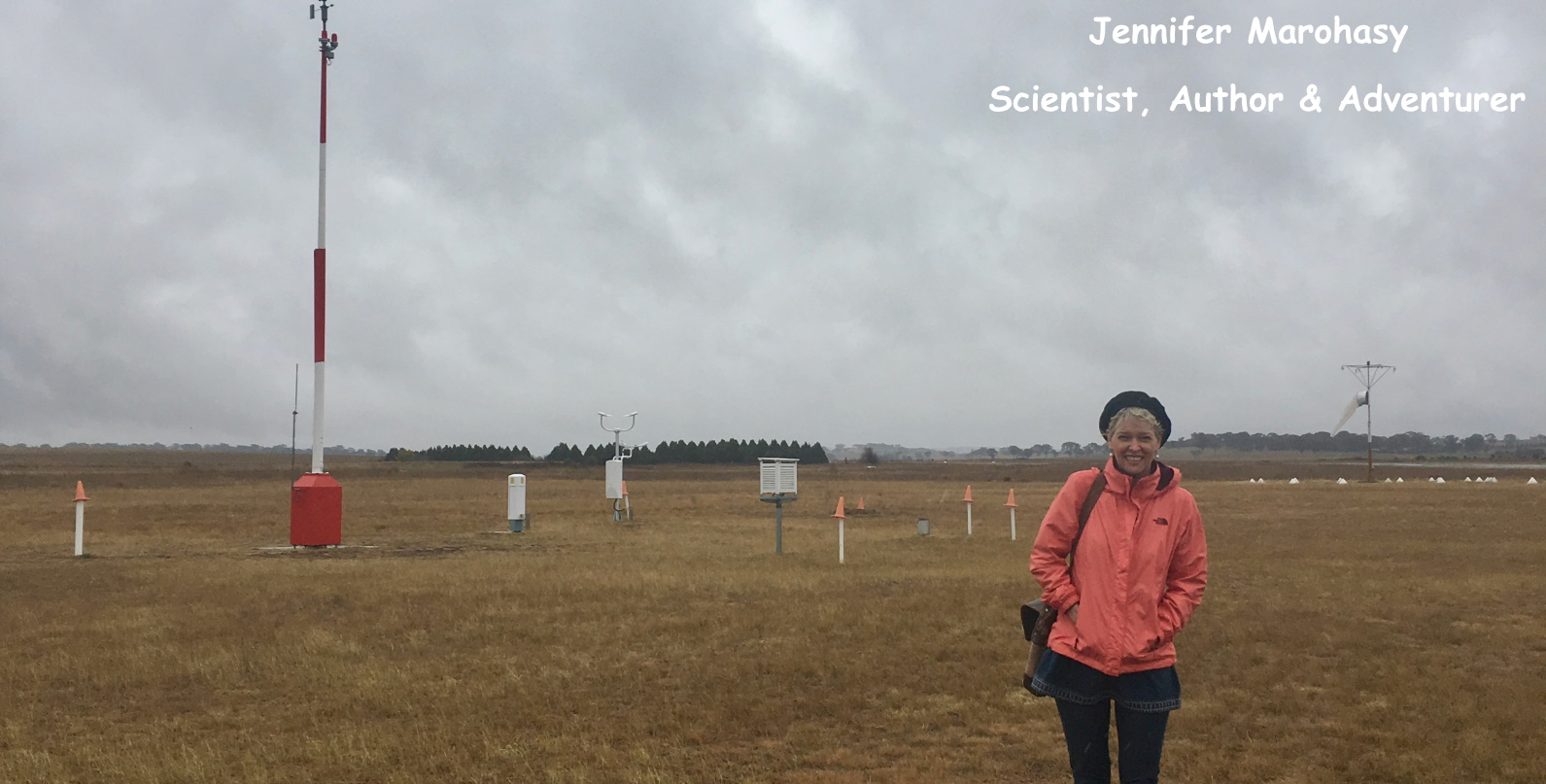
Jennifer Marohasy Jennifer Marohasy BSc PhD has worked in industry and government. She is currently researching a novel technique for long-range weather forecasting funded by the B. Macfie Family Foundation. Read more

Subscribe For News Updates

Subscribe Me

Contact Me

To get in touch with Jennifer call 0418873222 or international call +61418873222.

Email: jennifermarohasy at gmail.com

Connect With Me

  • Facebook
  • LinkedIn
  • RSS
  • Twitter
  • YouTube

Copyright © 2014 - 2018 Jennifer Marohasy. All rights reserved. | Legal

Website by 46digital