• Skip to primary navigation
  • Skip to main content
  • Skip to primary sidebar
  • Skip to footer
Jennifer Marohasy

Jennifer Marohasy

a forum for the discussion of issues concerning the natural environment

  • Home
  • About
  • Publications
  • Speaker
  • Blog
  • Temperatures
  • Coral Reefs
  • Contact
  • Subscribe

Blog

Asking for a FairGo for Live Export: Scot Braithwaite

June 12, 2011 By jennifer

My name is Scot Braithwaite and my life has basically revolved around live export since I was 10 years old. I was unloading cattle boats in Malaysia at the age of 13. I have worked for all the major cattle companies including as a Head Stockman in the Northern Territory. I have a degree in economics from the Queensland University and I personally have sold more than 1.5 million head of cattle into Indonesia since 1991. I am presently employed as the marketing manager for Wellard rural exports.

I am writing to you after the ABC 4 Corners Television program to say that although I abhor the treatment of the animals shown in the video, your one sided approach to the subject and the possible effect of that of a ban on live exports is too big a price to pay for a report based on the evidence of an organization that’s charter is to shut us down. I have the following points to make. I would like to have the same time as those who denigrated my life to show you the other side of our industry. To show you what is really going on. In Australia there used to be thing about “A fair Go”. You have gone with images provided by one person followed up by your investigative journalist who spent a week in Indonesia. Your report makes out that close to 100% of Australian cattle are treated as was shown on TV.

The ship that appears in the footage “for less than 30 seconds” is a vessel that cost tens of millions of dollars to build. We have had 3 separate media groups sail with this ship and it can in no uncertain terms be described as best in class. The Wellard group has another 3 vessels of the same standard with another 2 being built in China. This is a total investment of 400 million dollars to ensure that livestock exports from Australia are undertaken at the utmost levels of cow comfort and animal welfare.

[Read more…] about Asking for a FairGo for Live Export: Scot Braithwaite

Filed Under: News, Opinion Tagged With: Food & Farming

Demands for Moratorium on Organic Food

June 12, 2011 By jennifer

“Right now, someone nearby is buying organic bean sprouts. It may be the last thing he ever does. Last week’s E. coli outbreak in Germany – potentially traced to an organic farm – was more deadly than the largest nuclear disaster of the last quarter-century.”

These are the claim in an article in the Washington Times. Are they true? Were the bean sprouts organic? The story continues…

“Indeed, in the past two years, two public safety stories have dominated global news headlines – an explosion and oil spill in the Gulf of Mexico and a nuclear power plant meltdown in Japan. Yet in the recent German organic-food-disease outbreak, nearly twice as many people already have died as in the two other industrial disasters combined.

“In response to the oil spill, countries all over the world have stopped or curtailed deep-water oil drilling as new safety and environmental regulations are designed and implemented. And ground hasn’t been broken on any new nuclear power plant in Europe or the United States since news of the Japanese meltdown broke. Germany is developing plans to mothball its whole nuclear industry.

“Yet, 23 deaths and more than 1,000 hospitalizations caused by an industrial accident at an organic farm in northern Germany have caused no such newfound caution toward the expansion of that industry.”

The story continues here:
http://www.washingtontimes.com/news/2011/jun/8/dead-bodies-demand-organic-food-moratorium/

Filed Under: News, Opinion Tagged With: Food & Farming

How Others Price Carbon

June 9, 2011 By jennifer

The Australian Government asked the Productivity Commission to undertake a research study into effective carbon prices that result from emissions-reduction policies in Australia and other key economies.

Key findings include:

1. More than 1000 carbon policy measures were identified in the nine countries studied, ranging from (limited) emissions trading schemes to policies that support particular types of abatement technology. ◦As policies have been particularly targeted at electricity generation and road transport emissions, the Commission analysed major measures in these sectors.

2. While these disparate measures cannot be expressed as an equivalent single price on greenhouse gas emissions, all policies impose costs that someone must pay. The Commission has interpreted ‘effective’ carbon prices broadly to mean the cost of reducing greenhouse gas emissions – the ‘price’ of abatement achieved by particular policies.

3. The Commission’s estimates essentially provide a snapshot of the current cost and cost effectiveness of major carbon policies. ◦The subsidy equivalent, abatement achieved and implicit abatement subsidy have been calculated for policies and aggregated by sector in each country.

4. As a proportion of GDP, Germany was found to have allocated more resources than other countries to abatement policies in the electricity generation sector, followed by the UK, with Australia, China and the US mid-range.

5. Estimates of abatement relative to counterfactual emissions in the electricity generation sector followed a similar ordering, with Germany significantly ahead, followed by the UK, then Australia, the US and China.

6. The estimated cost per unit of abatement achieved varied widely, both across programs within each country and in aggregate across countries. ◦Emissions trading schemes were found to be relatively cost effective, while policies encouraging small-scale renewable generation and biofuels have generated little abatement for substantially higher cost.

7. The relative cost effectiveness of price-based approaches is illustrated for Australia by stylised modelling that suggests that the abatement from existing policies for electricity could have been achieved at a fraction of the cost. ◦However, the estimates cannot be used to determine the appropriate starting price of a broadly-based carbon pricing scheme.

8. The estimated price effects of supply-side policies have generally been modest, other than for electricity in Germany and the UK. ◦Such price uplifts are of some relevance to assessing carbon leakage and competitiveness impacts, but are very preliminary and substantially more information would be required.

More here: http://pc.gov.au/projects/study/carbon-prices/report

Filed Under: News, Opinion Tagged With: Carbon Trading

Free-Flowing Estuary Vital to Healthy River System: Johnny Kahlbetzer

June 7, 2011 By jennifer

Johnny Kahlbetzer
Johnny Kahlbetzer

“There is more to fixing the Murray-Darling Basin than fixating on the amount of fresh water coming downstream,” writes Johnny Kahlbetzer in today’s The Australian…

“I am a Murray-Darling Basin food and fibre producer, and I’m very aware of how much water our operations use. My company, Twynam Agricultural Group, also invests in research and develoment constantly to improve water-use efficiency so we can produce more food and fibre with less water.

“But the bottom line is that food and fibre production requires water, so on average there is less water flowing to the Murray Mouth, Coorong and Lower Lakes. Food and fibre producers don’t take all the water. In fact because of upstream storages there is more water on average in the Murray River during drought, including the recent drought, than there was historically…

Read more here:
http://www.theaustralian.com.au/national-affairs/commentary/free-flowing-estuary-vital-to-healthy-river/story-e6frgd0x-1226070473687

Filed Under: News, Opinion Tagged With: Murray River

Warming Alarmists Lose Yet Another Debate

June 6, 2011 By Charlotte Ramotswe

In celebration of World Environment Day, the Queensland Division of the Property Council of Australia convened a breakfast meeting last Friday morning (June 3rd) to debate the topic “Australia needs a carbon tax”.

Leading speaker for the motion was Mr. Matthew Bell (Climate Change & Sustainability Services, Ernst & Young), supported by Ms. Kellie Caught (Acting Head of Climate Change, WWF Australia) and Mr. Kirby Anderson (Policy Leader, Energy Infrastructure, General Electric).

Speaking against the motion were Mr. Michael Matusik (Director, Matusik Property Insights), supported by Mr. John Humphreys (Director, Human Capital Project, University of Queensland) and Professor Bob Carter (James Cook University and Institute of Public Affairs).

The audience of about 150 persons were treated to some pointed exchanges, with the team speaking for the motion concentrating rather more on the science, and their opponents almost exclusively on the economics and cost:benefit analysis of the introduction of a carbon tax.

One compelling argument was the observation that to introduce a carbon tax of $25/tonne of carbon dioxide would cost around $100 billion by 2020, for a notional benefit of 0.0002O C (two ten thousandths of a degree) of warming averted.

The opponents of the tax were awarded a clear win, on rendered applause, by debate Chairman Mr Mark Ludlow (Australian Financial Review).

Filed Under: News, Opinion Tagged With: Carbon Trading

World Environment Day: Time to Reflect on Barrages that Cripple Murray River Estuary

June 4, 2011 By jennifer

“World Environment Day is a time to celebrate what has been achieved, but also to reflect on many seemingly insurmountable problems,” said Murray Darling food producer, Johnny Kahlbetzer.

“The Murray River is important to me,” said Mr Kahlbetzer, “And it is important for the Murray River that it has a healthy estuary.”

“Just as lakes and wetlands need freshwater, rivers need estuaries. The problems of the Murray are exacerbated by five barrages that now separate salt water close to the river mouth from fresh water in Lake Alexandrina and Lake Albert. Built in the 1930s the barrages have crippled the Murray River estuary.”

“Freshwater needs to come down the River to trigger spawning of fish and flow out the Murray Mouth to take nutrients to creatures like the Goolwa cockle but saltwater is also required for the estuarine ecology.”

“The health of the Murray River and its estuary is dependent on more than the amount of water coming downstream,” said Mr Kahlbetzer.
“Yet in all the arguing about the new plan for the Murray Darling Basin there is no discussion about the Murray River estuary or the barrages.”

“I cannot see the logic in allocating thousands of more gigalitres of precious freshwater each year to these lakes,” said Mr Kahlbetzer, “when they have an estuarine history.”

“Evaporation from the Lower Lakes has been estimated at 1,300 GL each year. This is the equivalent of three Sydney Harbours of freshwater which is an enormous quantity of freshwater because the Lower Lakes are a vast shallow expanse of water not quite the size of Port Phillip Bay and maintained as an artificial freshwater system.”

Concerned about the current direction of water reform Mr Kahlbetzer has joined the group ‘Myth and the Murray’ to help get the Lower Lakes healthy and back the way they once were.
**********

This is the first media release from the Myth and the Murray Group.
Adverts have been placed in The Age and Sydney Morning Herald for World Environment Day on this issue sponsored by Mr Kahlbetzer. For more information visit the media page at www.mythandthemurray.org

About Myth and the Murray – Myth and the Murray is a group of Australians concerned about the health of the Murray Darling and in particular its estuary.

Filed Under: News, Opinion Tagged With: Murray River

  • « Go to Previous Page
  • Go to page 1
  • Interim pages omitted …
  • Go to page 95
  • Go to page 96
  • Go to page 97
  • Go to page 98
  • Go to page 99
  • Interim pages omitted …
  • Go to page 607
  • Go to Next Page »

Primary Sidebar

Recent Comments

  • Ian Thomson on Vax-ed as Sick as Unvax-ed, Amongst My Friends
  • Dave Ross on Vax-ed as Sick as Unvax-ed, Amongst My Friends
  • Dave Ross on Vax-ed as Sick as Unvax-ed, Amongst My Friends
  • Alex on Incarceration Nation: Frightened of Ivermectin, and Dihydrogen monoxide
  • Wilhelm Grimm III on Incarceration Nation: Frightened of Ivermectin, and Dihydrogen monoxide

Subscribe For News Updates

  • This field is for validation purposes and should be left unchanged.

January 2026
M T W T F S S
 1234
567891011
12131415161718
19202122232425
262728293031  
« Jan    

Archives

Footer

About Me

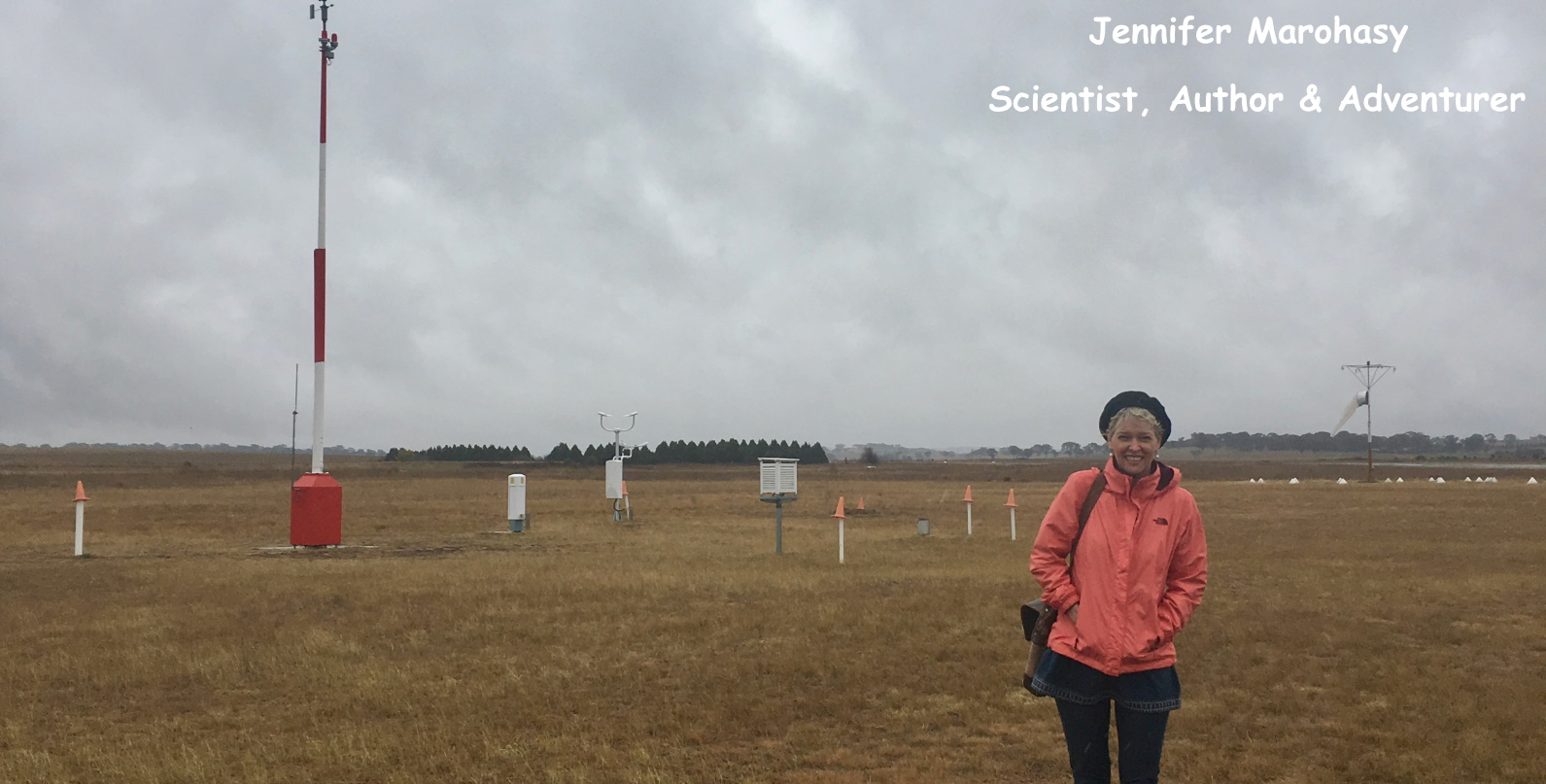
Jennifer Marohasy Jennifer Marohasy BSc PhD has worked in industry and government. She is currently researching a novel technique for long-range weather forecasting funded by the B. Macfie Family Foundation. Read more

Subscribe For News Updates

Subscribe Me

Contact Me

To get in touch with Jennifer call 0418873222 or international call +61418873222.

Email: jennifermarohasy at gmail.com

Connect With Me

  • Facebook
  • LinkedIn
  • RSS
  • Twitter
  • YouTube

Copyright © 2014 - 2018 Jennifer Marohasy. All rights reserved. | Legal

Website by 46digital