• Skip to primary navigation
  • Skip to main content
  • Skip to primary sidebar
  • Skip to footer
Jennifer Marohasy

Jennifer Marohasy

a forum for the discussion of issues concerning the natural environment

  • Home
  • About
  • Publications
  • Speaker
  • Blog
  • Temperatures
  • Coral Reefs
  • Contact
  • Subscribe

Blog

Who Ate the Green Plate?

March 5, 2021 By jennifer

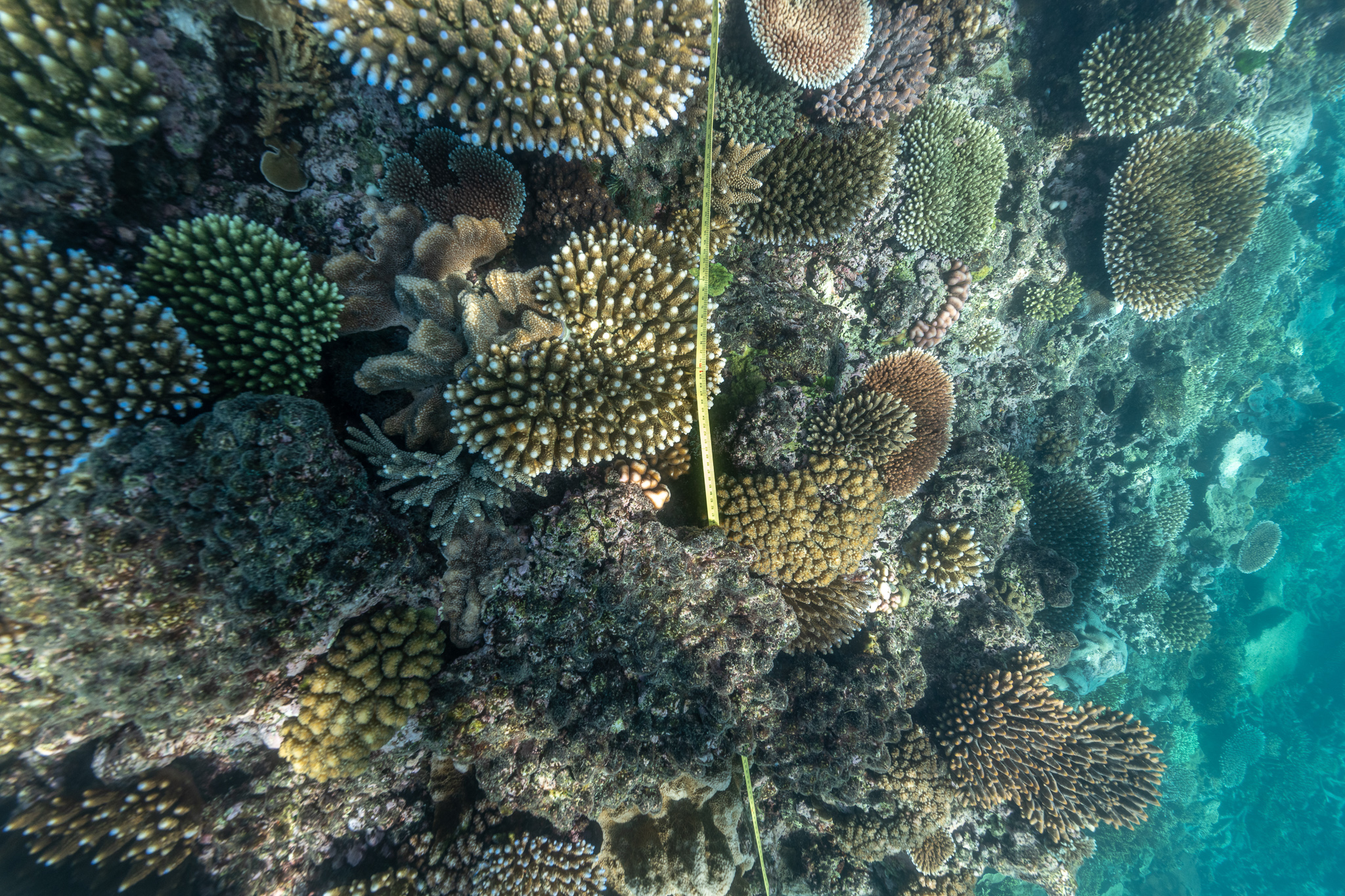
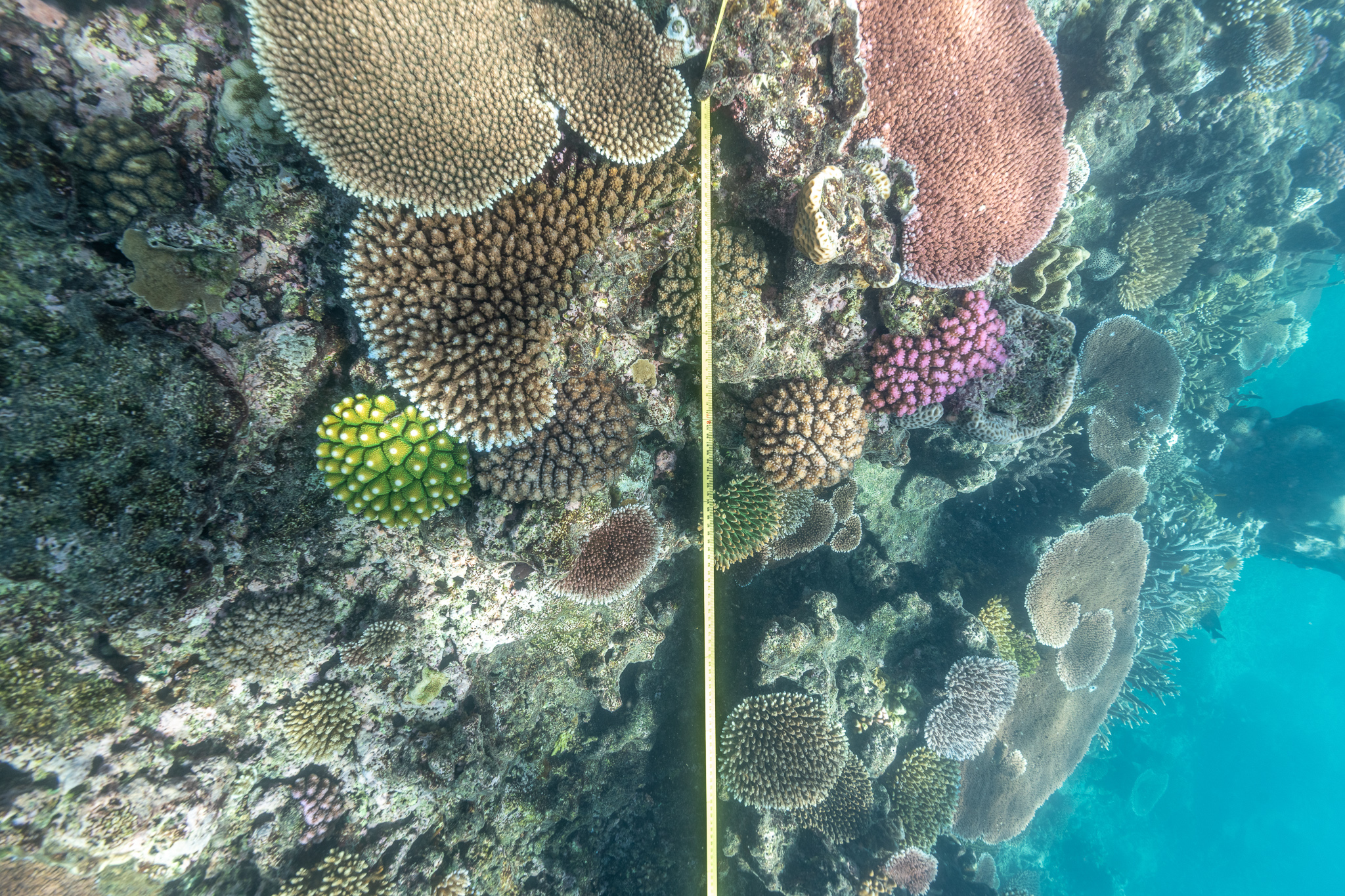
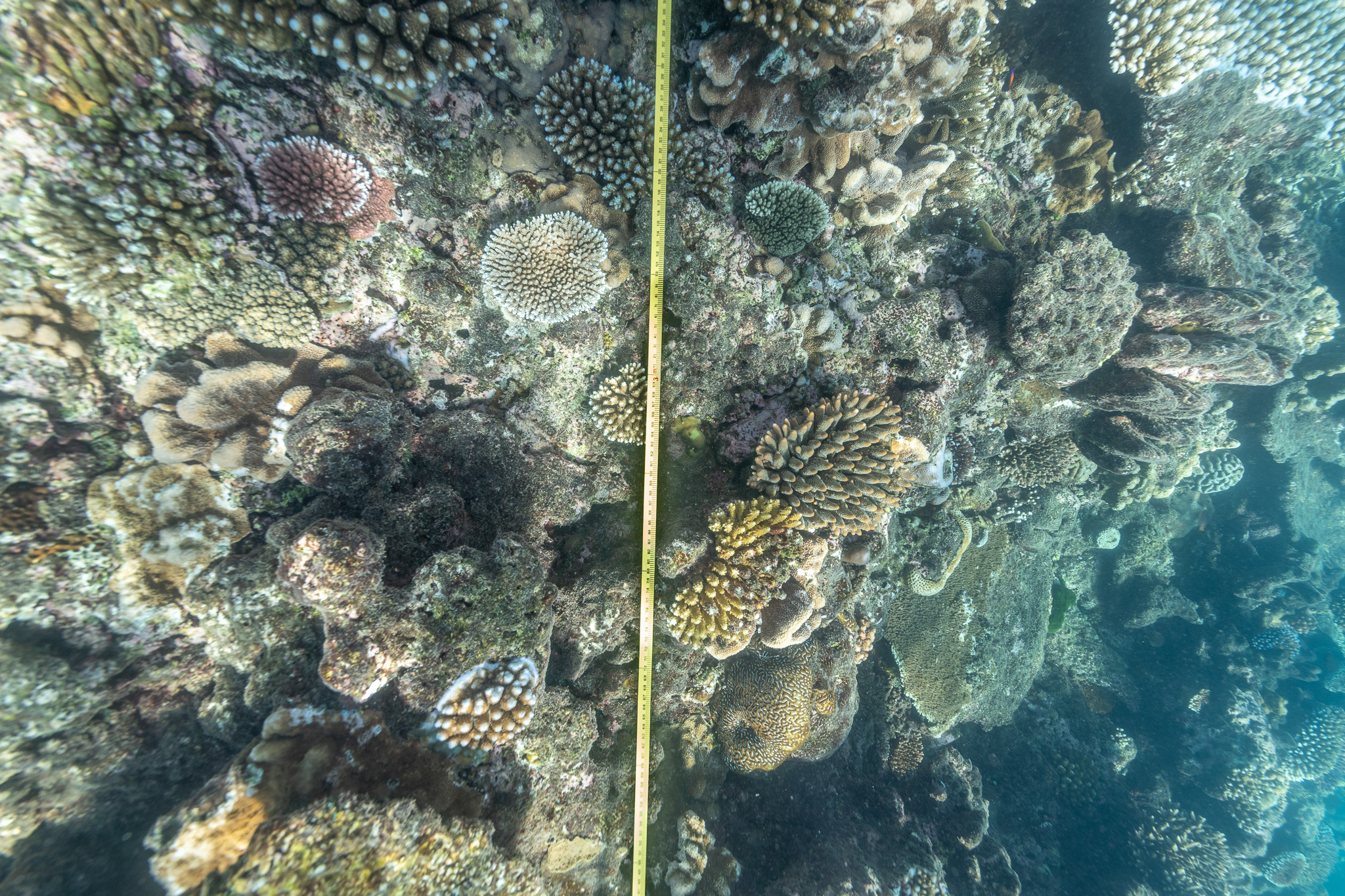
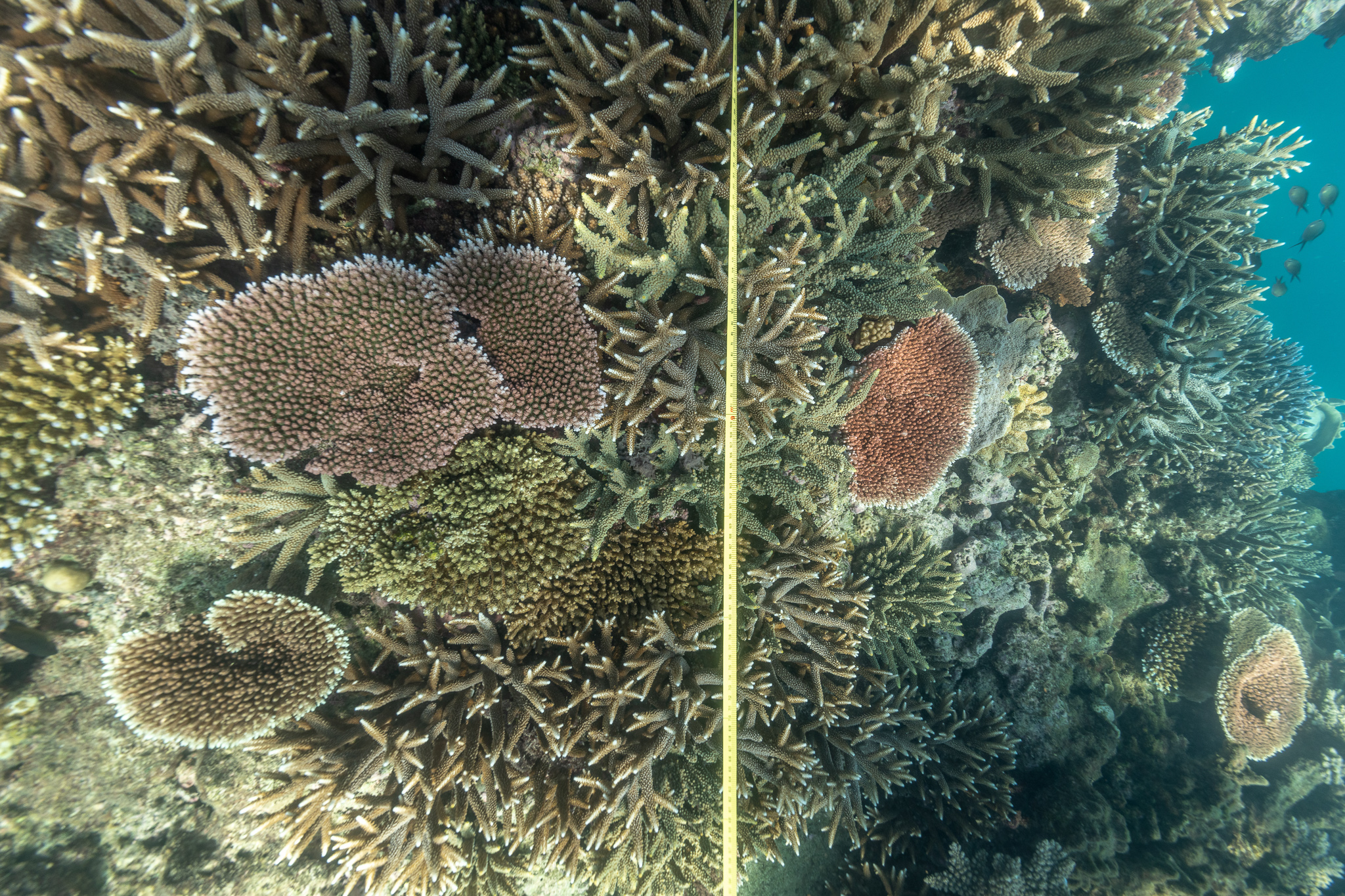
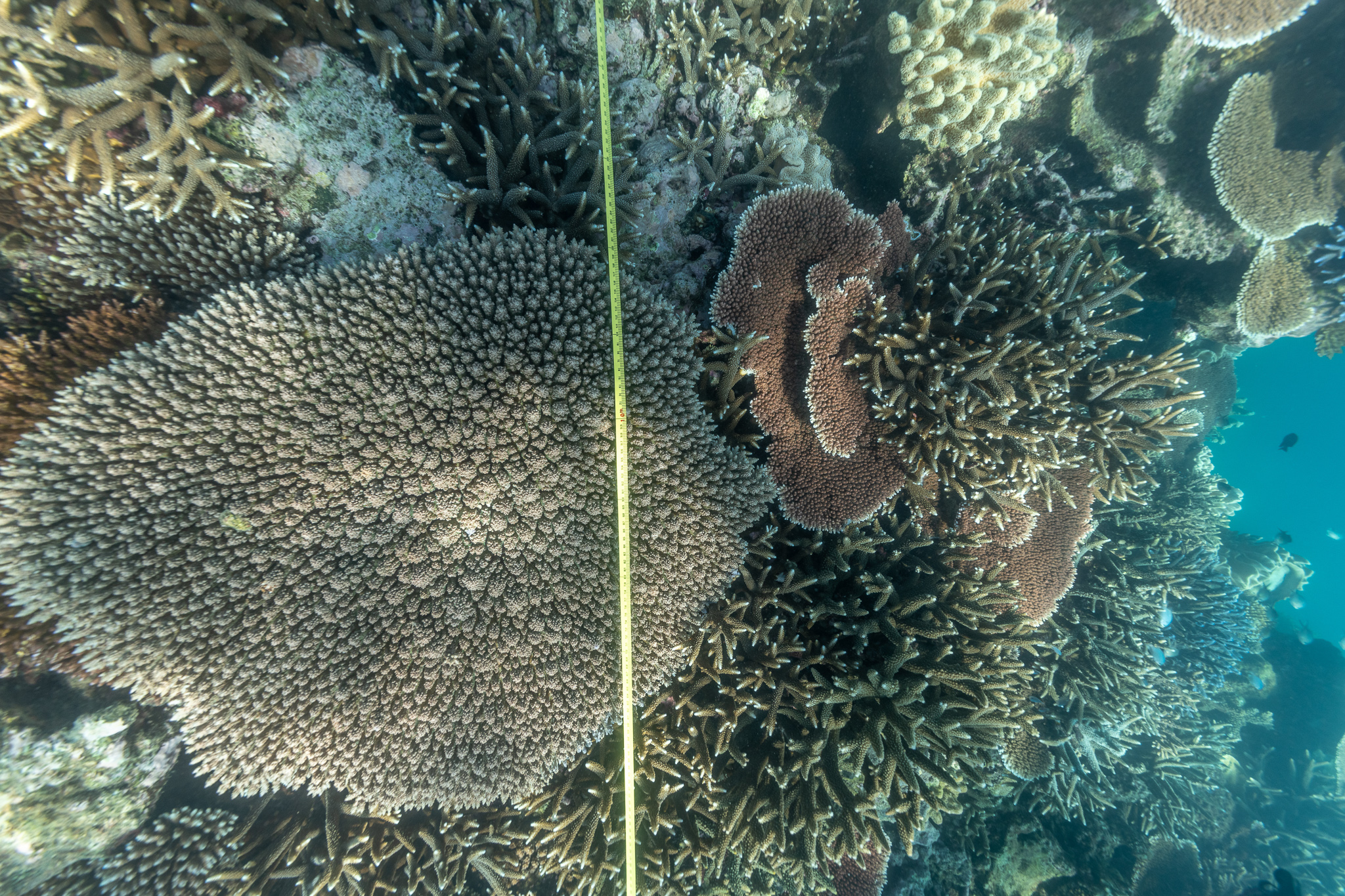
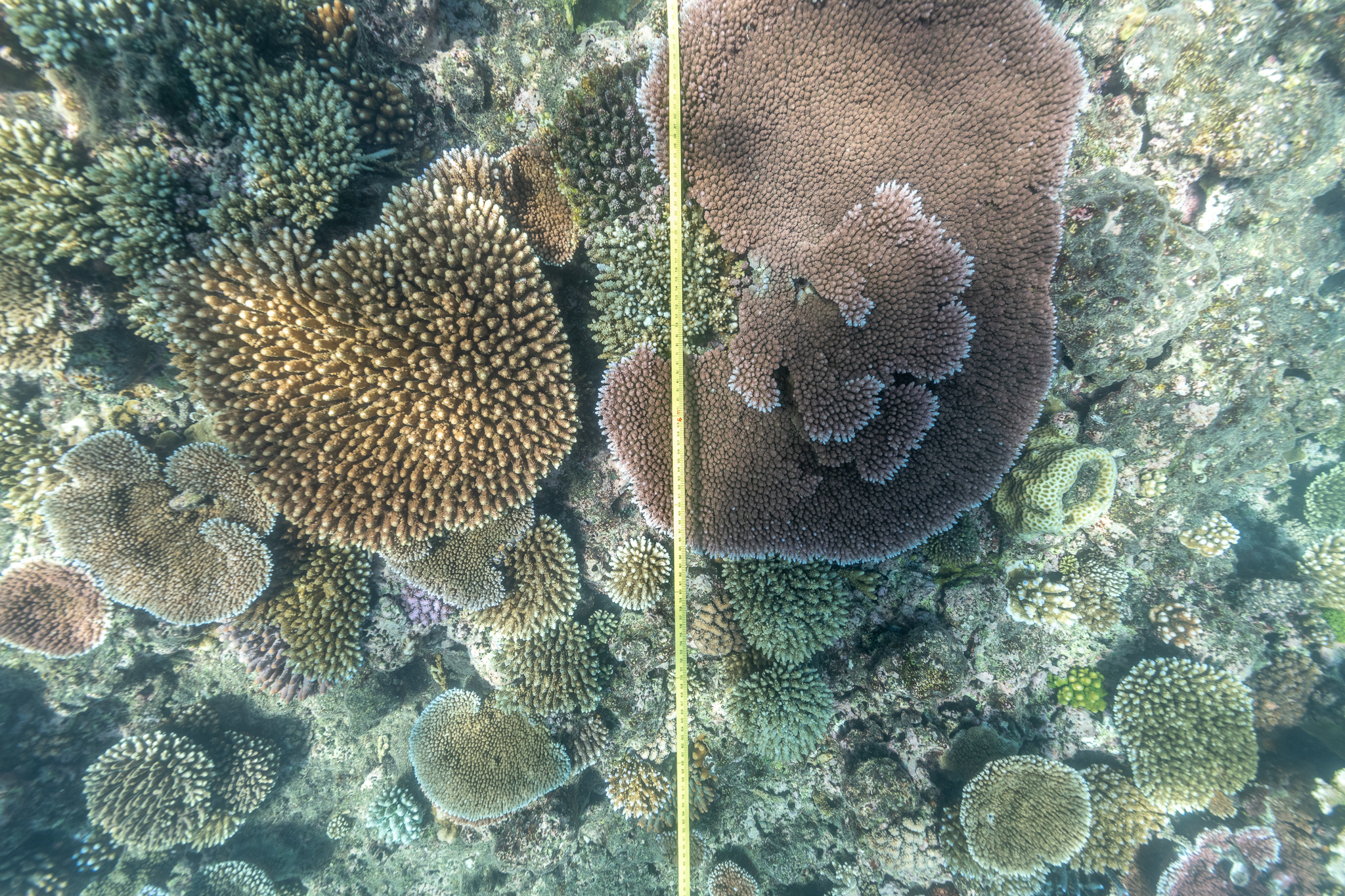
I wasn’t the one who took that bite out of that green plate coral. Can you see what looks like a bite mark? It is at about 4 o’clock on the large, green, plate coral, which is also one of the transect photographs taken last week, on 22nd February at Pixie Reef by Leonard Lim.
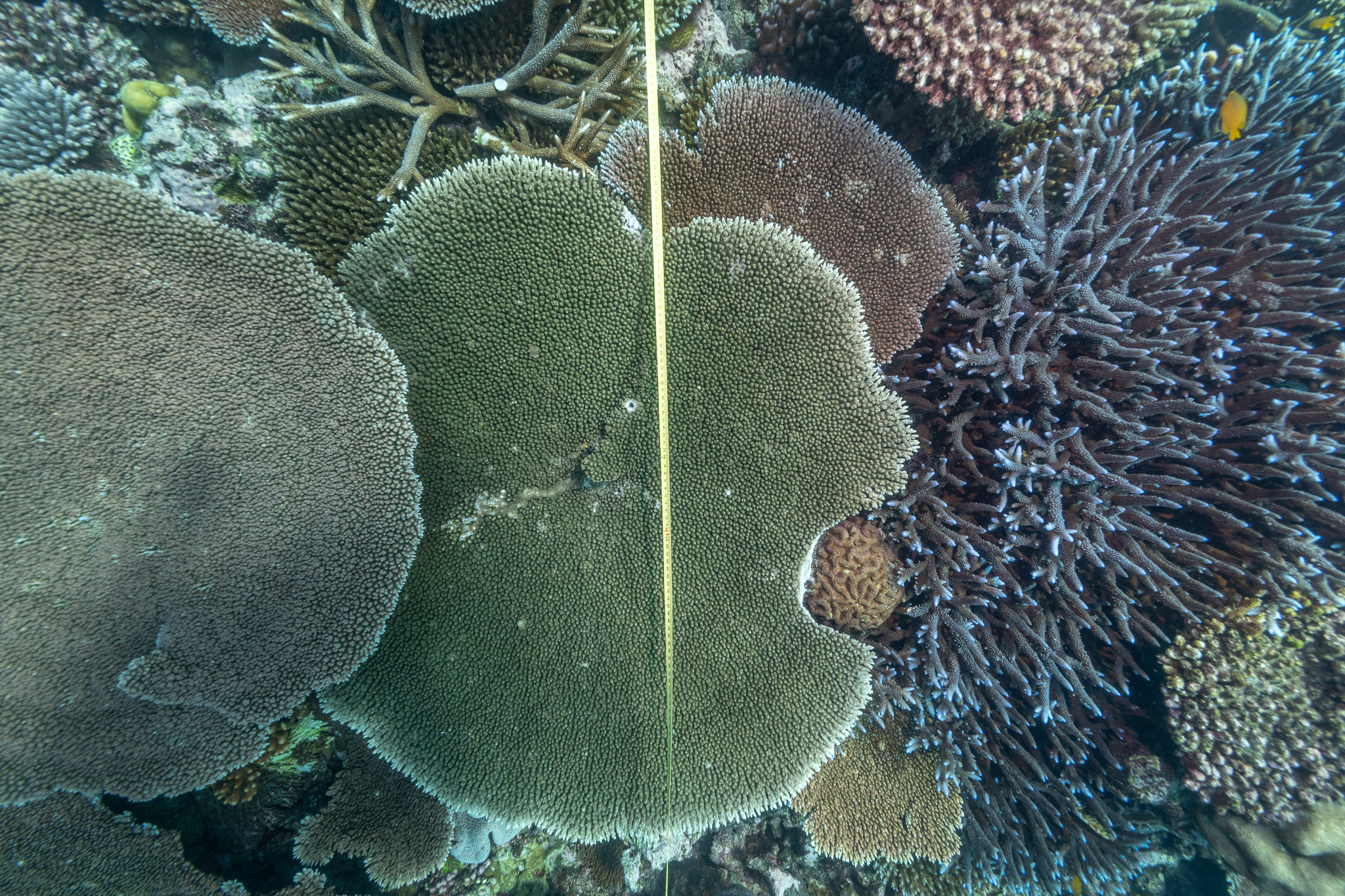
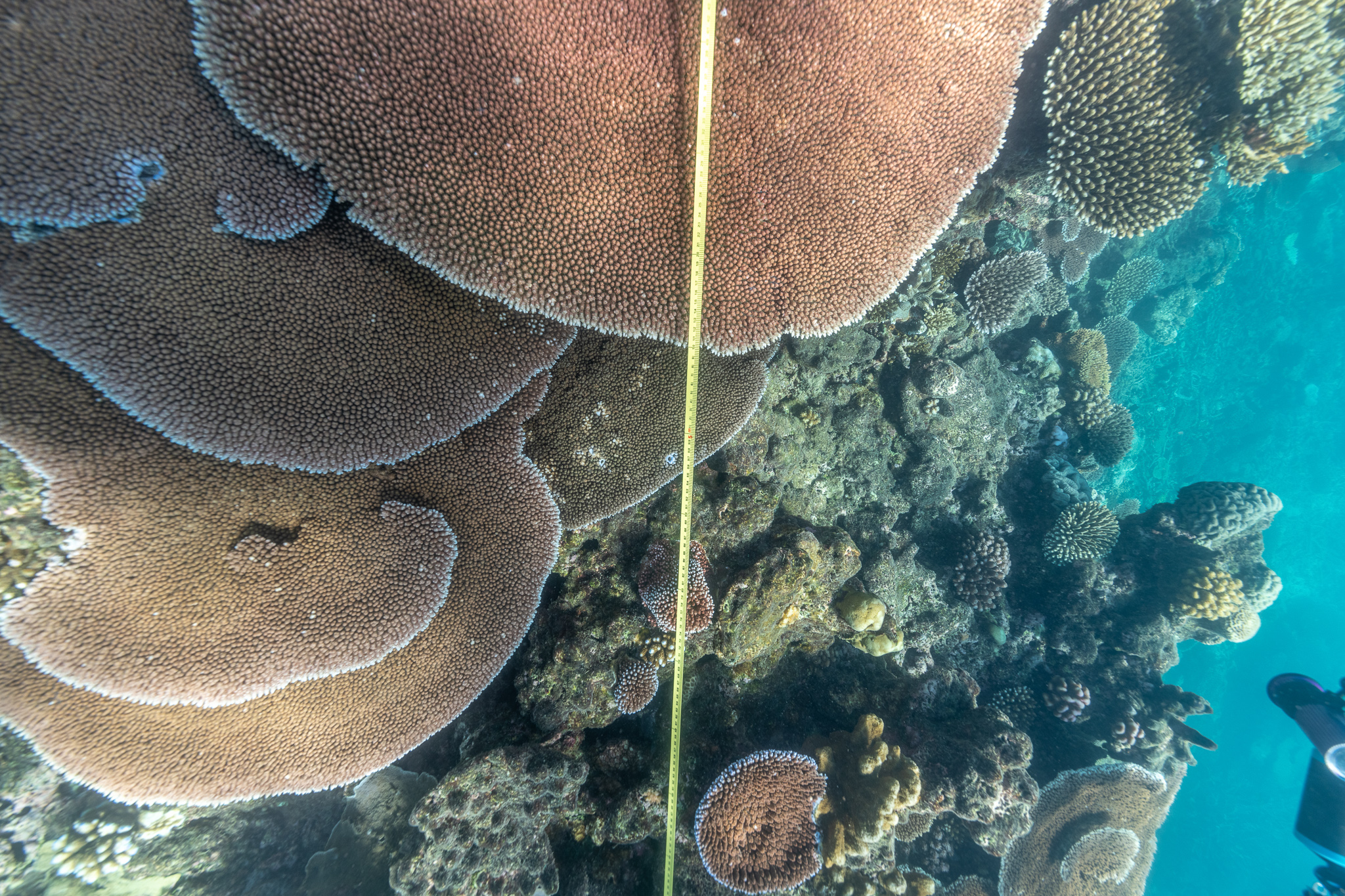
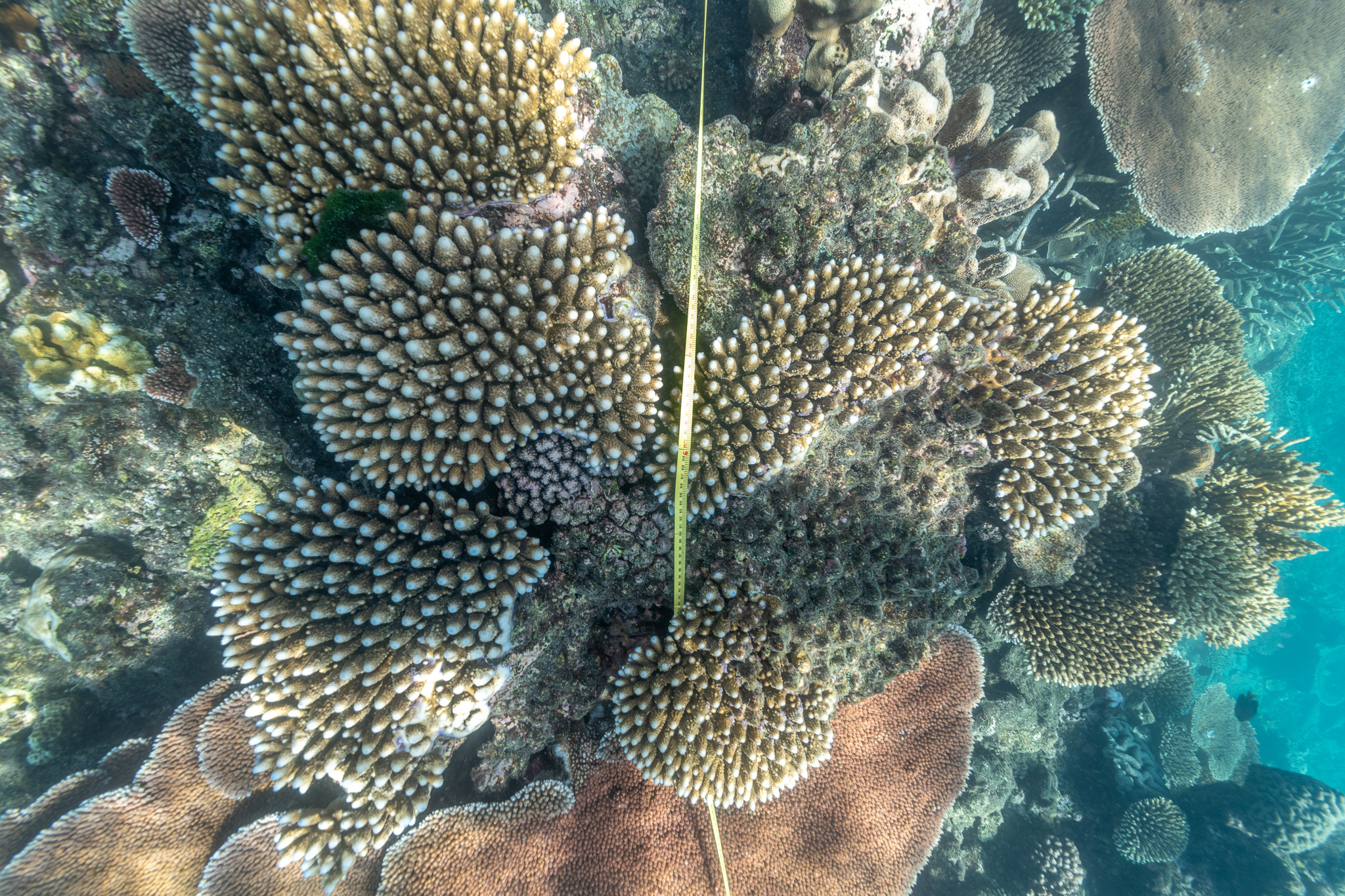
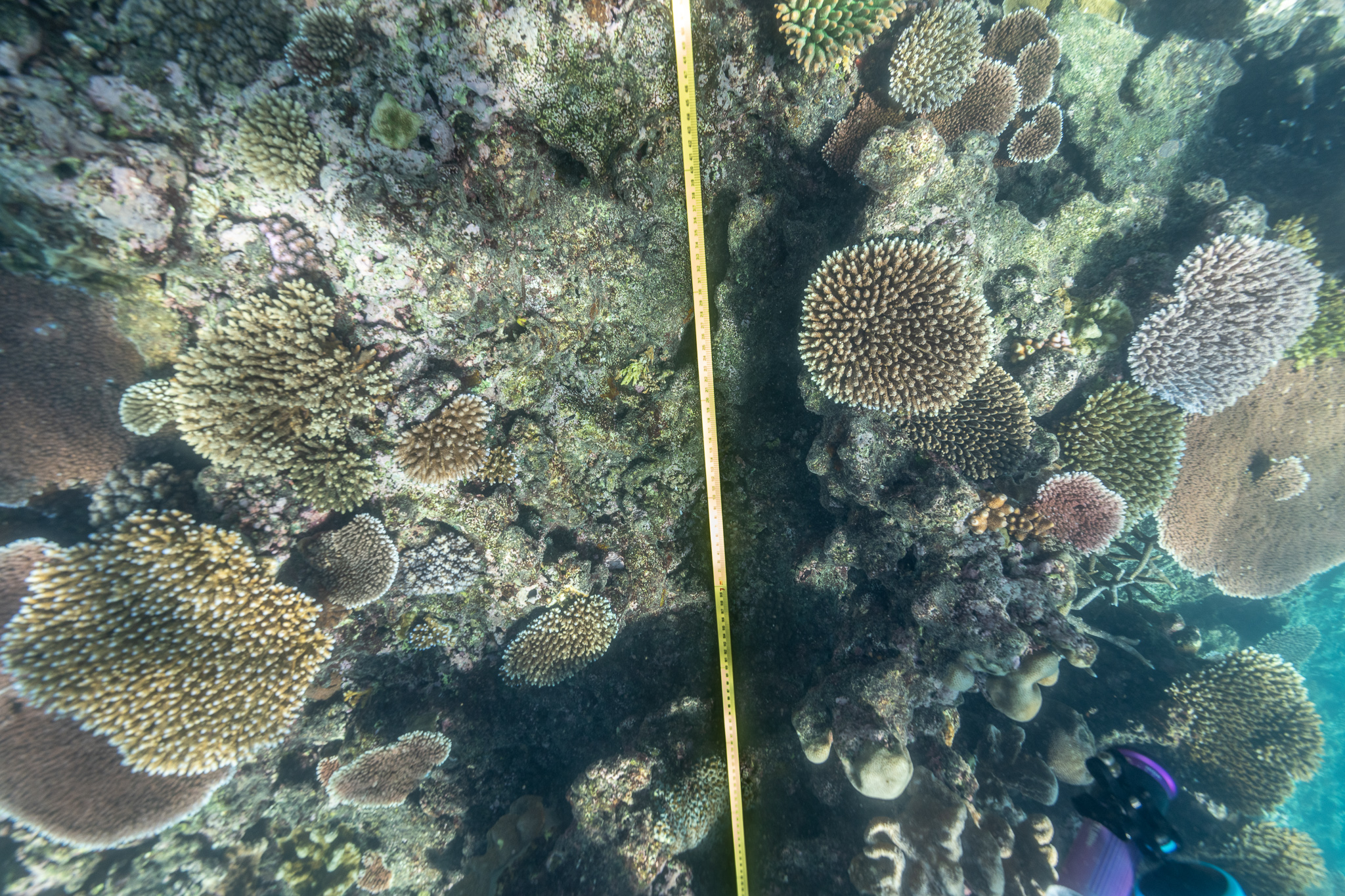
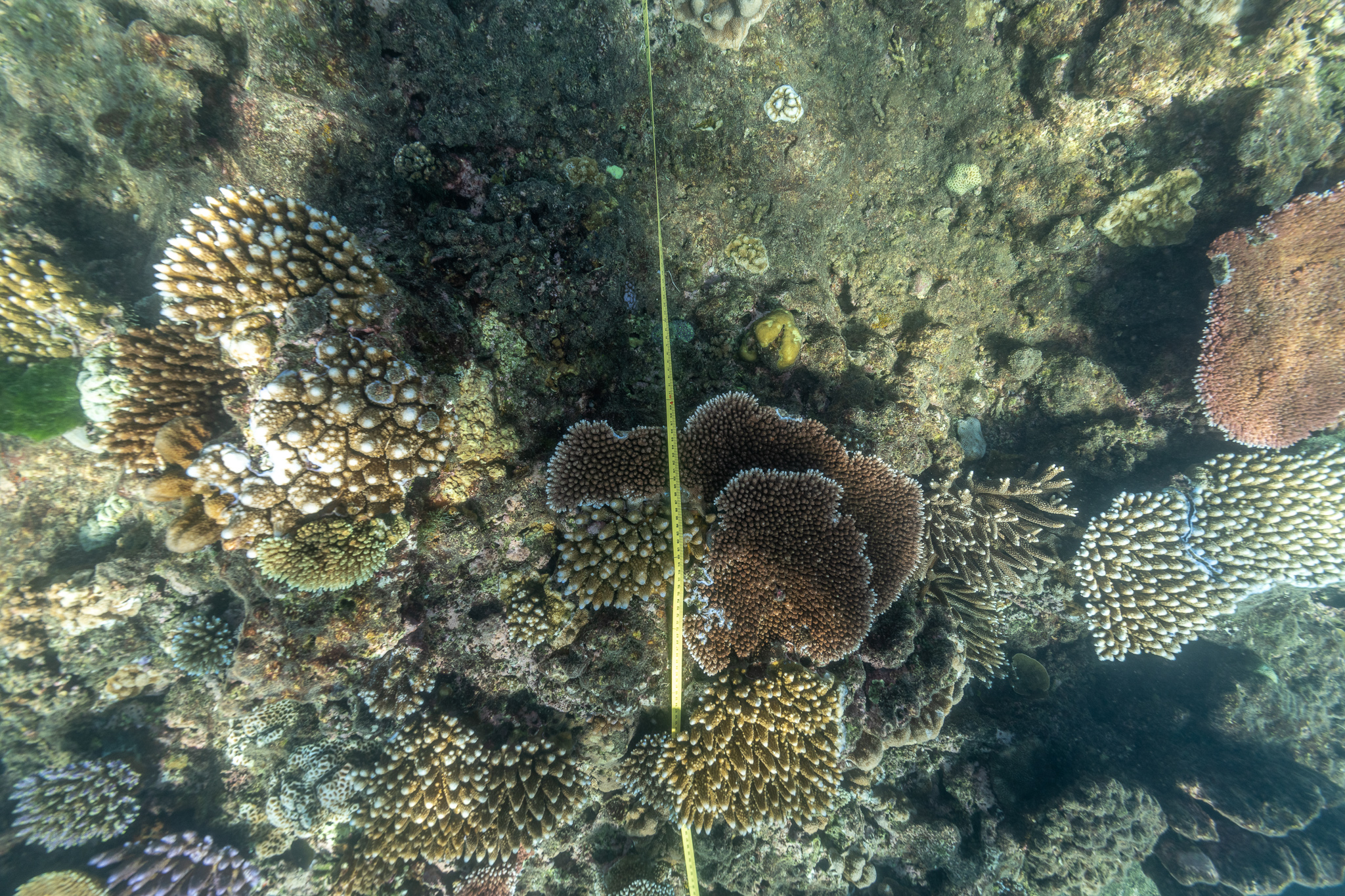
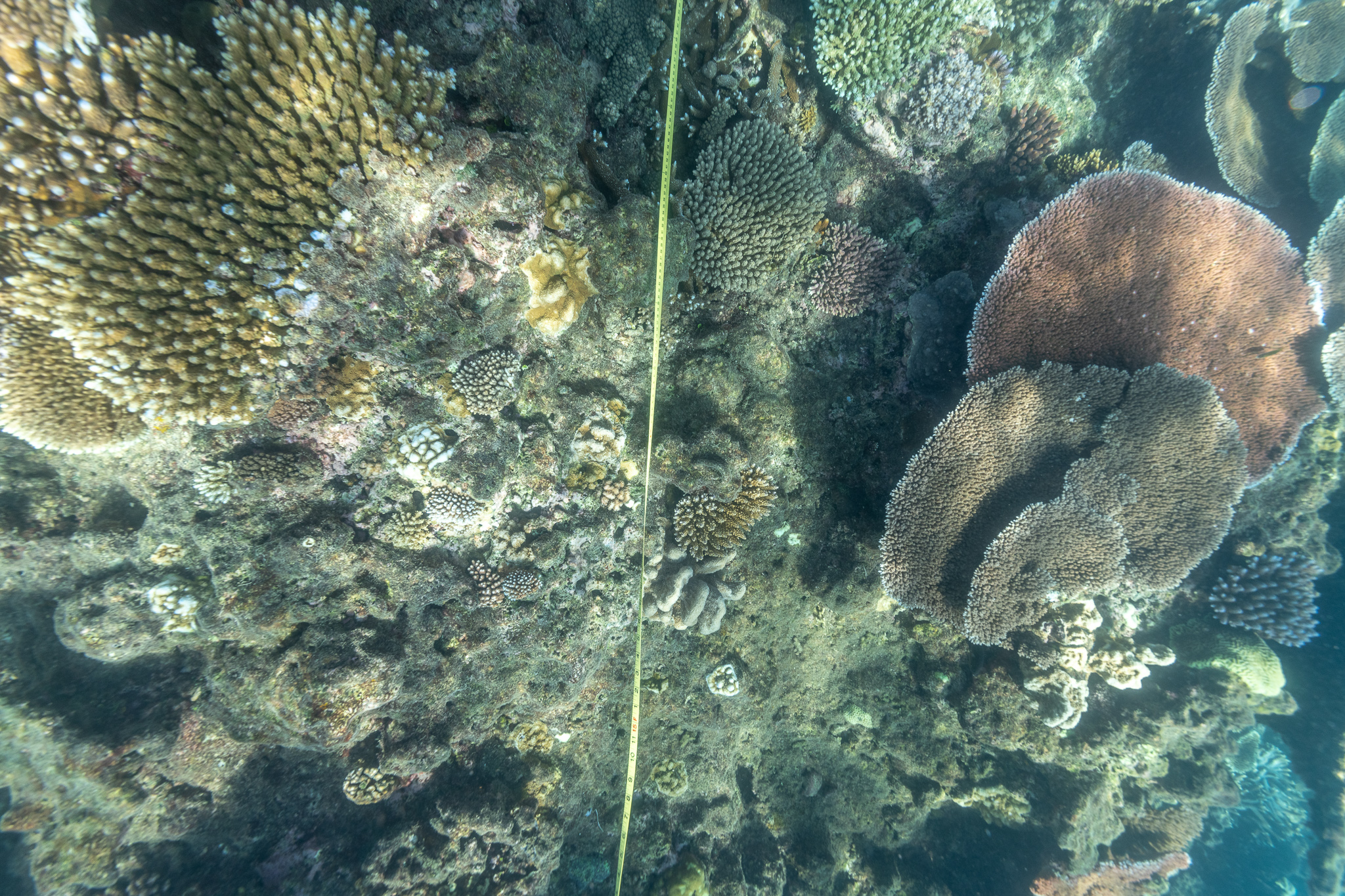
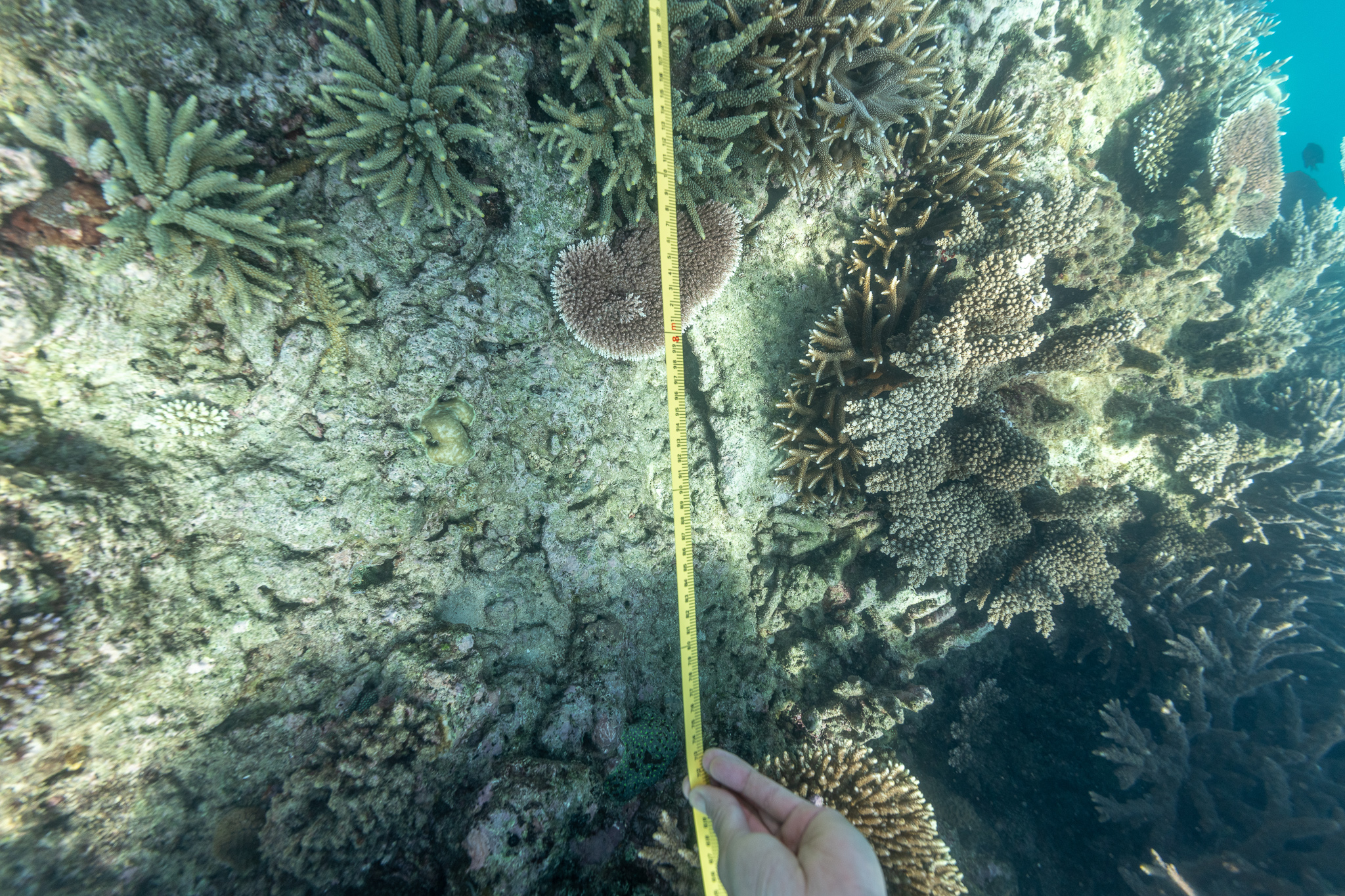
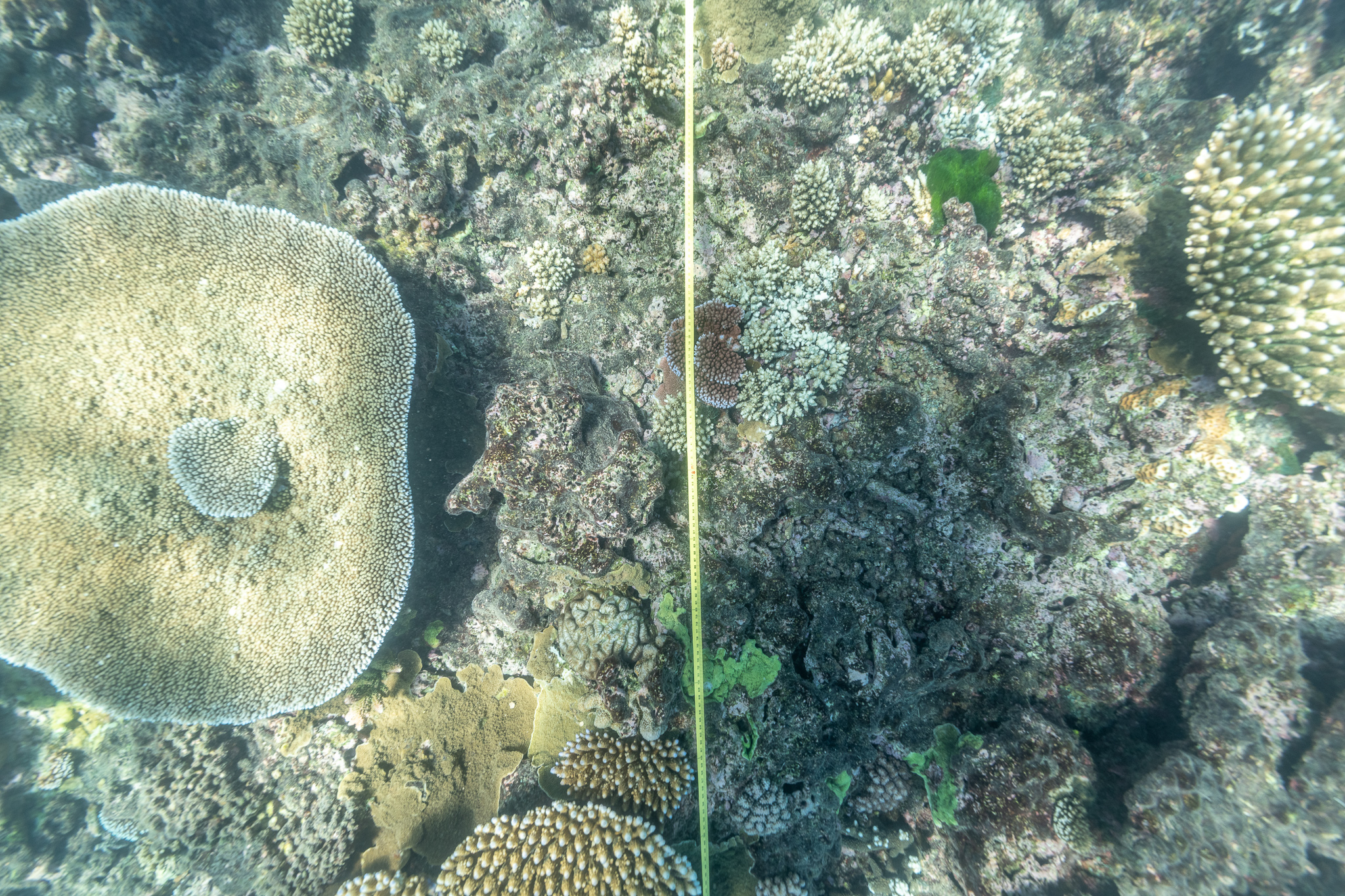
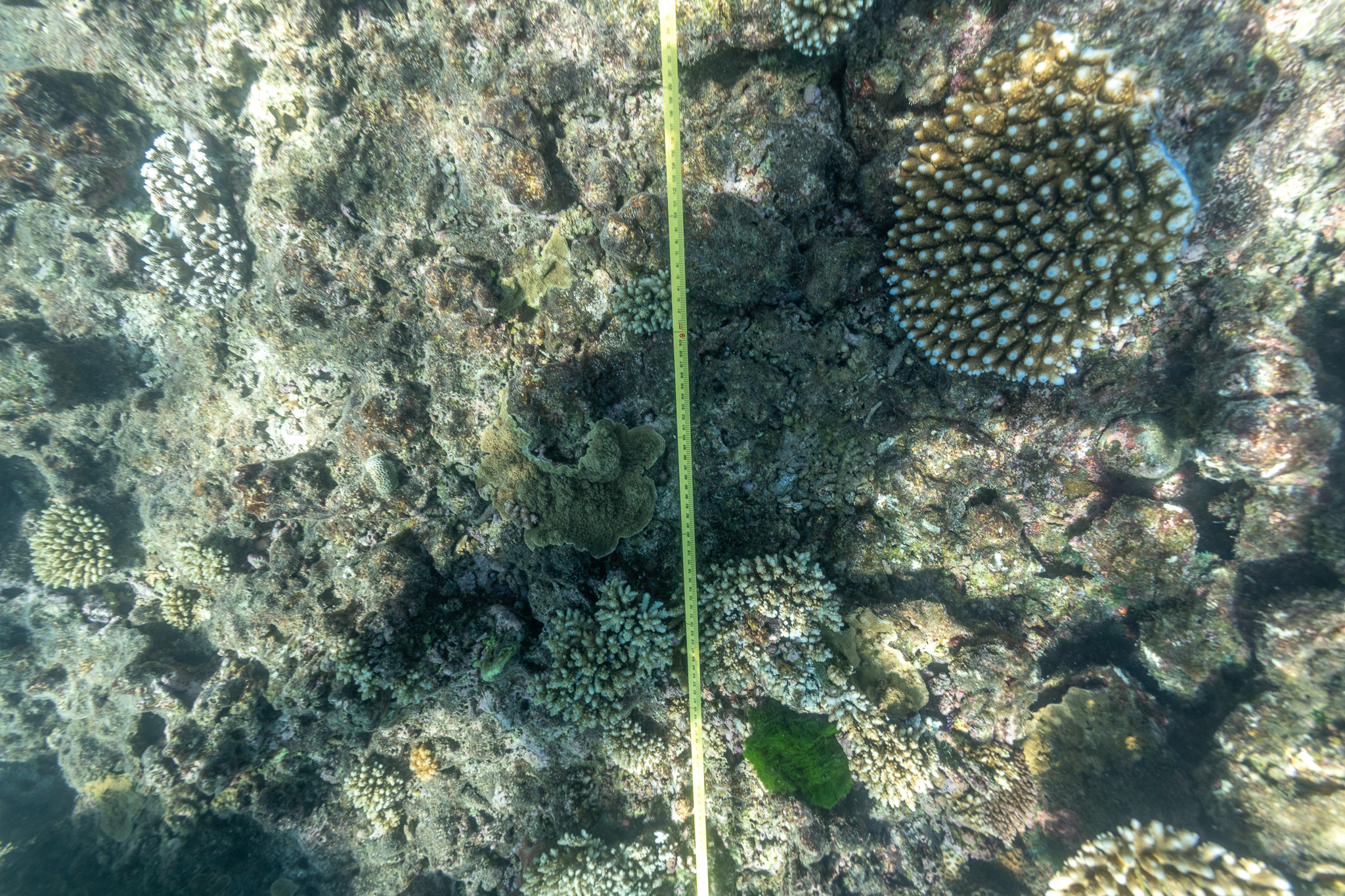
Corals one metre along what was the second transect at 3 metres’ depth at the front of Pixie Reef on 22nd February 2021. Photo credit: Leo Lim.

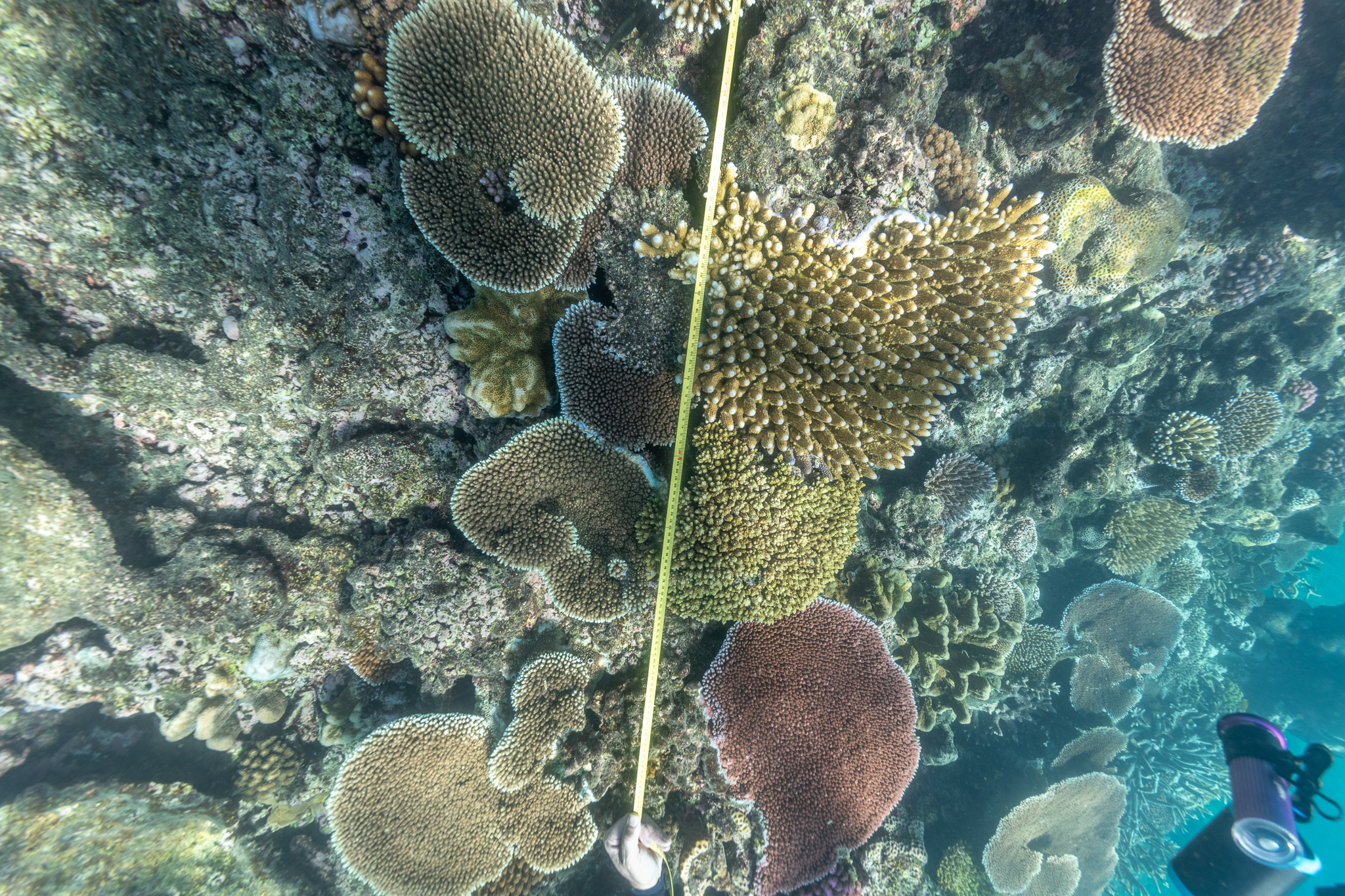
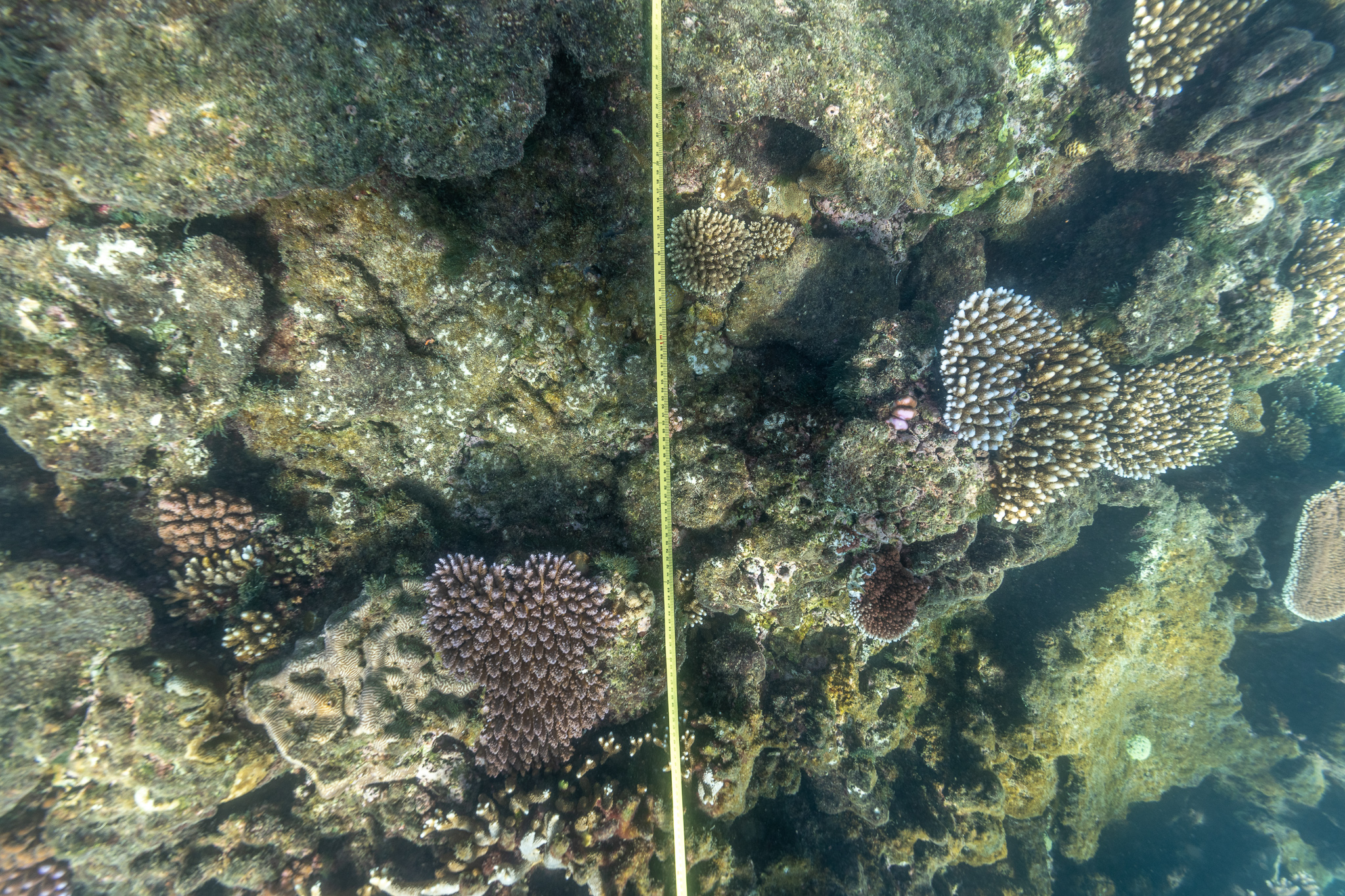
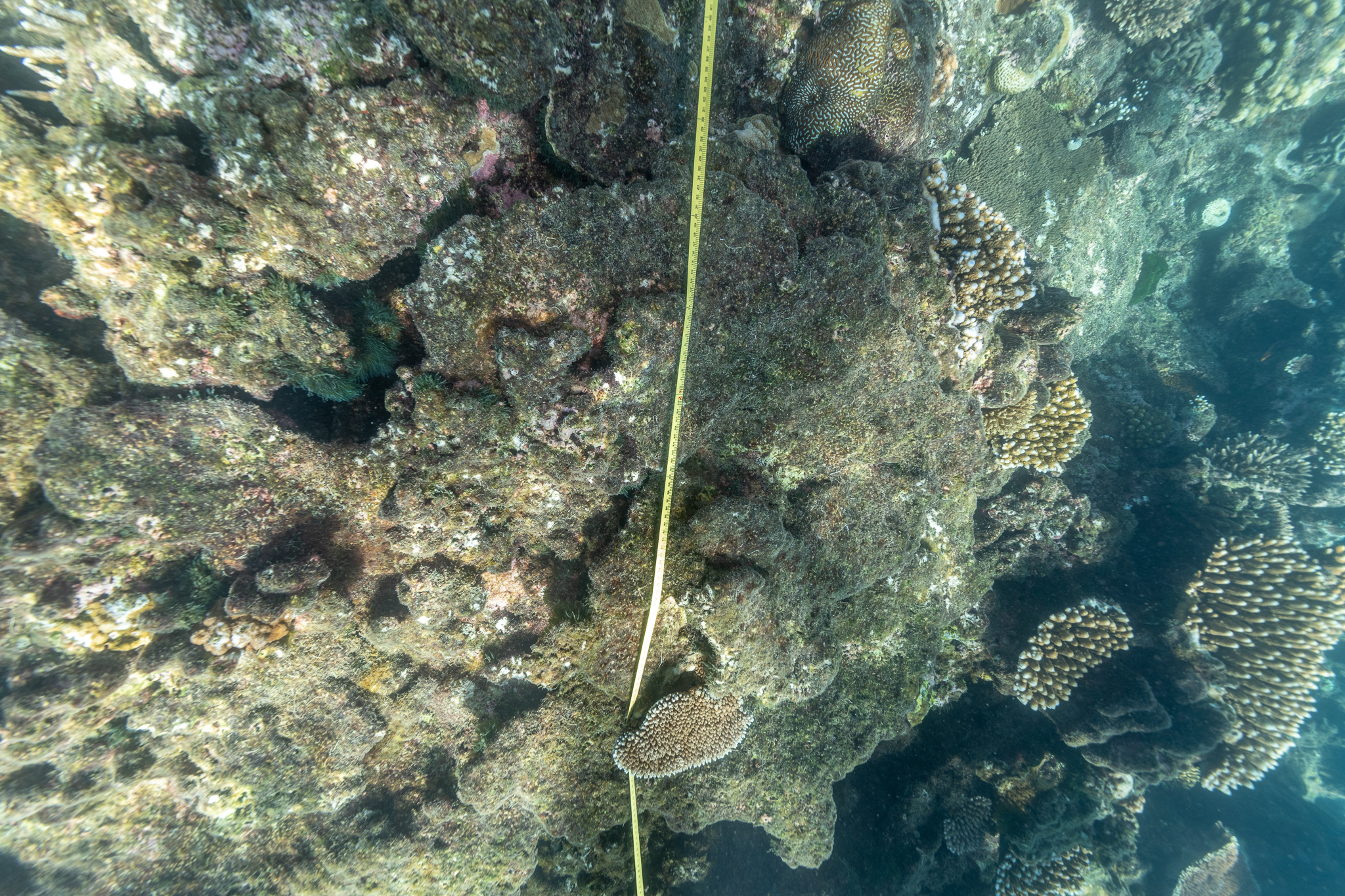
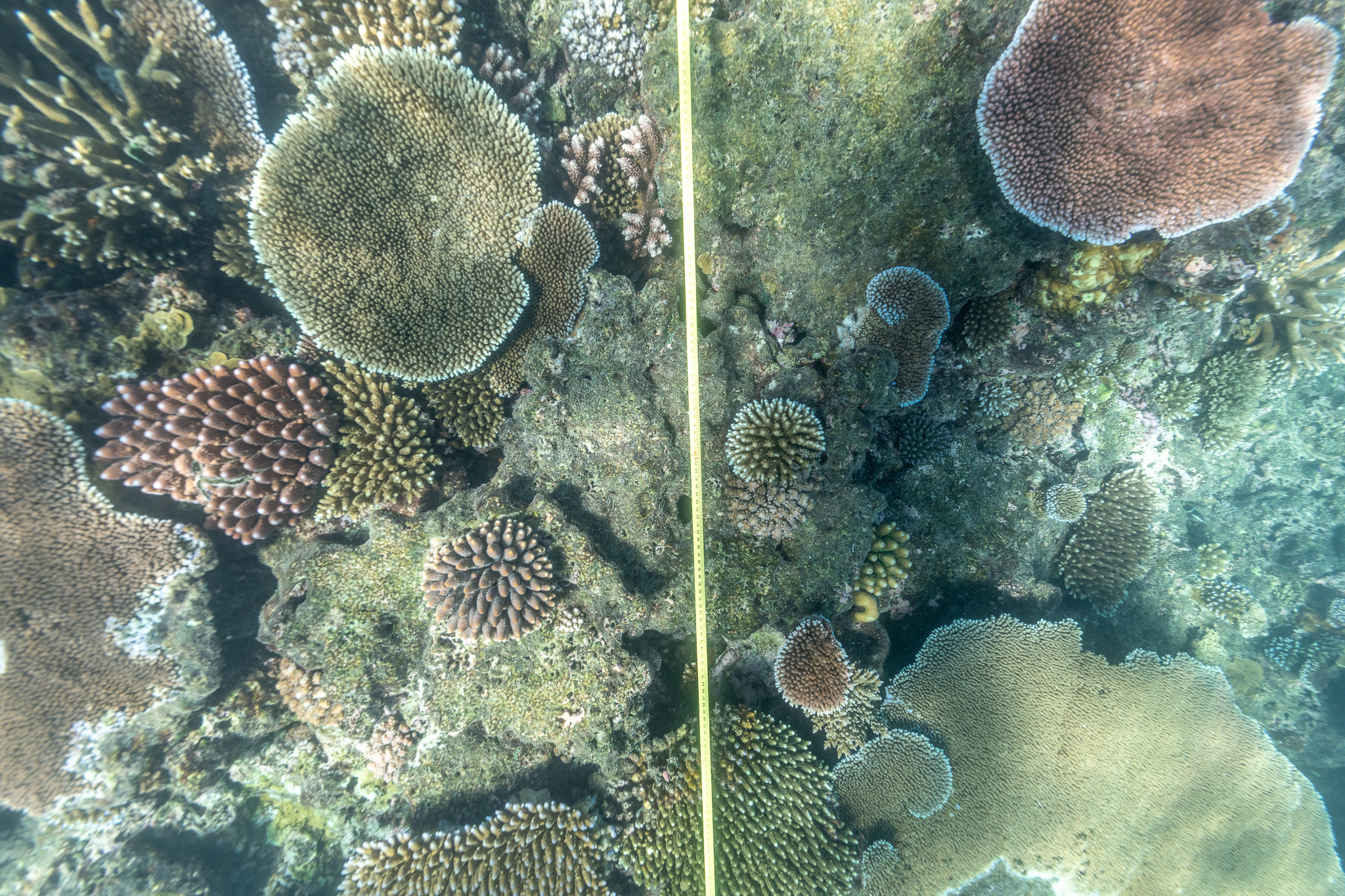
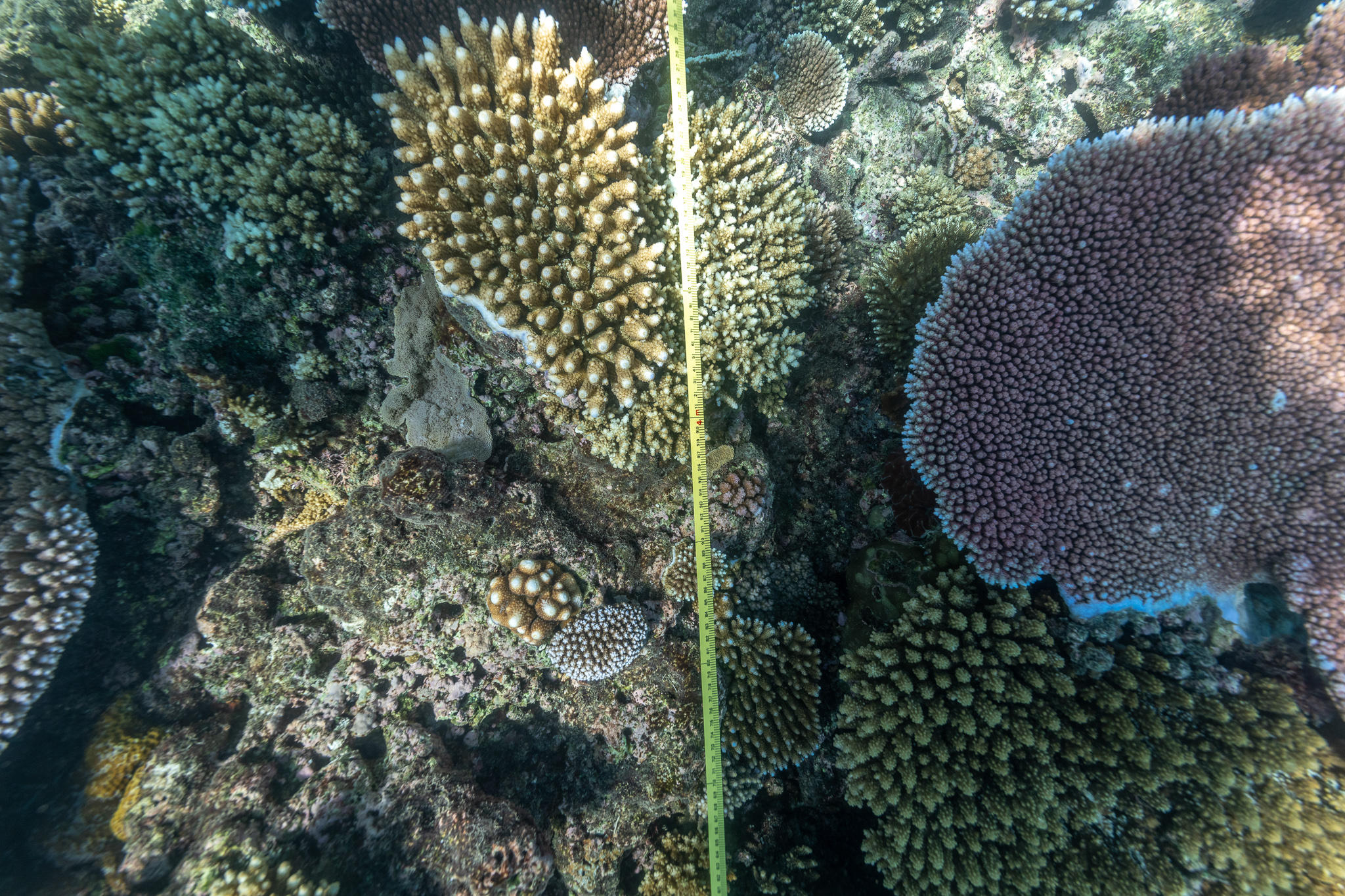
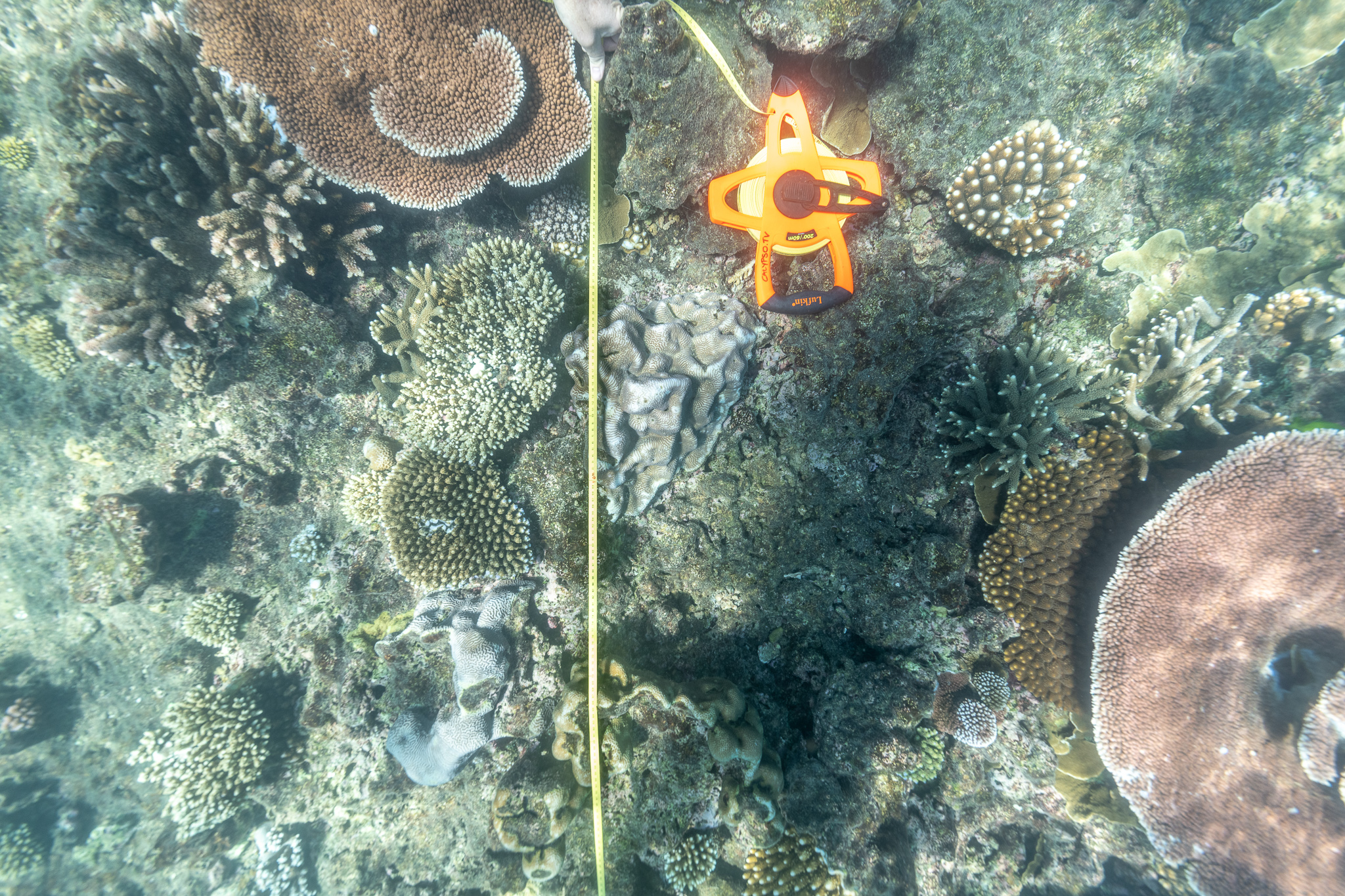
I’m so proud of the 360 underwater photographs taken along 36 transects that were laid in four different habitat types: at the reef front, in the back lagoon, at the reef crest, and we also laid three transects at the bottom of the reef crest – beginning at a depth of ten metres at what I’m calling the western flank. It was hard work, over two days, but these photographs and the corresponding videos will provide some evidence as to the state of the corals at Pixie reef for that moment in time.

Table 1.1

Date: 22 Feb 2021
Habitat: Crest
Starting locations:
  Rep1: (16°32.717'S, 145°51.672'E), Rep 2: (16°32.711'S, 145°51.668'E),
  Rep3: (16°32.710'S, 145°51.663'E)
DepthRep@1m@2m@3m@4m@5m@6m@7m@8m@9m@10m
21
22
23

I was so grateful that we were able to lay transects along the reef front at Pixie. If you click on the thumbnails in the above table you will see some of the photographs. There will be many more uploaded at the ‘Pixie Reef Data Page 2021’ over the next couple of weeks. Leo took 120 photographs from the reef front at two different depths: 3 metres and also 6 metres.

Last November, I only visited the back lagoon. More usually, the prevailing wind is blowing onto the reef from the south east/from the front making access to this front section of the reef difficult. But on 22nd February the wind was blowing from the north northwest. (It was a hot day, and we did return to harbour under Anvil clouds, with Stuart bringing his little speed boat with us safely through a storm that afternoon. Thank you.)

This reef, Pixie Reef, was ‘surveyed’ back on 22nd March 2016 from the air by Terry Hughes of James Cook University during one of his fly pasts. It was concluded from that single observation/glance-down from 150 metres altitude that that this reef was 65% bleached. The inshore reefs north of Cairns were more or less all written-off, back then, by the experts and the mainstream media, as ruin – as dead. But they are not, not at all. (And I do worry for all the children who now believe this precious environment/the Great Barrier Reef is dead from ‘carbon dioxide pollution’.)

Pixie Reef was one of thousands of coral reefs ‘surveyed’ during March to April 2016, with the overall conclusion – reported on the front-pages of newspapers worldwide and now incorporated into schoolbooks – being that the Great Barrier Reef is more than half dead: that more than half of the corals have suddenly died from global warming.

It is my hypothesis that these coral health assessments of the Great Barrier Reef, comprising 1,156 reefs including Pixie Reef as published in the peer-reviewed technical literature by Terry Hughes and others, are yet another example of the mismatch between official government-sponsored (taxpayer funded) propaganda masquerading as science, versus reality.
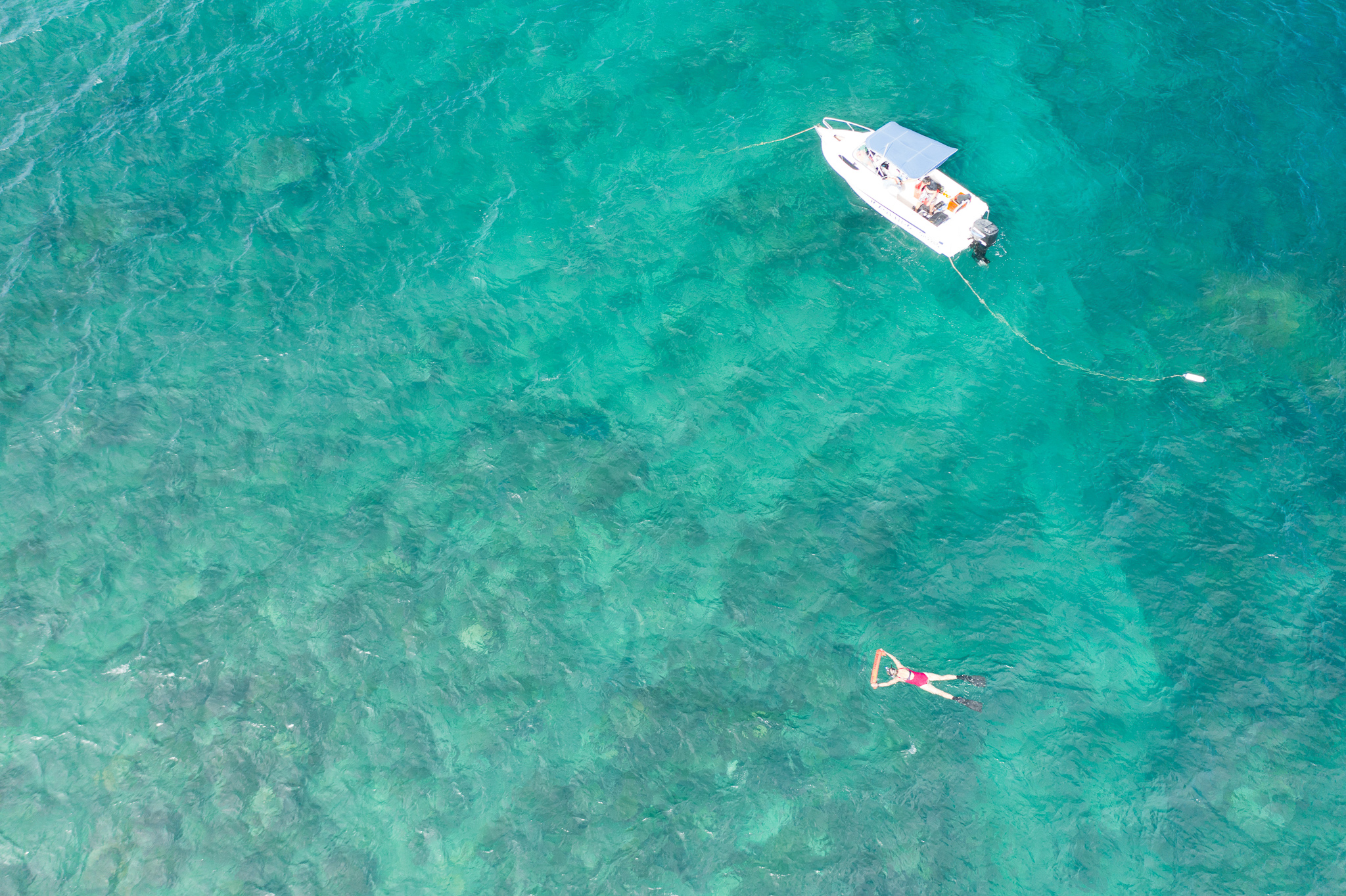
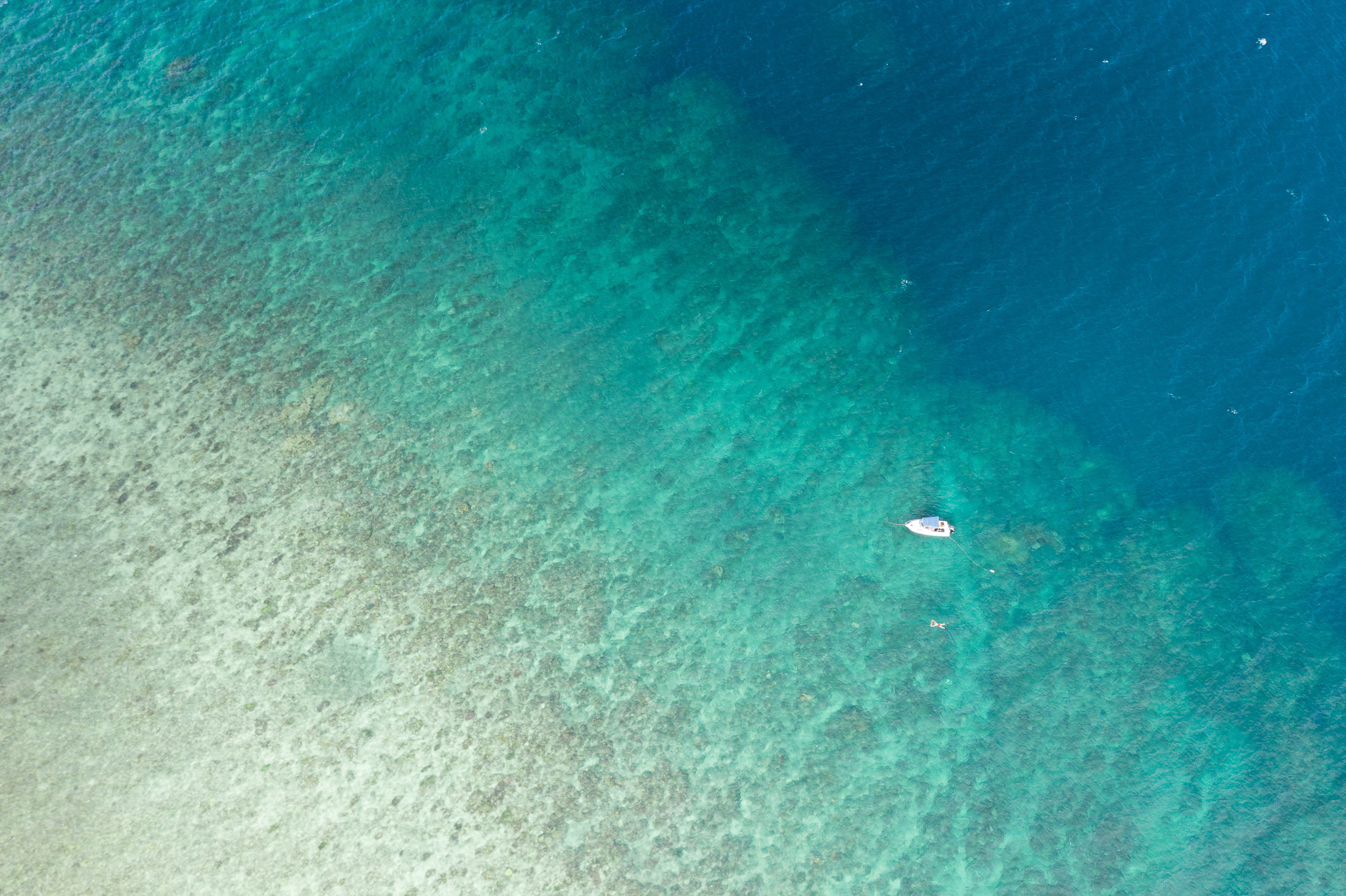
Jen floating, with aerial photograph taken at 20 metres above the front of Pixie Reef on 22nd February, just before the thunderstorm hit.
Jen floating above the reef front, holding a safety sausage showing exactly one metre. This aerial was taken by Stuart Ireland at exactly 120 metres altitude.

It is only under the water that we can see the true state of the corals.

Of course, Pixie Reef is where I found and named that extraordinary, large and old Porites after Craig Kelly MP. I visited ‘Porites Craig’ again on 22nd February. That bolder coral still looks relatively pale from a distance, but up close it is evident that the massive coral colony/Porites Craig has a lot of colour – with all its corallites intact and healthy.
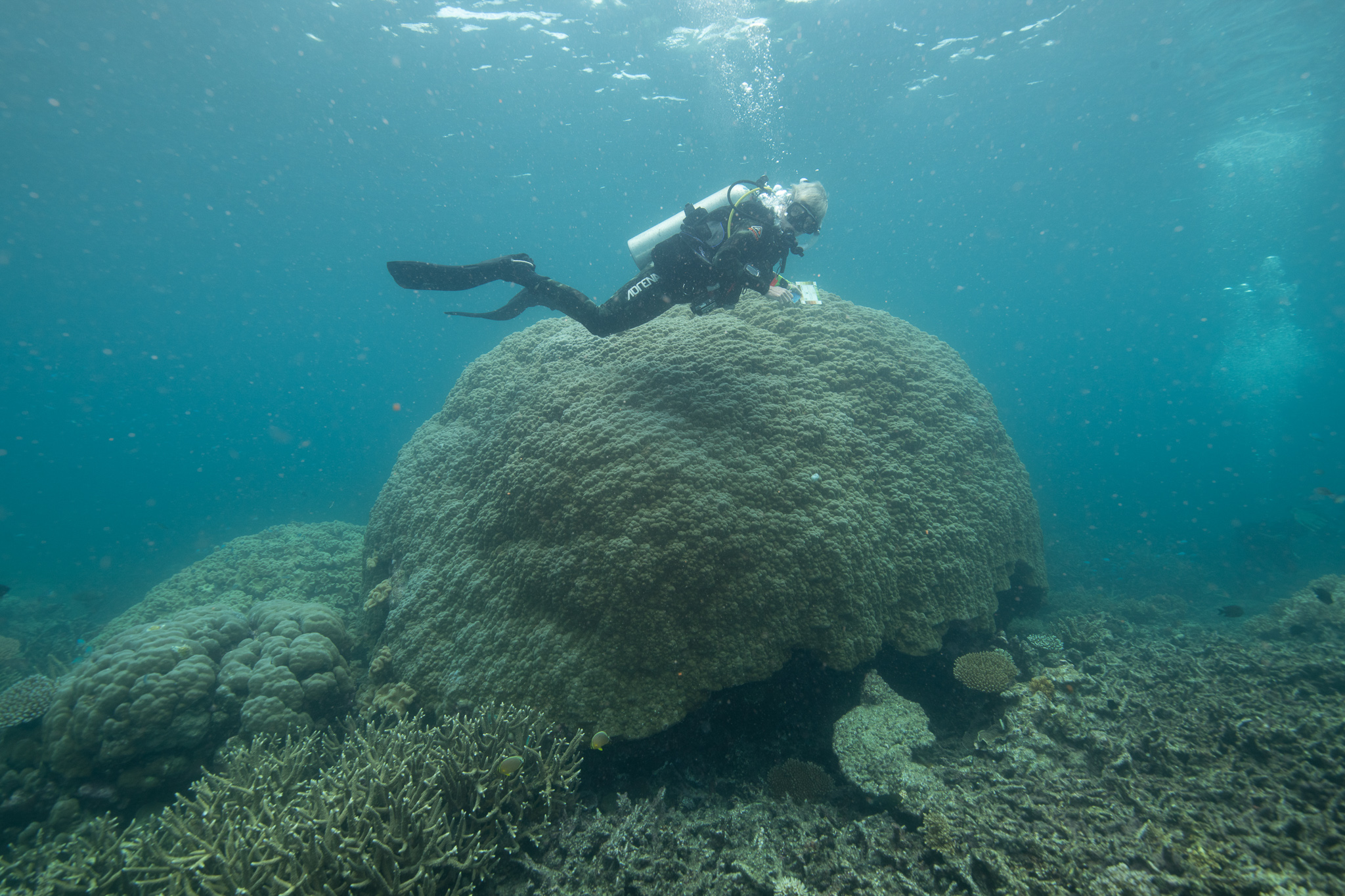
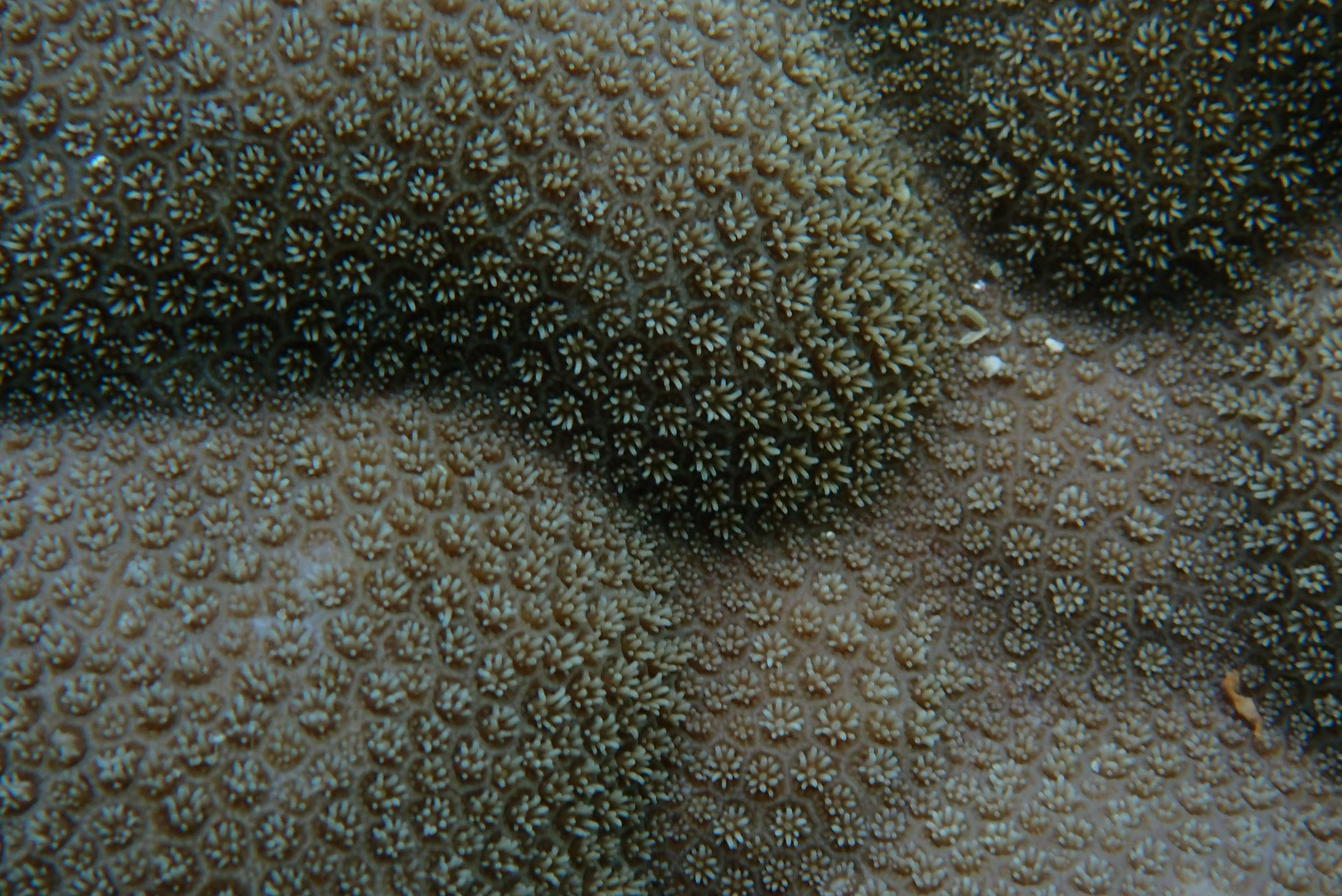
The massive Porites in the back lagoon at Pixie Reef. Photographed with me on 22nd February by Leo Lim.
Porites Craig is massive, and a thin veneer of living coral comprising so many corallites as shown in this photographs taken by me (Jennifer Marohasy) on 22nd January 2021.

There is such a diversity of different coral types, coral species and in so many different coral colours at Pixie Reef.

And what about that green plate coral – with the bite mark? (Could it be from the pixies?)
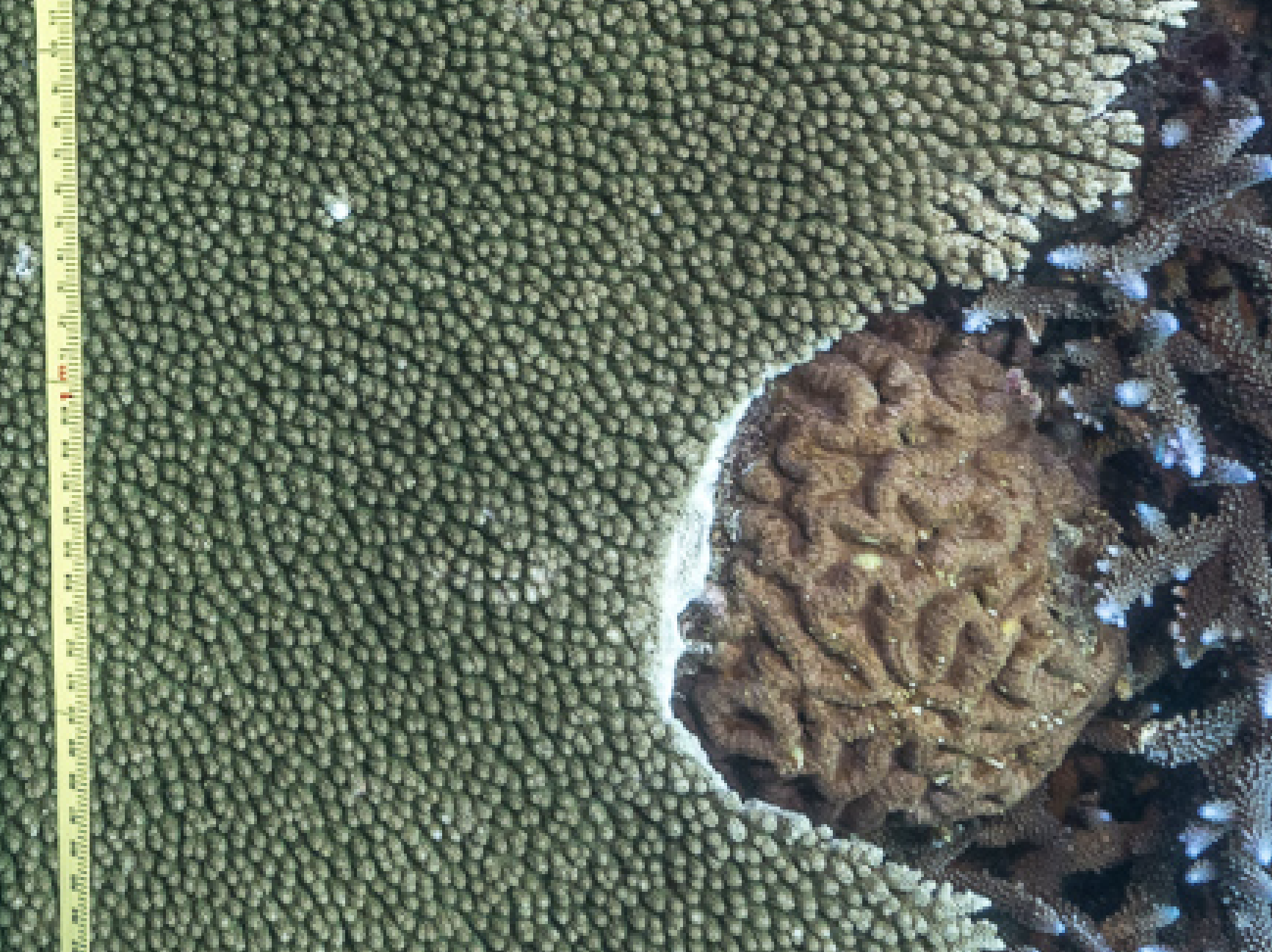
A green plate coral missing some/with a bite mark.

I hypothesis that the little beige-coloured brain coral, which you can see directly under what I am describing as the bite mark, is responsible. This is perhaps a species of FavitesSymphyllia, and it could be extending its tentacles at night and eating up that section of plate coral directly above it. Very likely the Symphyllia sp.Favites sp. is eating away at the Acropora sp., so it has access to sunlight for its own zooxanthellae.

There are so many of them at Pixie Reef – all different types of corals including healthy plate corals in shades of green and also brown. You can see them in the transect photographs, click across to the new page where they will be uploaded over the next couple of weeks: https://jennifermarohasy.com.dev.internet-thinking.com.au/coralreefs/pixie2021/ .
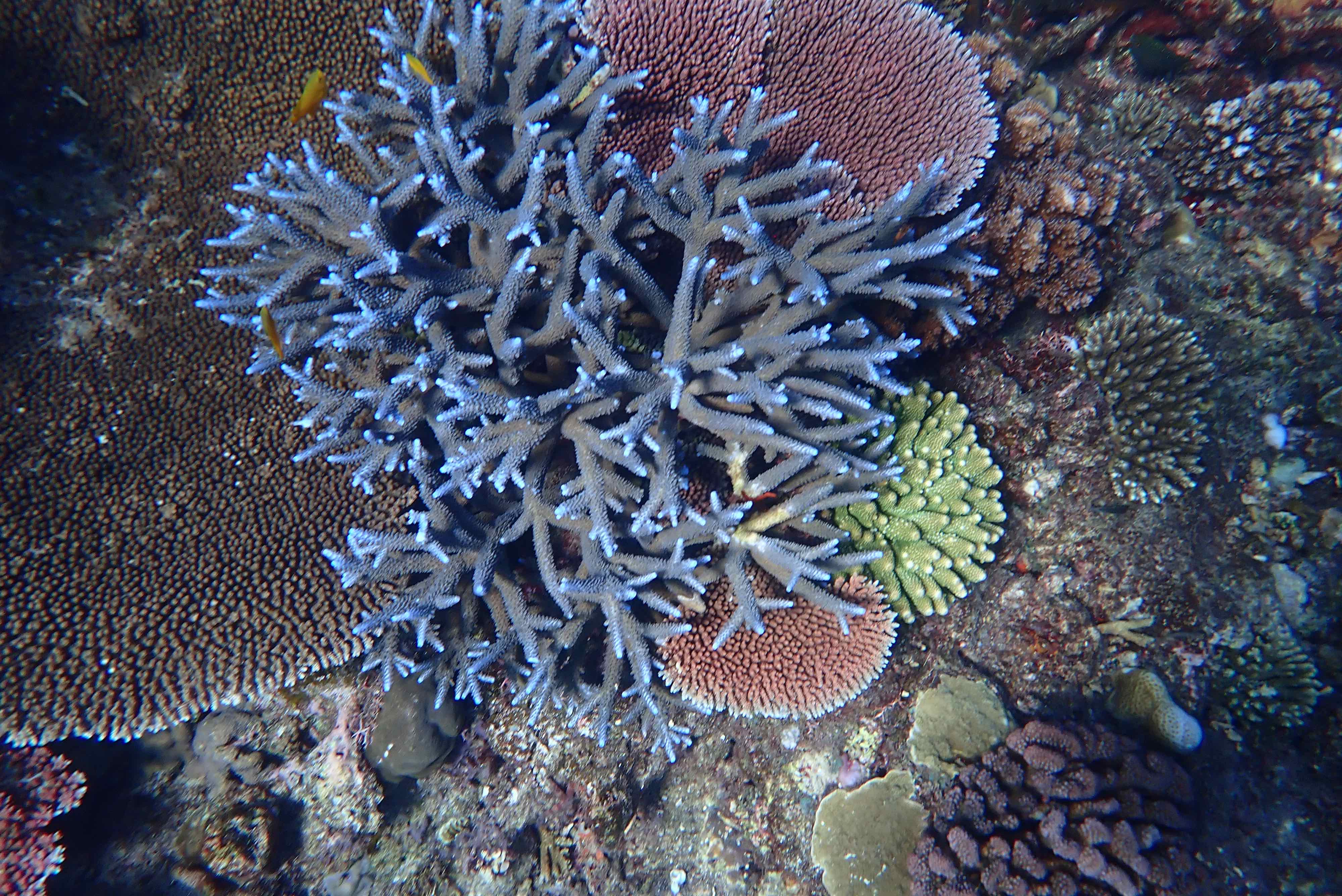
So many pretty corals, but no pixies.

Postscript

This is Part 4 of ‘Measuring Old Corals & Coral Reefs’, essentially written to let everyone know about the new data page for Pixie Reef. You can access other data pages here: https://jennifermarohasy.com.dev.internet-thinking.com.au/coralreefs/

There has already been a Part 1 and a Part 2:
https://jennifermarohasy.com.dev.internet-thinking.com.au/2020/11/measuring-old-corals-coral-reefs-part-1/
https://jennifermarohasy.com.dev.internet-thinking.com.au/2021/01/measuring-old-corals-coral-reefs-part-2/

The blog post about the garden of old Porites at Myrmidon should really be Part 3, ‘tis here: https://jennifermarohasy.com.dev.internet-thinking.com.au/2020/12/gardens-of-old-porites-without-sharks/

And so much thanks to Leonard Lim and Stuart Ireland for all the photographs and video from Pixie last week, and to The B. Macfie Family Foundation for believing in us.
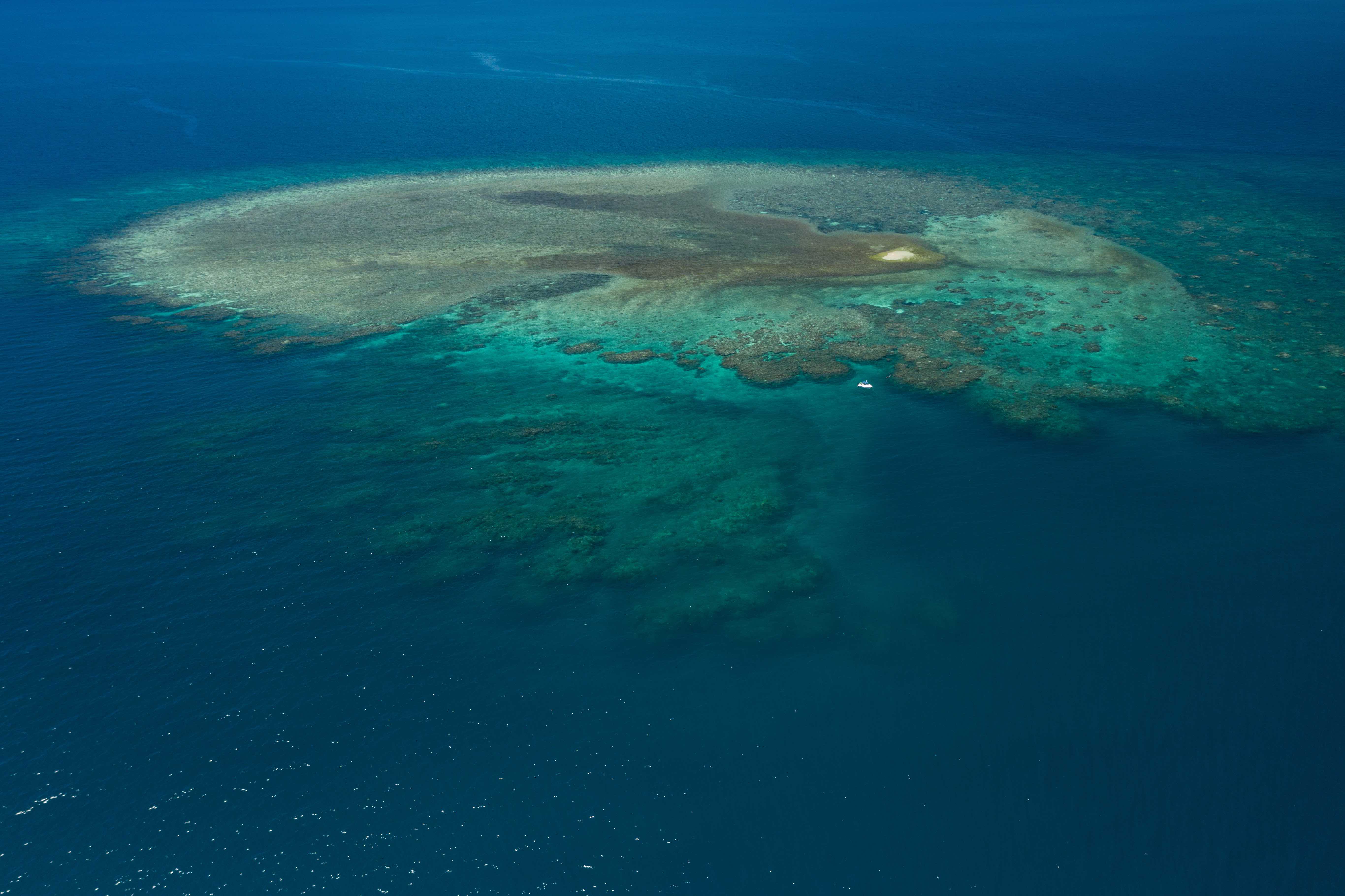
Pixie Reef on 22nd February 2021 from about 120 metres looking to the east. Photo credit: Stuart Ireland.

Filed Under: Information Tagged With: Great Barrier Reef

Why Craig Kelly Resigned on Tuesday

February 26, 2021 By jennifer

Craig Kelly has a huge following on Facebook. His daily posts were ‘liked’ and ‘shared’ by thousands, until he was blocked – disallowed, censored. His page is still there. He just can’t post anything. The banner at the top of his page says:

Today’s truth is frequently tomorrow’s error. There is nothing absolute about the truth … if the truth is to emerge and in the long run triumph, the process of free debate – the untrammelled clash of opinion – must go on.

Craig is quoting Australia’s longest serving Prime Minister, Sir Robert Menzies.

Last Tuesday, on 23rd February 2021, he handed his letter of resignation to the current Prime Minister, Scott Morrison. That was in the Great Hall of the Australian Parliament in front of the joint party room: 110 Senators and Members of the House of Representatives belonging to the Liberal and National Parties.

He has been a member of Parliament for over a decade, and he does make close friends. In making the speech that he did at 11.20 am that morning/Tuesday morning, Craig knew he would be losing some of his closest friends, and perhaps forever.

Craig phoned me yesterday to chat about it – while he packed up to leave Canberra after a tumultuous week. He was heading home: back to Sydney where he lives. But there is no refuge anywhere for Craig. Just two weeks ago, during a home invasion, someone flew the Islamic flag from his bedroom window and photographed it there while accusing him of being a supporter of the caliphate. Also recently, he was accused in the Sydney Morning Herald of being anti-Semitic because he described Dr Zev Zelenko as having a long Jewish beard. That is a fair description of the physical appearance of the American doctor who has recommended the drugs Hydroxychloroquine, Zinc and Azithromycin as a treatment for Covid. Craig is actually a fan of Zev’s – on the public record as describing Zev as a true hero, and someone from whom he (Craig Kelly) draws strength, courage and inspiration.

Craig likes people, and people of all ethnicities. He grew up in the 1970s, with a father who travelled the world buying wholesale for his successful furniture business in south western Sydney. Craig got to go on some of these overseas adventures: down the back streets of far-flung places from Hong Kong to Istanbul, where his father would seek out, not only the best business deal, but also the best of the local foods – especially the sweets.

Like his father, Craig cares about small business and also people, and their capacity to make their own decisions about how they furnish their home, what they choose to eat, and what medications they choose to take or reject. In his letter of resignation given to the Australian Prime Minister on Tuesday Craig wrote:

I acknowledge that some of my conduct over recent months has not helped … has made it difficult for you and the government. However, at all times I have acted upon my conscious and my beliefs – not political expediency.

My goal has only been to save lives and ensure that my constituents and all Australians, were not denied access to medical treatments if their doctors believe those treatments could save their life.

Craig was censored by Facebook for posting a quote from Professor Tom Borody who advocates Ivermectin, when combined with Doxycycline and Zinc, as an early treatment for Covid. Professor Borody is another of Craig’s heroes: recognized worldwide for his innovative clinical work and research into complex gastrointestinal disorders and infective disorders.

Another professor, probably Australia’s most senior immunologist, Robert Clancy, has also suggested there are alternatives to vaccination for the treatment of Covid. In a recent interview on ABC radio Professor Clancy made mention of a recent scientific review that summarises 43 different studies on Hydroxychloroquine, concluding that:

HCQ is consistently effective against COVID-19 when provided early in the outpatient setting, it is overall effective against COVID-19, it has not produced worsening of disease and it is safe.

So, why is Facebook banning Craig and why did the Australian Prime Minister’s Office ask that Craig Kelly remove – that he delete – 20 previous Facebook posts?

It was reported by The Guardian newspaper that up to 70 posts had disappeared from Craig’s Facebook page – the inference being that he/Craig had deliberately deleted them.

Craig has told me that all his Facebook posts are still there, and he has no intention of removing any of them. Craig tells me that he stands by everything that he has written on Facebook as accurate and correct. He acknowledges that others may disagree, and that he is keen to discuss why, especially with reference to clinical trials and published scientific papers.

Craig acknowledges that he is neither a scientist nor a doctor – but rather a politician with a keen interest in these issues who will always make-up his own mind based on reading and consulting widely. I know from personal experience that Craig will spend hours discussing detail and seemingly anomalous results always in search of the truth. Craig and I both enjoy the technical, and we both like puzzle solving.

My expertise, and most recent peer-reviewed published papers, are in climate science. Craig has been known to text me at midnight, asking for clarification about some detail pertaining to how air temperatures are measured and/or the historical temperature record for Australia remodelled/homogenised by the Australian Bureau of Meteorology.

Craig attempted to raise the issue of the world’s longest heat wave record in the Australian parliament a couple of years ago. Specifically, Craig was attempting to draw attention to how the historical observations/temperature measurements have been changed, and how the values as originally recorded at Marble Bar between 31 October 1923 and 7 April 1924 have been adjusted down.

When the Australian Bureau of Meteorology cools the past – as it does with most of the 112 temperature series used to construct the official statistics – current temperatures appear hotter. The remodelling of Marble Bar has, to quote Craig, also robbed Australia of the world’s longest heatwave record. This now goes to Death Valley in California.

Whether it is climate science or medical science, Craig revels in the detail. It is his current inability to communicate this detail, or to defend himself against accusations that he is promoting unproven treatments for Covid, that left him with no choice but to resign from the government on Tuesday.

He made up his mind last weekend. He finished drafting his letter of resignation to the Prime Minister Monday night. He also wrote a letter that same night to the Speaker, informing him of his resignation and asking for a reallocation of seating in the chamber and that he be given indulgence to address the house/the parliament.

Last Tuesday morning was really difficult for Craig.

The first thing the Prime Minister asked Craig when he gave him his letter of resignation was, ‘Why didn’t you tell me first’.

Had Craig told Scott Morrison of his intension to resign first, Craig believes that the Prime Minister would have denied him the opportunity to address his colleagues that morning in the joint Party room. There was nothing more important to Craig, than what he calls ‘eyeballing’ his colleagues, and explaining his decision: a most difficult decision – to leave the team, the government – his government.

Looking people in the eye, and having a firm handshake are both characteristics of Craig Kelly.

They are traits I so remember of my father, who like Craig’s father, travelled the world through the 1970s – but as an agricultural scientist working on international aid projects. Dad would often take me with him, and I also got to eat the most delicious foods. Dad liked his sweets, but also the hottest chilli sauces in the back streets of Jakarta.

I never got to meet Craig’s father, but I did go to his funeral, out of respect for Craig.

Craig Kelly is a good friend of mine, and his particular perspective on alternative treatments for Covid are worthy of scrutiny. And like Craig, I am of the opinion that the Covid vaccines now being rolled out across Australia may not be the best choice for everyone. More than anything else, just like the flu vaccines, it should be up to the individual whether they choose to be vaccinated – or not.

Update 31 May 2021
David Archibald just published this data on Ivermectin and ‘whole of country trials’ that backs up what Craig has been asking for … choice in terms of what we can use to prevent and/or treat Covid, there should be more options than just vaccine:
https://wentworthreport.com/ivermectin-whole-of-country-trials-in-real-time/

Writing in the Mountain Home magazine, Michael Capuzzo has put together a compelling narrative in support of Ivermectin that is also damning of mainstream medicine and their ability to act in the best interests of the individual when it comes to the oh-so political Covid-19: https://www.mountainhomemag.com/2021/05/01/356270/the-drug-that-cracked-covid

photograph
The feature image shows Craig Kelly in the Australian National Archive checking actual historical temperature records, and comparing them with values currently listed by the Bureau.

Filed Under: Community, Information Tagged With: Covid

Priorities, Life is a Journey – And Happy Birthday to My Daughter

February 19, 2021 By jennifer

I remember picking my daughter up from school, years ago. It was her first year, so she was about six years old. The last class for the day had been art, and the teacher had asked they paint the solar system. Most of the children had something to show their mothers, that included moons and planets in various shades and shapes painted onto a white background. My daughter, meanwhile, had spent the entire art class painting a black background. Only after that, had she intended to paint the Sun, and after that the planets. At the end of that school day, most of her classmates had finished paintings. The teacher was clearly frustrated my daughter only had a black background to show me.

In the scheme of things did it matter that my daughter hadn’t finished her picture on time? I thought it wonderful that she had thought through what was needed to create the best picture, rather than concern herself with being finished on time.

There is always a lot of pressure for us to have something to show, something completed. But how much more important can it be, getting the process/the method correct especially when it comes to art, and also science and medicine.

I only have the one daughter, and she has always been concerned with the fundamentals – and getting them right.

While I have always been most interested in the environment and how to best care for it, she has always been more concerned about people.

At University she got herself a scholarship for a study tour to Kenya, and from that she wrote a paper explaining the taboo issue that is preventing so many girls from finishing school:

Investment in projects that directly support women and girls is essential to reducing poverty. In 2012, the UN Secretary General Ban Ki-moon said that ‘the greatest return comes from investing in girls and women. When they are educated, they drive development in their families, communities and nations.’

A single year of primary education correlates with at least a 10-per-cent increase in a woman’s wages later in life, with the returns on a year of secondary education estimated to be double that. Moreover, educating girls remains the single best policy for reducing fertility.

However, in Sub-Saharan Africa only 57 per cent of all girls attend primary schools, with only 17 per cent enrolled at a secondary level. A UNESCO study has found that about 150 million children currently enrolled in primary schools globally will drop out before they finish. At least 100 million of those will be girls.

One reason young girls are not attending school is commonly overlooked: gender taboos and menstruation. Ngeru, for instance, is a 14-year-old girl from Kenya. During her period, she has no access to sanitary pads. Instead, Ngeru will improvise with cloth, or bark tree lining, or mattress stuffing.

Needless to say, these DIY techniques are ineffective and humiliating. Health risks abound, including infections and genital sores. She will likely end up with blood on her school uniform or clothing, but attitudes to menstruation mean that Ngeru would rather drop out than confront the bullying of peers and male teachers alike. She enjoys studying mathematics, but her education is wholly subject to her cycle.

A study of the attitudes of Kenyan school-aged girls to menstrual health found that ‘one of the most effective ways to deal with menstruation is to go home’.

There are now enough masks for everyone in Australia it seems. But I wonder when there will be enough sanitary pads for young girls needing to complete school, in Africa?

In the article Caroline did write:

Moreover, educating girls remains the single best policy for reducing fertility.

I’m also for smaller families, including so there is less pressure on the natural environment. Africa’s wildlife and wild places are under so much pressure from so many people. There was hope for tourism, as an economic reason to protect all the animals. But who into the foreseeable future will be visiting Africa to see the elephants?

Caroline has seen the elephants, and so much of Africa. She perhaps holds the record for fastest ascent and descent of Mount Kenya. So, she can get things done quickly, when there is a real need.

Lindsay, with Caroline following, as they climbed Mt Kenya in 2018.

It was back in July 2018 – by then Caroline had moved to Kenya, she was living and working in Nairobi – she told me she would be climbing Mt Kenya. I thought that would take about 5 days, there is the issue of altitude sickness, and normally one would be accompanied by a porter and a local guide.

But, no, the ever-intrepid Caroline told me she only had the weekend, she had to be at work on Friday, and back by Monday. She told me she was planning to run-up on Saturday, and down on Sunday with her girlfriend, Lindsay.

I grumbled to myself all that weekend, wondering what the chances might be, of finding any remains, should she be eaten by a Lion, after being trampled by a buffalo. Then I got the phone call, on Monday, she was back in Nairobi, sending photographs and videos including of them summitting. I felt inspired and relieved. And her friend Lindsay wrote about the adventure on her blog, as a three part series.

Caroline, she has a heart of gold. She doesn’t settle for less, and she sometimes takes her time. She never gives up, and she is fearless. She was born 32 years ago today.

Yes. It is her birthday!

I wish her every happiness. And I’m so grateful for all the love she bestows on me, and also her Grandma.

I’m so proud of all that she has achieved this last year. May the next year be everything she has worked towards, and more, even if it means that she will be leaving Australia for yet another overseas adventure.

Happy Birthday!

Caroline in the dark, but not lost as she climbs Mount Kenya those few years ago.

***
Photo credits all to Lindsay. Thank you.

Filed Under: Events Tagged With: Caroline

Fly-Past Coral Surveys, And

February 11, 2021 By jennifer

This morning, Peter Ridd’s legal team will be asking the High Court to hear his appeal against his sacking by James Cook University.

The High Court does not agree to hear most cases. They consider cases that have a wider legal implication. His legal team continue to focus on the academic/intellectual freedom clauses in most university enterprise agreements and on this basis, they are hopefully the High Court will see the case as important. I continue to wish there was more interest in the actual science.

Peter Ridd was a professor at James Cook University for more than two decades. He was fired in 2017 for saying that because of systemic problems with quality assurance, work from the university’s Coral Reef Studies centre, at the time headed by Terry Hughes, was untrustworthy. Peter’s issues were many and varied.

My issues relate specifically to the aerial surveys of coral bleaching by Terry Hughes from which it has been concluded that the Great Barrier Reef is half dead.

There has been very little scrutiny of the methodology underpinning these aerial surveys. It is actually impossible to make any meaningful assessment of coral reef health from more than 120 metres above a coral reef – which is the altitude from which Professor Hughes has been conducting his flyovers. It is easy enough to demonstrate this by putting a drone up over different habitat at the same, and different, coral reefs. I’ve also been getting in and under the water to assess the corals close-up.

This is all explained in a new ‘coral reef’ page at my website, from which you can click-on and see some of the transects we ran at the reefs we visited. It is still in a work in progress: https://jennifermarohasy.com.dev.internet-thinking.com.au/coralreefs/ .

****
The feature image is my buddy swimming over a garden of massive Porites, Myrmidon Reef, December 1, 2020.

Filed Under: Information Tagged With: Great Barrier Reef

Naming a First Old Porites, Craig

February 5, 2021 By jennifer

Knowing the truth has always been a challenge requiring an amount of discipline. And it is getting that much harder in this age of disinformation. How can we distinguish reality from fantasy, truth from propaganda?

Science used to be so useful for this. But many government-funded reef research programs now amass data to prove a bad impact from global warming, and other things. There is not much hypothesis testing as such – not even about how coral growth rates are affected by increasing sea temperatures.

Coral reefs are amongst the most diverse, species-rich and spectacularly beautiful ecosystems on Earth. The largest and best known of these is the Great Barrier Reef and there was once a program of coring, with an annual average growth rate reported for the entire Great Barrier Reef. In the beginning it was hypothesized that as temperatures increased coral growth rates would increase too, which is a good thing – right?

From Chapter 1 of Climate Change: The Facts 2017, the previous book in the series I’m editing.

In the beginning the Australian Institute of Marine Sciences (AIMS) sampled the really old large Porites. These are the bolder corals with distinct annual bands – variations in the density and length of these annual bands are an indication of changing growth rates.

Then, after 1990, they started mixing up the young (less than 15 years old) with the old (more than 100 years old) samples, which generated some confusing results. A study published in Marine Geology (volume 346) that used only data from the large old corals showed an increase in calcification rates (coral growth rates) over the last 100 years, rather than a sudden drop off after 1990.

Then AIMS just stopped coring the really old Porites and stopped calculating an annual average growth rate. It is now 16 years since AIMS published an average coral growth rate for the Great Barrier Reef. This makes it that much harder to know if the Great Barrier Reef really is dying – or if this is just scare mongering to generate research funding.

I think we should start an inventory of the oldest and largest Porites, to acknowledge and celebrate them. The largest massive bolder coral that I have measured so far is from Pixie Reef, just to the north east of Cairns.

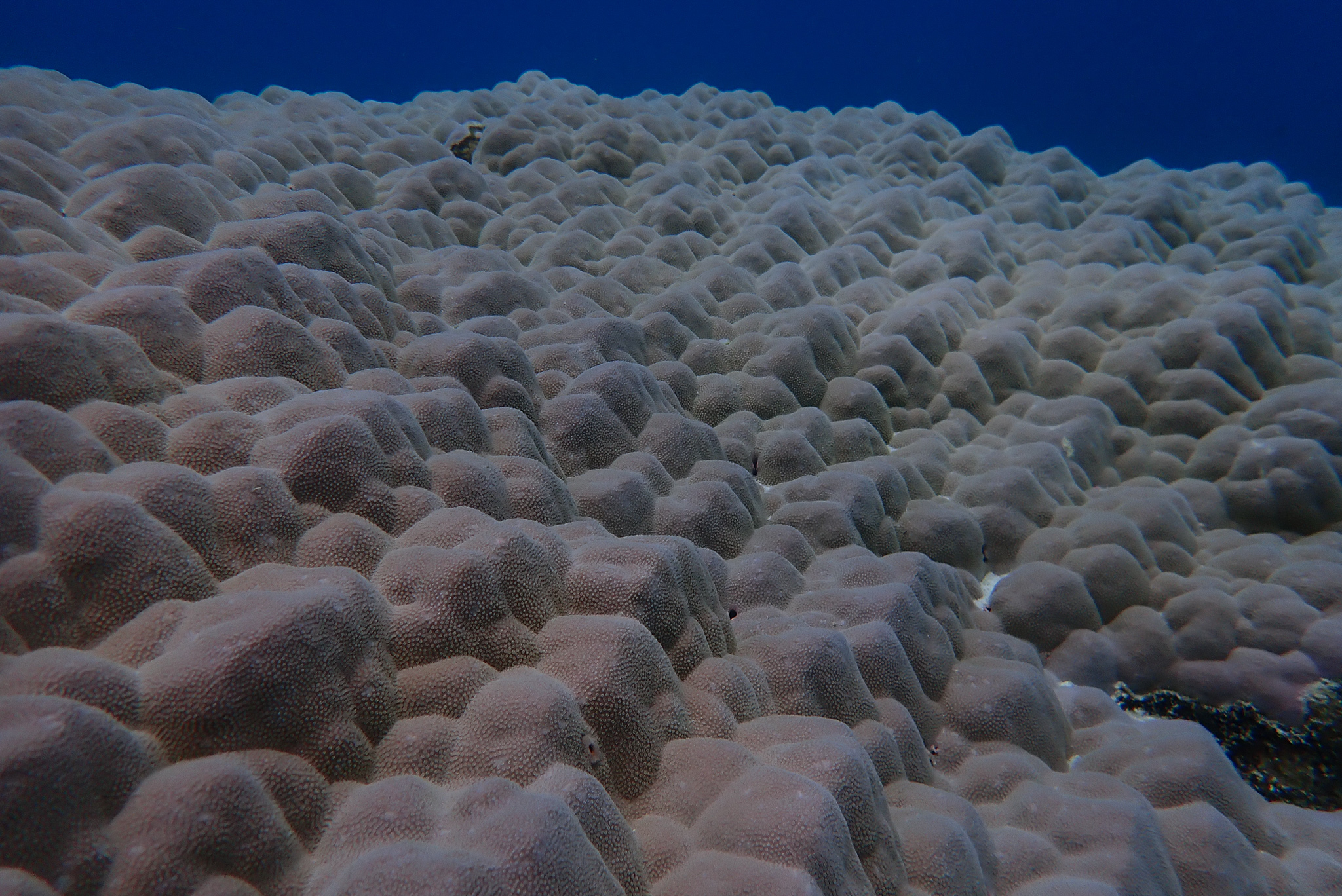
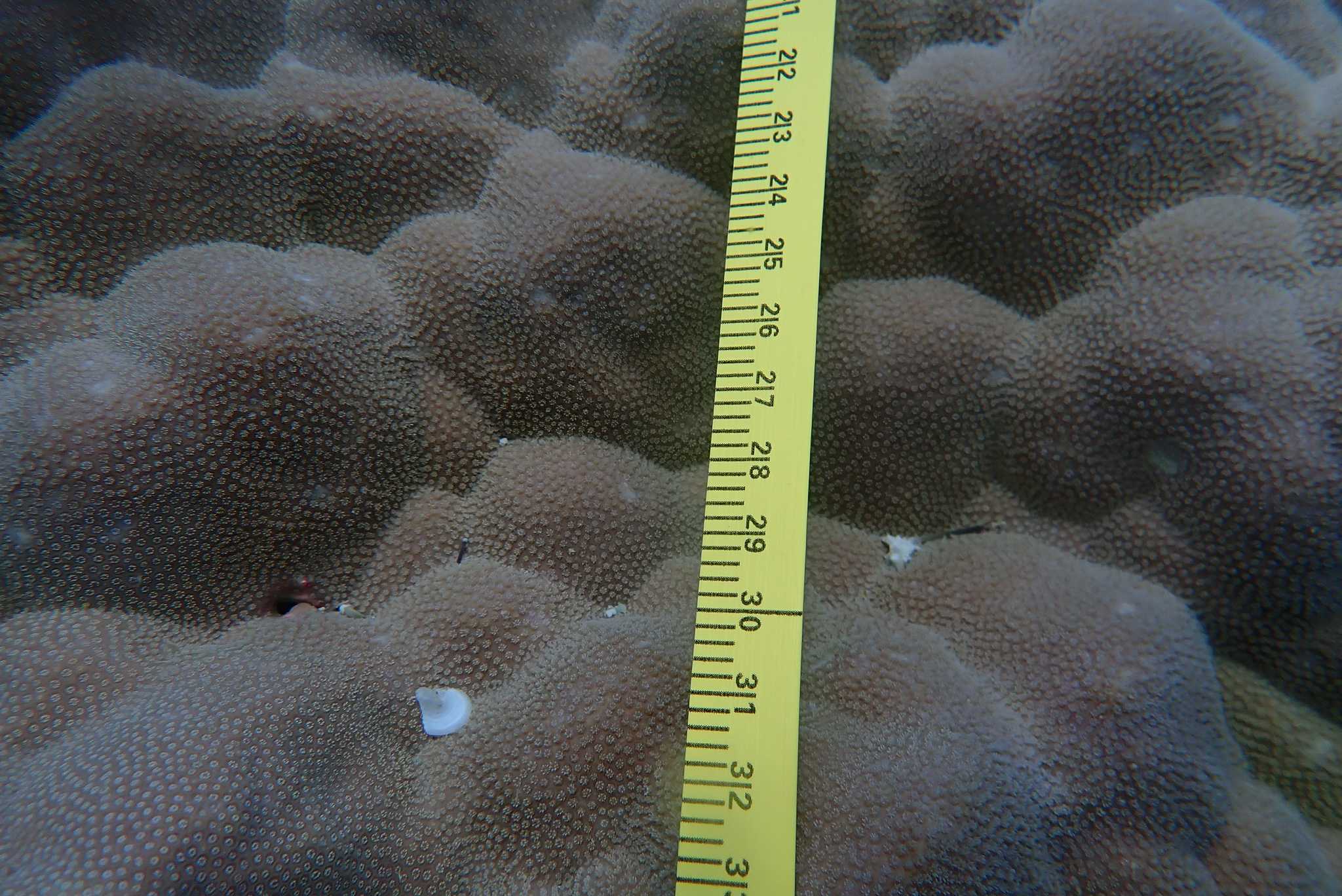
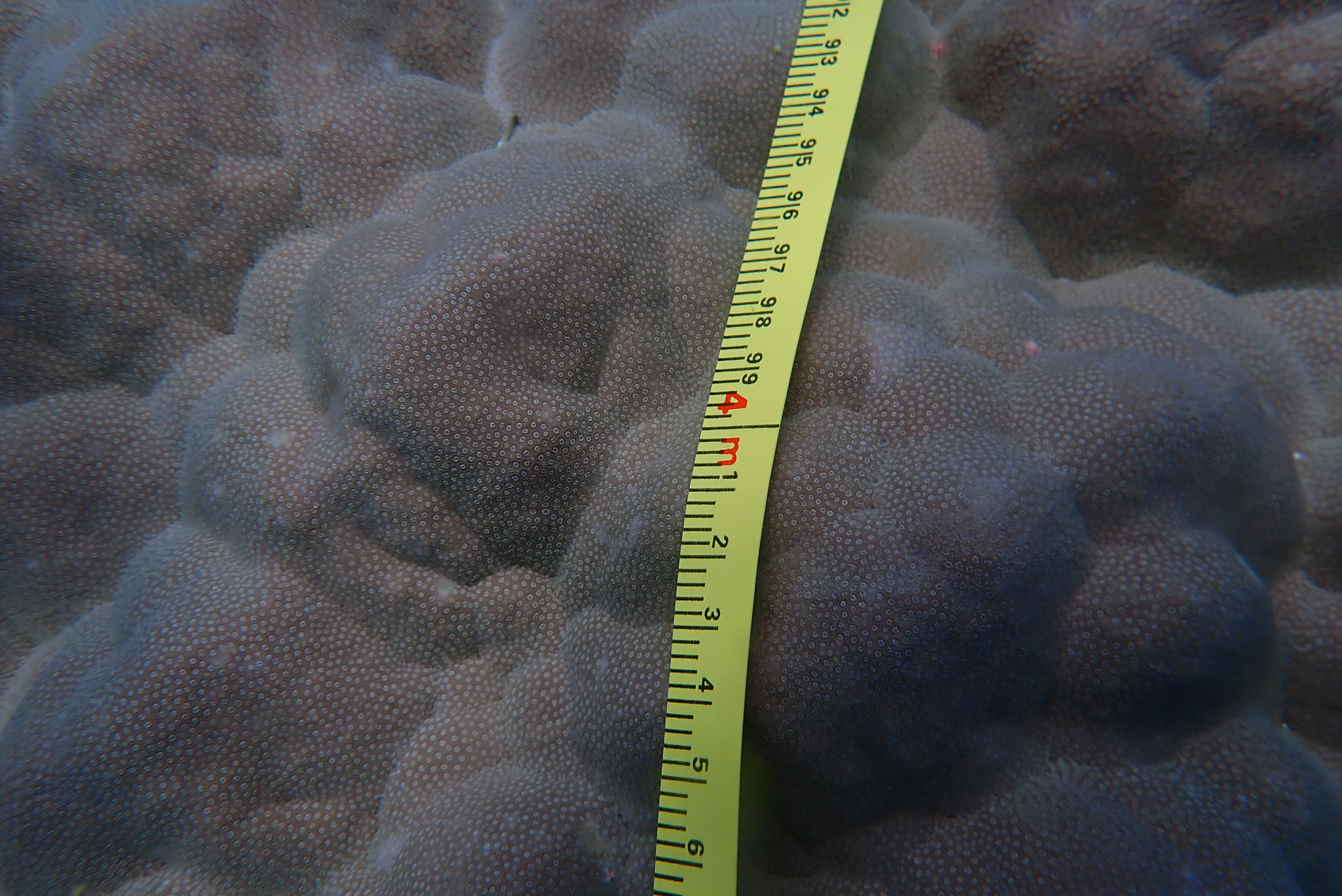
Does anyone want to guess how high and wide this very large old Porites coral colony is? These photographs were taken on 25th November 2020.

I was wondering how we might distinguish the individual coral colonies: what we might call it? Then I remembered how it all began with naming cyclones:

It started in 1887 when Queensland’s chief weather man Clement Wragge began naming tropical cyclones after the Greek alphabet, fabulous beasts, and politicians who annoyed him.

After Wragge retired in 1908, the naming of cyclones and storms occurred much less frequently, with only a handful of countries informally naming cyclones. It was almost 60 years later that the Bureau formalised the practice, with Western Australia’s Tropical Cyclone Bessie being the first Australian cyclone to be officially named on January 6, 1964.

Other countries quickly began using female names to identify the storms and cyclones that affected them.”

I was wondering what we might call this massive Porites amongst the Pixies, and then I received a phone call from my dear friend Craig Kelly MP.

Following in the early tradition of Clement Wragge for cyclones, I though we might name this Porites after Craig – a truth seeker and for many an annoying politician.

These close-up photographs of Porites Craig taken at the same time as the wide-angle images, show that the corallite wall is still intact and some have their tentacles extended. So, we can conclude Porites Craig was quite healthy on 25th November 2020. If AIMS cored this coral we could know the true climate history of this place back perhaps 500 years.

Ends.

Filed Under: Information Tagged With: Great Barrier Reef, Porites

Don’t Cancel Craig Kelly MP, Debate Him

February 3, 2021 By admin

The condemnation is coming largely from people who continue to be part of a relentless scare campaign over the pandemic, exacerbating fear rather than reassuring the public. The same cohort habitually underestimate the intelligence of the public, preferring to shield them from contrary views rather than trusting them to be discerning.

Politicians and journalists have almost unequalled access to platforms for debate and discussion. Instead of cancelling people they should contest them, instead of de-platforming them they should debate them.

I’m quoting from an article just published by Chris Kenny. He writes:

The efforts of the Left and the media pack to cancel Craig Kelly are at once pathetic and frightening. They are pretending he is an anti-vaxxer, pretending he is issuing dangerous medical advice and pretending he is wrong.

This is a classic example of how the green Left narrative and the general media, journalist narrative usually run in parallel. They work together pushing the same line but the very basis of their attack is seldom tested or scrutinised.

If you are a journalist or a politician and you really believe these things about Craig Kelly, then it is easy; detail the facts, show us what he has said, and demonstrate that it is wrong.

But they fail to do this. We have seen Kelly mocked in interviews on breakfast television, in the hallways of parliament and in countless pieces of commentary. There is plenty of heat but not much light.

It spilt into the hallways of parliament on Wednesday morning when Tanya Plibersek had a go at Kelly and he had a go back. It was unseemly but the most telling point came from Kelly, urging Plibersek to read the medical research. Predictably, the media called it for the Labor antagonist.

Kelly should not have shared a platform with loopy anti-vaxxer Pete Evans, but beyond that he has done little more than contribute to a sensible, open and well-referenced debate about research and trials into potential COVID-19 treatments.

He is not an anti-vaxxer. After those ugly corridor scenes, the prime minister called Kelly in to tell him to settle down, which is rather unfortunate, because this means giving in to the bullies.

It is better to accept the assessment from leading immunologist Professor Robert Clancy, as quoted in the Sydney Morning Herald and The Age, hardly barrackers for a conservative like Kelly.

Professor Clancy said he didn’t know Craig Kelly or agree with everything he has said but that he was “absolutely right” about hydroxychloroquine and ivermectin.

“Early treatment is highly effective,” he said, “Vaccines are critically important. They should not be seen as mutually exclusive. You need them both.”

Yet, Labor, the Greens and most of the press gallery continue to bay for Kelly’s blood, demand that he be silenced, and they do this without making their case, without detailing errors, and without showing the basic qualities of research, scepticism and objectivity they are supposed to practice.

Tanya Plibersek clashes with Craig Kelly in halls of press gallery
Labor frontbencher Tanya Plibersek has clashed with Liberal MP Craig Kelly accusing him of peddling quack COVID-19 cures in the halls of the press gallery.

And for all this, Kelly is now under real threat because he is providing a political distraction. This is a ridiculous way to conduct a searching discussion about a many-pronged attack against a global pandemic.

Written by Chris Kenny, and just now published at The Australian.

**********
The feature image is Craig with me at Bob Carter’s funeral in Townsville.

Filed Under: Information

  • « Go to Previous Page
  • Go to page 1
  • Interim pages omitted …
  • Go to page 4
  • Go to page 5
  • Go to page 6
  • Go to page 7
  • Go to page 8
  • Interim pages omitted …
  • Go to page 607
  • Go to Next Page »

Primary Sidebar

Recent Comments

  • Ian Thomson on Vax-ed as Sick as Unvax-ed, Amongst My Friends
  • Dave Ross on Vax-ed as Sick as Unvax-ed, Amongst My Friends
  • Dave Ross on Vax-ed as Sick as Unvax-ed, Amongst My Friends
  • Alex on Incarceration Nation: Frightened of Ivermectin, and Dihydrogen monoxide
  • Wilhelm Grimm III on Incarceration Nation: Frightened of Ivermectin, and Dihydrogen monoxide

Subscribe For News Updates

  • This field is for validation purposes and should be left unchanged.

December 2025
M T W T F S S
1234567
891011121314
15161718192021
22232425262728
293031  
« Jan    

Archives

Footer

About Me

Jennifer Marohasy Jennifer Marohasy BSc PhD has worked in industry and government. She is currently researching a novel technique for long-range weather forecasting funded by the B. Macfie Family Foundation. Read more

Subscribe For News Updates

Subscribe Me

Contact Me

To get in touch with Jennifer call 0418873222 or international call +61418873222.

Email: jennifermarohasy at gmail.com

Connect With Me

  • Facebook
  • LinkedIn
  • RSS
  • Twitter
  • YouTube

Copyright © 2014 - 2018 Jennifer Marohasy. All rights reserved. | Legal

Website by 46digital