• Skip to primary navigation
  • Skip to main content
  • Skip to primary sidebar
  • Skip to footer
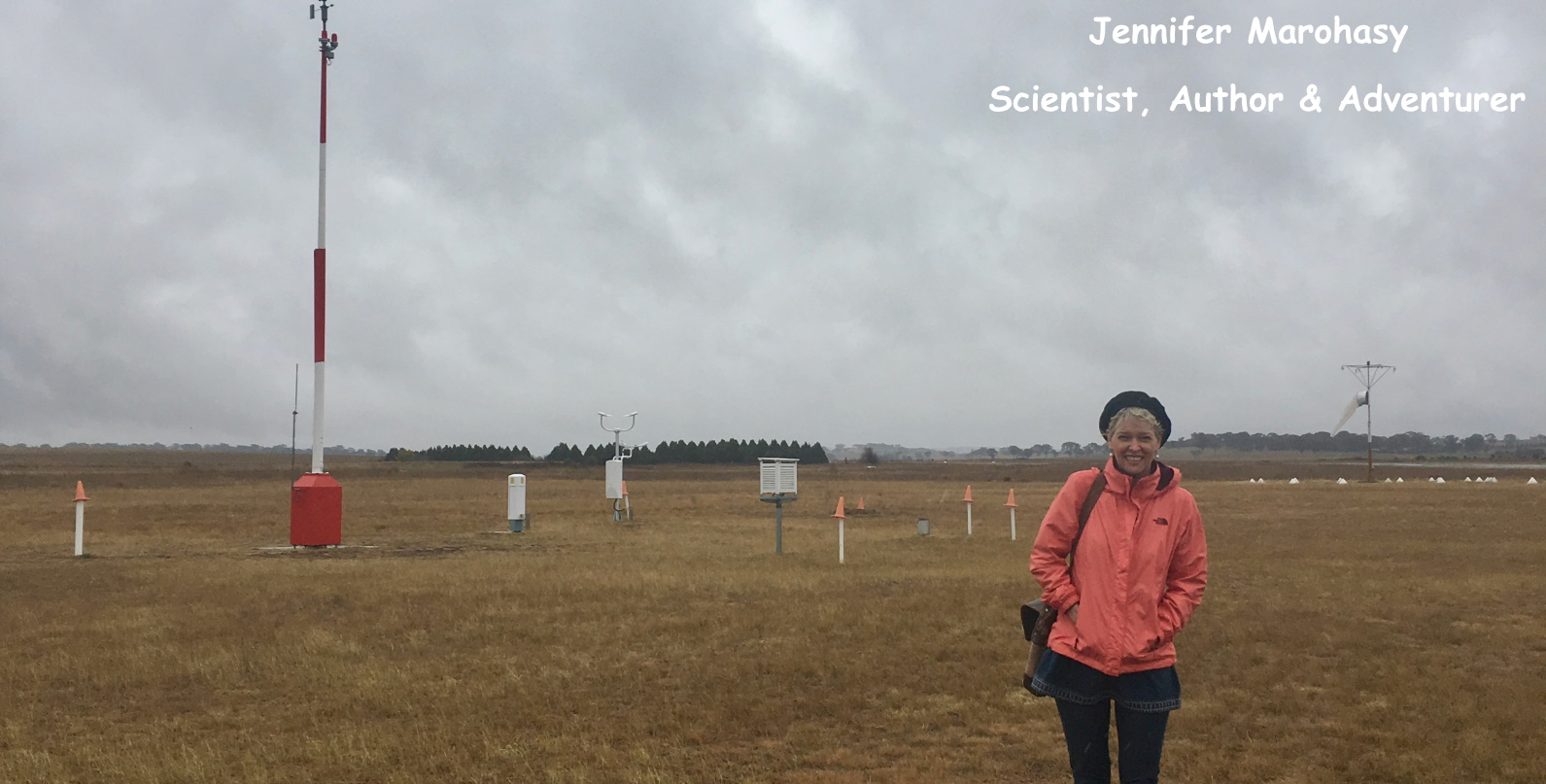
Jennifer Marohasy

Jennifer Marohasy

a forum for the discussion of issues concerning the natural environment

  • Home
  • About
  • Publications
  • Speaker
  • Blog
  • Temperatures
  • Coral Reefs
  • Contact
  • Subscribe

Blog

Tax Has Been Axed

July 17, 2014 By jennifer

THE Australian Senate just passed the Clean Energy Legislation (Carbon Tax Repeal) Bill with a 39-32 vote effectively axing Australia’s carbon tax. Labor and the Greens voted against. South Australian senator Nick Xenophon was absent.

Greens leader Senator Milne warned the new senators who supported the repeal that it will will be their political legacy. These new senators are Bob Day, David Leyonhjelm, Ricky Muir, Jackie Lambie, Glenn Lazarus and Dio Wang.

Well done.
Filed Under: Information

Philosophising on Bushfires: A Note from David Ward

July 16, 2014 By jennifer

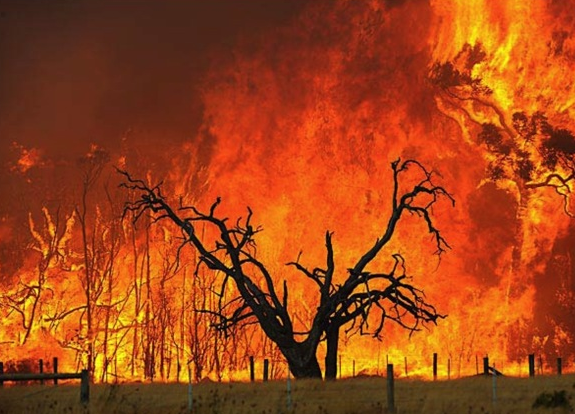
FIRE in the landscape, or bushfire, is Australia’s most lethal and costly natural hazard. Big, uncontrollable bushfires can kill millions of trees and wild animals, thousands of farm animals, and sometimes humans too. Apart from deaths, bushfires incinerate property, such as bridges, farm fencing, homes, and even, a few years ago, an astronomical observatory. The cost to the economy is significant. So bushfire management is, for Australians, no trivial matter. Yet, despite many enquiries since the 1930s, we still have serious bushfires, which seem to be increasing in extent and intensity.

Image courtesy of http://bushfirefront.com.au

Philosophers may be interested in bushfire epistemology, logic, ethics, aesthetics, and ontology. Bushfire epistemology is very diverse, including traditional Aboriginal knowledge; historical records from early European settler diaries, letters, and journals; recent scientific research; economics, politics; law, and even psychology. Logic is needed to pull these together and arrive at rational policy on bushfire.

Although logic may seem to point to a particular solution, we must beware of the paths of false logic. Also, there may be ethical objections to some seemingly logical solutions. For example bulldozing all native vegetation might abolish bushfire, but would not be a good idea from many other points of view. Even aesthetics come into the picture. Many urban Australians, of recent migrant descent, see blackened ground as ugly, but Aborigines see it as beautiful, and describe it as ‘cleaned up’. Although bushfire is no doubt ugly to victims, flames do have a certain beauty, especially when mild and not threatening. Many of us like a campfire. Ontology is always useful, to distinguish between what is real, and what is imaginary.

While local volunteers provide most of the weary fire fighters, they are under the ultimate direction of salaried fire officers, who are public servants, wear white shirts, big hats, many medals, and appear on television, looking worried. Budget and big hats may be central to their thinking. Policy and budget are largely dictated by leading politicians, who may have budgets and metaphorical big hats of their own, and usually appear by helicopter in the aftermath, dispensing sympathy.

It may seem, to some, that Australia has addressed the bushfire bureau-political chain well (especially the hats, medals, helicopters and sympathy), yet there is ongoing dispute over the best way to actually prevent destructive bushfires. Some, including most farmers and volunteer bushfire fighters, with practical bushfire experience, are in favour of simplification, by returning to something like traditional Aboriginal management, where the bush was deliberately lit at short intervals, in a mosaic pattern, so keeping fuels low, and fires mild, even in summer. Local knowledge is essential for this approach. Those in white shirts should play a supporting, not directing role. In other words, let’s make fire our friend, and use fire to fight fire.

There are many historical accounts of this approach, for example the early German explorer Ludwig Leichardt described frequent mild bushfires in New South Wales in the 1840s, lit by Aborigines. He pointed out that such fires, although widespread and common, were not a threat to humans. I suspect there were few big hats and medals in those days. Early European farmers imitated Aboriginal burning, to keep themselves safe. More recent bushfires in New South Wales, often in long unburnt areas such as National Parks, have been unmistakeably menacing, due to heavier fuel. In 2013 bushfires in NSW caused two deaths, and the loss of 248 houses. The cost was put at $94 million.

Some natural scientists say that bushfire history is anecdote; or mythology; that little is known about Aboriginal burning; or even that such burning is impossible; and that frequent, mild fires destroy ‘biodiversity’ (however that slippery word may be defined). They say that history is unreliable, and only natural science can lead to the truth about bushfire. I suspect that the philosopher Robin G. Collingwood might have strongly disagreed with that view, since he saw history as an essential part of human understanding. Scientists should be aware that there is a history of science.

However, one Australian professor of biology, apparently dismissing history, wrote a letter to the prestigious journal Nature, titled “Don’t Fight Fire with Fire”. This may have reinforced his appointment as a bushfire adviser to the New South Wales government, from 1996-2004. In that time there were many uncontrollable bushfires. We should not, of course, allow ourselves to be misled by the old logical error of post hoc, ergo propter hoc, but we can still ponder. That professor now holds an academic appointment in the United Arab Emirates, where I would imagine there are few bushfires. Again, we should avoid assuming that his presence there has brought about that situation.

But is biology the most reliable source of information on bushfire? Biologists usually use statistical induction, which is a useful tool, but can be misused. Logical blunders have been noticed in refereed natural science journals. Could the broader scope of philosophy help us to get closer to the truth? History, and practical experience, can be astringent cross checks on findings by the scientific method, or a version thereof.

The cynic Ambrose Bierce is not widely acclaimed as a philosopher, yet he did have some useful insights. Before the First World War, in his ‘Devil’s Dictionary’, the cunning old codger defined logic as “The art of thinking and reasoning in strict accordance with the limitations and incapacities of the human misunderstanding”. This may dismay learned, studious people like me, who are entranced by our own beamish logic, but we should remember that Ambrose also defined learning as “The kind of ignorance distinguishing the studious”.

The perspicacious Ambrose did not stop there. He gave a clear example of a suspect syllogism, in which the statement that sixty men can do a piece of work sixty times as quickly as one man (major premise), followed by the statement that one man can dig a post-hole in sixty seconds (minor premise), leads to the unavoidable mathematical conclusion that sixty men can dig a post-hole in one second. Those who have, at one time or another, actually had a shovel in their hands, may find this questionable.

Similarly, those who have, at one time or another, actually had a fire hose in their hands, breathed smoke up their nostrils, felt the enormous radiant heat of fire in long unburnt fuel, heard the roar, and felt the ground shake as a bushfire goes its merry way, may be perturbed at statements by some studious ecologists, apparently supported by statistical evidence, that deliberate, mild burning in cooler weather, to mitigate uncontrollable holocaust bushfires in hot, windy weather, is ineffectual, and harmful to the bush.

Apart from ecology, lawyers have their own philosophy, called jurisprudence. Like Ambrose Bierce, some medieval Scottish lawyers may not be recognised as philosophers, but showed perspicacity in taking the Latin verb reptare (to crawl or creep) and forming the legal terms subreption and obreption. These mean, respectively, to crawl under the truth, and to crawl over it; in other words to mislead by telling less than the whole truth, or by telling more than the whole truth. In bushfire debate, as in courtrooms, we need the truth, the whole truth, and nothing but the truth.

The post-hole syllogism is a clear example of subreption, as are some claims made in the bushfire debate. Some news media reports, or papers in refereed journals of ecology, may mislead public, and hence political opinion. As an example, it may be said that vegetation has been destroyed, without a close definition of that word. Although they may appear to be dead, many Australian plants are well adapted to bushfire, have lignotubers, and resprout readily soon after it. They are no more destroyed, by mild fire, than a garden shrub which is pruned. Other Australian plants need fire, or smoke, in order to flower, or germinate from seed. Words can be deceptive, as philosophers such as Locke, Hobbes and Wittgenstein noted.

With regard to the political aspects of bushfire, Ambrose Bierce had it well covered. He defined politics as a strife of interests masquerading as a contest of principles. The strife of interests includes winning the votes of urban dwellers who are rarely subject to bushfire, yet may have assorted passionate notions about its ecology, perhaps gleaned from refereed journals. The contest of principles, in this case, is the ethical duty of care to both nature and human society.

As a former loyal public servant, I won’t give Ambrose’s cynical definition of the word politician, but it involves the word eel. We should remember, of course, that dictionaries can be wrong. Let’s hope that philosophy can come to the rescue, and that there are at least some worthy Australian politicians, and public servants, who understand that bushfire is Australia’s most lethal, costly, and urgent natural hazard, and won’t use pseudo-science to wriggle out of their duty of care, or ignore bushfire in the hope that it will go away, or become somebody else’s responsibility. Should a basic grasp of philosophy be a requirement for political office? Plato thought so.

Might governments have a Department of Philosophy, to peer deeply into the claims of tendentious lobbyists, no matter what their academic qualifications in natural science, or the length of their publication lists? There is an opinion that those who publish the most, often have the least to say. It’s a pity that Ambrose Bierce disappeared in 1914, so isn’t here to join the debate on philosophy and bushfire. I hope some from Australia, or other fire prone lands, such as USA, Canada, Africa, and even Europe, will.

© DR DAVID WARD 2014
David Ward has a PhD in Landscape Ecology, was formerly a Senior Research Scientist with the West Australian Department of Conservation and Land Management, and also a Senior Visiting Research Fellow at Curtin University, Perth, Western Australia. He has been involved in research into bushfire behaviour, bushfire ecology, and bushfire history for over forty five years. He has also occasionally held a fire hose in his hands, and is writing a book called ‘Our Dangerous Friend: Bushfire Philosophy in South-West Australia’. His email is mumpnpop at iinet.net.au

Filed Under: Information, Philosophy Tagged With: Bushfires, Philosophy

Science Fiction & Climate Change: A Speech by George Christensen MP in Vegas

July 15, 2014 By jennifer

“I KNOW good science fiction when I see it. And that is what I have seen in the climate change debate – a lot of fiction dressed up as science. Most great works of fiction end up on the silver screen so it was inevitable that climate change would become a “major motion picture”.

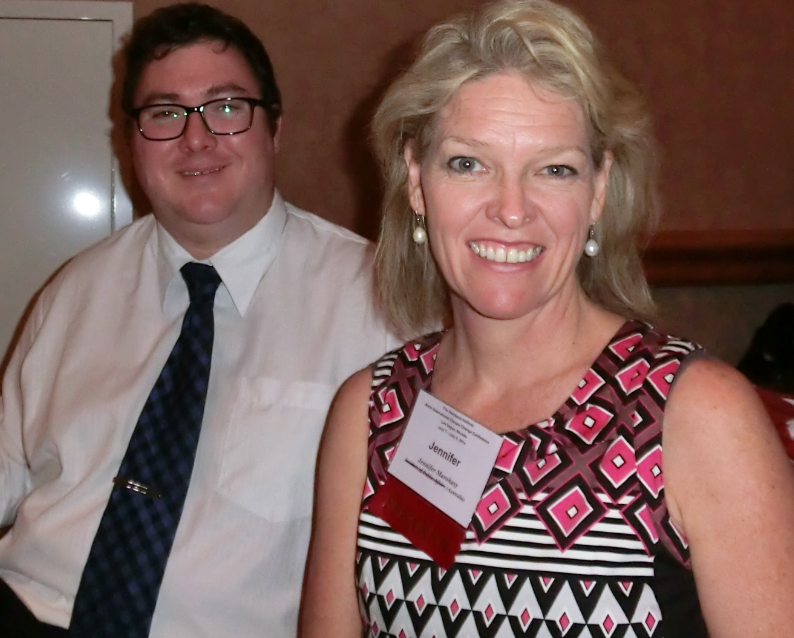
Jennifer Marohasy and George Christensen in Vegas

But a screenwriter has several angles to work with and which one they choose depends on whereabouts on the climate change timeline they pick up the story.

Early on in the piece, it is a disaster-cum-thriller plot as prophets warn of the impending doom of mankind and the planet. The story then lurches towards a slasher-style horror flick as ever more graphic descriptions are used to scare people into submission. Finally, the plot descends into a farcical comedy as government and environmental terrorists make ridiculous suggestions about how mankind will control the planet. In Australia, we have crossed that point where the horror genre is descending into a comedy…”

So, these were some of the words George Christensen MP used to open his speech to the Ninth International Conference on Climate Change in Las Vegas last week. It was entertaining with snippets of real information about what has been the economic cost of this folly to the Australian nation. You can watch the entire presentation from the link below (it starts at 29:00) or here (Keynote Lunch Tuesday), and read the text here.


Broadcast live streaming video on Ustream

Filed Under: Information, Opinion Tagged With: Climate & Climate Change, Conferences

The Need for a New Paradigm, Including for Rainfall Forecasting

July 11, 2014 By jennifer

The following paper was delivered by Jennifer Marohasy at the Ninth International Conference on Climate Change in Las Vegas on Wednesday 9th July 2013 in Panel 13.

Jennifer Marohasy at 9ICCC

SCIENTIFIC disciplines are always underpinned by theories that collectively define the dominant paradigm. In the case of modern climate science that paradigm is anthropogenic global warming (AGW). It defines the research questions asked, and dictates the methodology employed by the majority of climate scientists most of the time. AGW may be a paradigm with little practical utility and tremendous political value, but it’s a paradigm none-the-less. The world’s most powerful and influential leaders also endorse AGW. Even Australia’s Prime Minister Tony Abbott said in June, “I don’t think people should run around pretending there is disagreement when none exists. President Obama and myself both take climate change very seriously.”

AGW has even dictated the question for this session, “How is climate change affecting sea level, rainfall and water availability? Will a warming planet complicate or alleviate water challenges?”

But what is the utility of such a question, particularly given there is growing evidence that planet earth has already entered what could become a protracted period of cooling? This is not what we hear in the mainstream media, but this view is supported by evidence in the unadjusted temperature data for my state of Queensland in Australia, and is also what some astrophysicists have been forecasting for some time.

If mainstream science operated under a different paradigm, one where researchers believed it was possible to forecast weather and climate not just 3 days in advance, but with a high level of skill 3 months, or 3 years in advance, and if their primary focus was not justice, equity and curbing greed, but rather the provision of useful information to Joe Citizen, the question for this session might have been very different. “How much rain is forecast to fall on California’s Central Valley each and every month for the next 2 years?” Answering such a question could not only aid food production, but also facilitate planning for floods and drought. The work I have been undertaking with Professor John Abbot, Central Queensland University, is attempting to address this type of question for Queensland, Australia.

The General Circulation Models (GCMs) that underpin the paradigm of AGW have difficulty generating rainfall forecasts with any real level of skill more than 4 days in advance. If a fraction of the billions spent developing these simulation models, had instead been invested in a theory of climate underpinned with state-of-the-art statistical models based on an understanding of natural climate cycles, I believe we would be much closer to being able to mitigate climate variability across the globe through better rainfall forecasts with very significant benefits for all of mankind, but particularly subsistence farmers in places like India. In short, what we really need is a new paradigm for climate science, underpinned by new tools with some utility.

So, what I will do in the limited time available today is tell you something about how artificial neural networks (ANNs), a form of Artificial Intelligence (AI), have potential as a new tool for a new paradigm, and in particular their application to rainfall forecasting. I will then be in a position to better answer the question for this session concerning rainfall and water availability in a warming world.

ANNs are massive, parallel-distributed, information-processing systems with characteristics resembling the biological neural networks of the human brain. Imagine a computer with the capacity to search and find the complex linear, and also nonlinear relationships, which may exist between local temperature, rainfall, and Pacific Ocean phenomena including changing patterns of sea surface temperatures and pressure. Image a computer with a powerful and versatile data-modelling tool that is able to capture and represent input and output relationships acquiring knowledge, through learning from multiple examplars deciphered from vast arrays of historical data, storing this knowledge within inter-neuron connections strengths known as synaptic weights. A computer that can learn relationships, model and measure relationships, then use this information to forecast rainfall.

This is essentially what the ANN that John Abbot and I built to forecast rainfall for 17 locations across Queensland can do. In a paper by us published two year ago by the Chinese Academy of Sciences’ journal Advances in Atmospheric Science (Volume 29) we detail the model and demonstrate how much more skilful medium-term monthly forecasts from this model are, relative to forecasts from the Australian Bureau of Meteorology’s best GCM. In a more recent publication in the journal Atmospheric Research (Volume 138) we show how forecasts for Queensland are improved with inclusion of the Inter-decadal Pacific Oscillation. In a conference paper presented a year ago in Southampton (River Basin Management VII, WIT Press) we show the potential of ANN to forecast extreme rainfall, specifically the devastating flooding that submerged Queensland’s capital Brisbane, in January 2011.

We have another paper currently in press at the International Journal of Sustainable Development and Planning, which considers the affect of a 3 degree C increase in temperature on rainfall, a component of the question for this panel. What did we find? In our cast study when maximum and minimum temperatures were increased by 3 degree Celsius there was a decline in summer rainfall and an increase in winter rainfall at a placed called Nebo in central Queensland.

The bottom-line is that ANNs can already provide better medium-term rainfall forecasts for Queensland, Australia. This has a real practical value. ANNs can also provide an independent method of GCM validation under future climates with results from Nebo suggesting a smoothing of the annual variability in rainfall rather than more climatic extremes assuming global warming.

ANNs use the existence of recurrent patterns in historical data to inform the rainfall forecast. That our rainfall forecasts drawing in most cases on about 85 years of temperature data show considerable skill, means natural climate cycles must persist. Climate is not on a new trajectory as suggested by many proponents of AGW.

A great advantage of using ANNs is that they can easily be adapted to test and incorporate additional input data series, as climatic knowledge develops. If the relationship can be quantified it can be modelled by an ANNs, including potentially lunar, solar and planetary cycles.

While AGW is a demonstrably failed paradigm, it will be replaced only when a critical number of practicing scientists start working on something new. New paradigms always have their own questions and their own tools. In the same way that GCMs underpin AGW theory, ANNs could underpin a new paradigm based on better quantifying the drives of natural climate cycles.

Henry David Thoreau wrote, “In the long run, men only hit what they aim at.” What are we as a community of sceptics aiming for? Just the overthrow of AGW, or can we aim much higher, including for skilful rainfall forecasts?

Thank you.

Acknowledgements

I would like to thank The Heartland Institute for the opportunity to present at the Ninth International Conference on Climate Change. All the research on the application of artificial neural networks to medium-term rainfall forecasting detailed here has been done in collaboration with Professor John Abbot funded by the B. Macfie Family Foundation.

A video of the talk can be found at this link… http://climateconferences.heartland.org/breakout-1-streaming/
Scroll to find image of me in red, click on the link. The tiny URL for this blog post is http://tinyurl.com/m6fbq9p.

Filed Under: Information Tagged With: Artificial Neural Networks, Climate & Climate Change

Grizzly Man Swims with Polar Bear

July 7, 2014 By jennifer

This polar bear was raised in the home of Mark Dumas, apparently from the age of six weeks.

Filed Under: Nature Photographs Tagged With: Polar Bears

What about Draining Lake Albert at the bottom of the Murray River?

July 4, 2014 By jennifer

Bendigo-based long-range weather forecaster Kevin Long has repeatedly reminded me that, at the end of the day it is rainfall cycles that are most important in Australia, not temperature cycles. Can we expect a run of drier years in the Murray Darling? Is this the consensus amongst not just the mainstream climate science community, but also the so-called sceptics including astrophysicists and long-range weather forecasters who rely on lunar and solar cycles?

If this is the case, despite the buyback of large quantities of water, Lake Albert at the very bottom of the Murray Darling catchment is in a particularly precarious situation without a direct connection to either the Southern Ocean or Murray River.

In a recent blog post at Myth and the Murray, I have drawn parallels between Denmark’s Bøtø Nor and the Lower Murray, and asked why there isn’t some discussion about the possibility of draining Lake Albert and turning it into a nature reserve?

Meanwhile the mulloway fishery could be restored to Lake Alexandrina simply by modifying or removing the barrages. Indeed record catches in the past occurred during drought years, but that was before the barrages.

Ultimately sensible water policy in the Murray Darling needs to factor in the likelihood that we could be in for some exceptionally dry years, and that the best way to drought-proof is to restore the estuary so the Lower Lakes are no longer dependent on upstream storages. But neither the restoration of the estuary nor the possibility of a mega-drought are on the government’s agenda.

These issues were raised in today’s occasional newsletter from Myth and the Murray. If you would like to receive the next newsletter: click here.

M&TM LG v3a

Filed Under: Information Tagged With: Murray River

  • « Go to Previous Page
  • Go to page 1
  • Interim pages omitted …
  • Go to page 36
  • Go to page 37
  • Go to page 38
  • Go to page 39
  • Go to page 40
  • Interim pages omitted …
  • Go to page 607
  • Go to Next Page »

Primary Sidebar

Recent Comments

  • Ian Thomson on Vax-ed as Sick as Unvax-ed, Amongst My Friends
  • Dave Ross on Vax-ed as Sick as Unvax-ed, Amongst My Friends
  • Dave Ross on Vax-ed as Sick as Unvax-ed, Amongst My Friends
  • Alex on Incarceration Nation: Frightened of Ivermectin, and Dihydrogen monoxide
  • Wilhelm Grimm III on Incarceration Nation: Frightened of Ivermectin, and Dihydrogen monoxide

Subscribe For News Updates

  • This field is for validation purposes and should be left unchanged.

December 2025
M T W T F S S
1234567
891011121314
15161718192021
22232425262728
293031  
« Jan    

Archives

Footer

About Me

Jennifer Marohasy Jennifer Marohasy BSc PhD has worked in industry and government. She is currently researching a novel technique for long-range weather forecasting funded by the B. Macfie Family Foundation. Read more

Subscribe For News Updates

Subscribe Me

Contact Me

To get in touch with Jennifer call 0418873222 or international call +61418873222.

Email: jennifermarohasy at gmail.com

Connect With Me

  • Facebook
  • LinkedIn
  • RSS
  • Twitter
  • YouTube

Copyright © 2014 - 2018 Jennifer Marohasy. All rights reserved. | Legal

Website by 46digital