Opinion
Ten of the Worst Climate Research Papers: 5 Years On
I consider anthropogenic global warming, AGW, a failed theory, but it still shuffles on like an animated corpse sustained by money, politics and the faithful. The faithful keep publishing junk science. I put a list together of the 10 worst climate science research papers in September 2008 [1]. I added to this list in April 2009 [2]. There was more by me published at Jo’s AGW ‘science’ has fallen over a cliff. Now I’m adding another ten papers to the worst list, so I guess it’s the ten recent worst.
Regards, Cohenite.
1. Distinctive climate signals in reanalysis of global ocean heat content. By Magdalena A. Balmaseda, Kevin E. Trenberth and Erland Kallen. Published in Geophysical Research Letters, 2013. http://onlinelibrary.wiley.com/doi/10.1002/grl.50382/abstract
Kevin Trenberth and his researchers have never been able to find the ‘missing heat’. Trenberth still insists it is at the bottom of the ocean. This is despite sea surface temperatures declining, demonstrable reasons why back radiation, the Deus ex machina of AGW, cannot heat the oceans and the top 700 meters of the ocean not warming, at least since the accurate measurement of Ocean Heat Content [OHC] began in 2003, as David Evans has shown.
Trenberth ignores all this and the basic point of how the bottom can heat while the middle and top don’t and explains why the deep ocean heat content is increasing: “Sensitivity experiments illustrate that surface wind variability is largely responsible for the changing ocean heat vertical distribution.”
So has there been increasing wind variability in the surface winds? Not according to the data!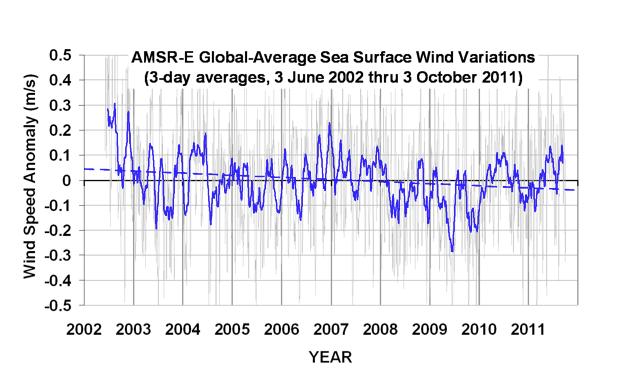
2. Quantifying the consensus on anthropogenic global warming in the scientific literature. By John Cook et. al. Published in Environmental Research Letters, 2013 http://iopscience.iop.org/1748-9326/8/2/024024/article
The consensus is the mainstay of AGW ‘science’. According to Cook et. al. and many others it’s always the case that AGW is true because the majority of scientists say it is. But this is not science! It only takes one contradiction to disprove a scientific theory as Karl Popper’s swan analogy shows. John Cook’s latest paper promoting the ‘consensus’ has been critiqued by Jo, Watts, some German guys and by Lucia. Lucia and Brandon Schollenberger analyse Cook’s methodology and Guidelines for classifying climate papers into ‘support’ and ‘reject’ AGW categories and find that Cook’s paper disproves the consensus. That is, analysis of Cook et. al. suggests that more climate papers reject AGW. So has Cook disproved the consensus theory of AGW? [Read more…] about Ten of the Worst Climate Research Papers: 5 Years On
Dam Building in Singapore
MANY South Australians, and the Australian government, and the Murray Darling Basin Authority, claim that it is necessary to have barrages across the bottom of the Murray River because of the upstream irrigation industries [1]. There is no equivalent large-scale irrigation in Singapore, but they have barrages across the Marina channel. 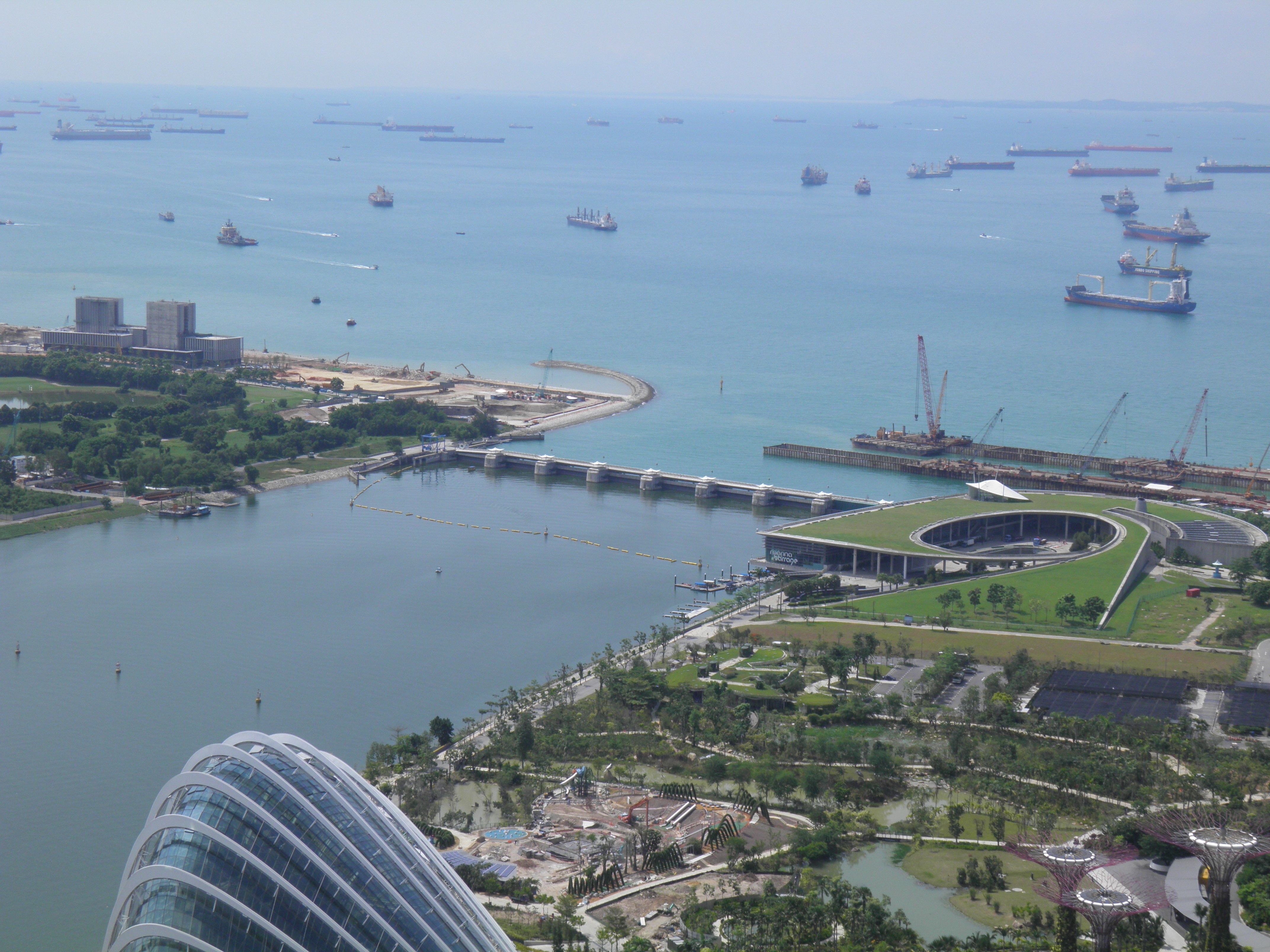
In Singapore, unlike Australia, the government freely admit that the barrages have dammed the estuary to create a freshwater reservoir. Such refreshing honesty.
Singapore is a tiny country with not much freshwater [2]. An official website explains [3]:
“Built across the mouth of the Marina Channel, the Marina Barrage creates Singapore’s 15th reservoir, and the first in the heart of the city. With a catchment area of 10,000 hectares, or one-sixth the size of Singapore, the Marina catchment is the island’s largest and most urbanised catchment. Together with two other new reservoirs, the Marina Reservoir increased Singapore’s water catchment from half to two-thirds of the country’s land area in 2011.”
“As the water in the Marina Basin is unaffected by the tides, its water level will be kept constant all year round. This is ideal for all kinds of recreational activities such as boating, windsurfing, kayaking and dragonboating…”
And this blog post is to reintroduce you to the revamped Myth and the Murray website that includes more information about the River Murray barrages … www.mythandthemurray.org
Open Thread
“NO one can deny that aspects of the environment are predictable. Day follows night, summer follows winter, most of us sleep when it’s dark, eat at midday and watch the 6.00pm news. Random events are for the most part whimsically quaint, as when the phone rings and it turns out to be the person you were thinking about. Oh, you exclaim, I must be psychic. But there is also a likelihood that between your and your friend’s life, some parallel pattern exists unaware to you both…”
from Ken Ring’s book entitled ‘Predicting Weather by the Moon’
Haven’t Lost Half of the Great Barrier Reef: Part 2, Junk Methodology
HOW could scientists conclude that half of the Great Barrier Reef has been lost in the last 27 years: target coral reefs most affected by cyclones, coral bleaching and crown-of-thorn starfish outbreaks, while ignoring more representative reefs with healthy corals. And I didn’t make that up! It’s documented in a peer-reviewed study by H. Sweatman, S. Delean and C. Syms entitled: ‘Assessing loss of coral cover on Australia’s Great Barrier Reef over two decades, with implications for longer-term trends’ [1].
Indeed the claim that there has been a 50 per cent decline in coral cover at the Great Barrier Reef appears to be largely an artifice of the survey method. In particular, coral reefs most severely affected by bleaching in 1998, and reefs disproportionally affected by crown-of-thorn starfish outbreaks, and also reefs with insufficient time to recover from cyclones in 2009 and 2011 were targeted for repeated sampling, while more representative reefs with healthy corals were ignored.
In part 1 of this series, I reported that the World Heritage Centre will demand action by the Australian Government to spend vast sums of taxpayers’ funds to address this manufactured issue, or have the Great Barrier Reef placed on its World Heritage in Danger List. This demand is a recommendation of the United Nation’s International Union for the Conservation of Nature, UNESCO, in its State of Conservation report prepared for the June meeting of the UNESCO committee [2], which in turn is based upon a report of the environmental lobby groups WWF and the Australian Marine Conservation Society, whose report [3] in turn relies on the claims of a peer reviewed study by Glenn De’ath and co-workers [4].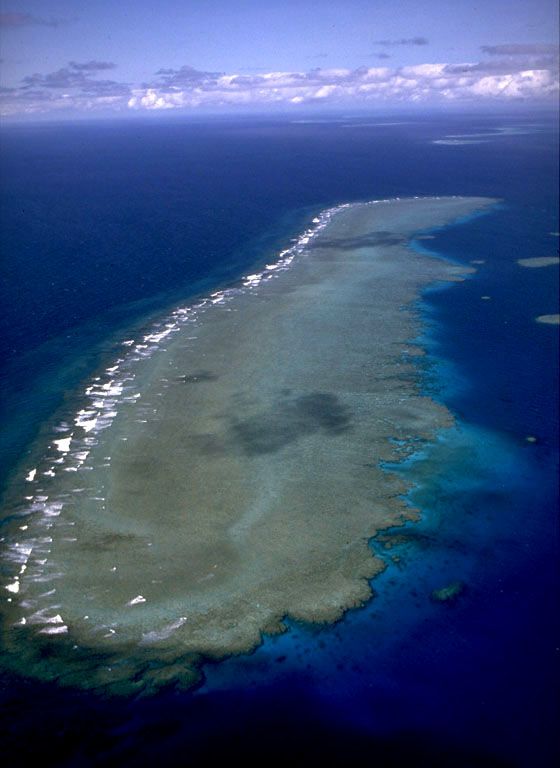
The paper by De’ath and co-workers published in the US Proceedings of the National Academy of Sciences in 2012 [5] does indeed claim a 50 per cent decline in coral cover based on 27 years of data from the Australian Institute of Marine Sciences (AIMS) Long-Term Monitoring Program. [Read more…] about Haven’t Lost Half of the Great Barrier Reef: Part 2, Junk Methodology
Undemocratic Politics Again Determines Land Use in Tasmania: Alan Ashbarry
A decision made in Cambodia in June by the United Nation’s World Heritage committee could add 172,000 hectares of forest to the Tasmanian Wilderness World Heritage Area. The Gillard government is seeking to have the deal sealed without proper scrutiny, in particular by using a loophole in the UN guidelines to label it as a “minor” modification so it can be approved before a likely change of government in September.
The proposal for a “minor” boundary modification was developed by the Federal minister for the Environment, Tony Burke, as part of the outcomes of the Tasmanian Forest Agreement signed between three main environmental lobby groups and industry representatives on 22 November 2012. The industry signed up with the hope the proposal would end years of campaigning against the Tasmanian forest industry.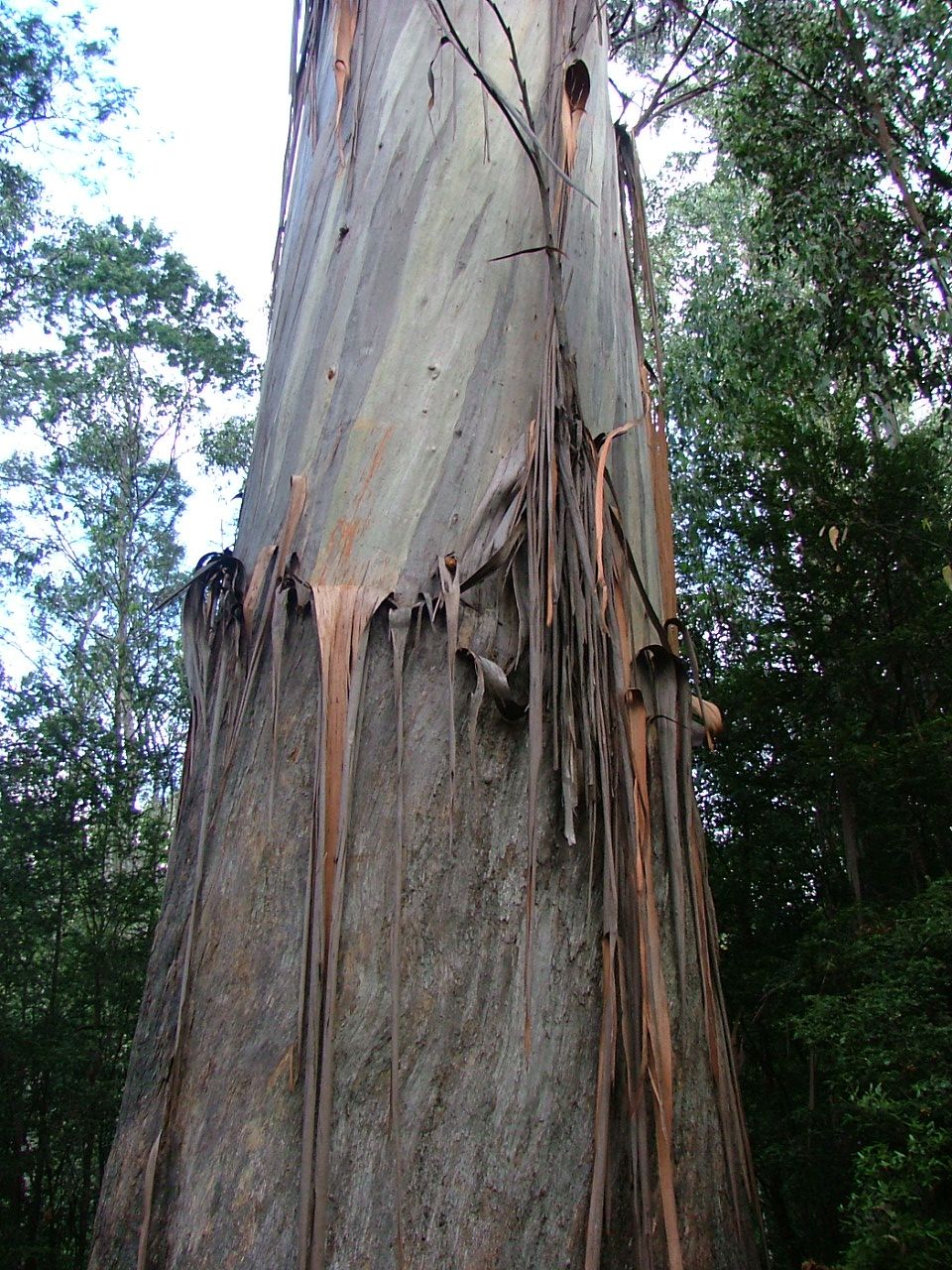
The World Heritage area has been controversial since it was first inscribed in 1982 when only 769,355 ha in size, and led to the 1983 Australian High Court ruling that the Commonwealth’s external relations powers gave it the right to prevent the flooding of the Franklin River for a renewable Hydro power scheme, not withstanding Tasmania’s constitutional land use rights.
It was the subject of the Commonwealth’s Helsham inquiry in the late 1980’s that examined the need for a further extension to the wilderness. The majority finding was overturned by the Hawke government, and a proposal adding 604,645 ha, i.e. a 78 per cent increase, was accepted by the World Heritage Committee. The extension was said by the environment Minister Graham Richardson to cement the green preference strategy to re-elect the Hawke ALP government. [Read more…] about Undemocratic Politics Again Determines Land Use in Tasmania: Alan Ashbarry
 Jennifer Marohasy BSc PhD has worked in industry and government. She is currently researching a novel technique for long-range weather forecasting funded by the B. Macfie Family Foundation.
