Opinion
Time for New Climate Policies?
An international group of academics is urging world leaders to abandon their current policies on climate change. The authors of How to Get Climate Policy Back on Course say the strategy based on overall emissions cuts has failed and will continue to fail. Read more here.
Fielding the Hard Questions (Part 6)
“But as world-ranked climate scientist Professor Roger Pielke Sr noted this week, three recent papers confirm that even the oceans seem to have stopped rising and warming since about 2004, or at least have slowed in doing so.” Read more here.
Framing Science
Research suggests frames are a key influence in shaping people’s response to science and technology. But there is no agreement on who should be allowed to do the official framing. Read more here.
No Solar: A Note from Viv Forbes
 AUSTRALIAN electricity consumers can look forward to soaring charges for electricity and blackouts if state and federal politicians continue to undermine the power grid by mandating and subsidising solar power generation.
Solar power can never produce continuous, predictable, low cost power. It must always be supported by expensive power storage systems or by reliable power sources such as coal, gas, hydro or nuclear.
No matter how many millions of taxpayer money is poured into “research”, it can never solve the two fatal flaws of solar power.
Defining the Scientific Sceptics (Part 7)
 THE scientific sceptic* is defined by rational inquiry and is prepared to consider the possibility, probability or certainty of different propositions. Furthermore, the scientific sceptic investigates with a disposition to be persuaded.
The following example, from physicist Peter Ridd, considers the ability to predict (the probability that a prediction will be correct) as a guide to whether we should be sceptical of anthropogenic global warming (AGW) as a theory – or not:
“THE big difference between our understanding of gravity and the atmosphere is that we can use gravity to produce brilliant predictions of the future, i.e. positions of projectiles, satellites, planets, tides etc. We can predict the position of Jupiter or the earth with remarkable accuracy 50 years (or 5000 years) into the future.
“Obviously the same cannot be said of the weather, or the climate, partly because of its intrinsic non-linear nature and partly because so many of the processes are not understood. Newtonian gravity also has only one unconstrained parameter, G, and we know that to 5 or 6 significant figures. Of the effectively hundreds of unconstrained parameters in Greenhouse theory, many would not even be known to the second significant figure.”
There is nothing in this comment from Professor Ridd suggesting AGW theory has been proven wrong, but rather, perhaps, that there is reason to be sceptical of the theory? [Read more…] about Defining the Scientific Sceptics (Part 7)
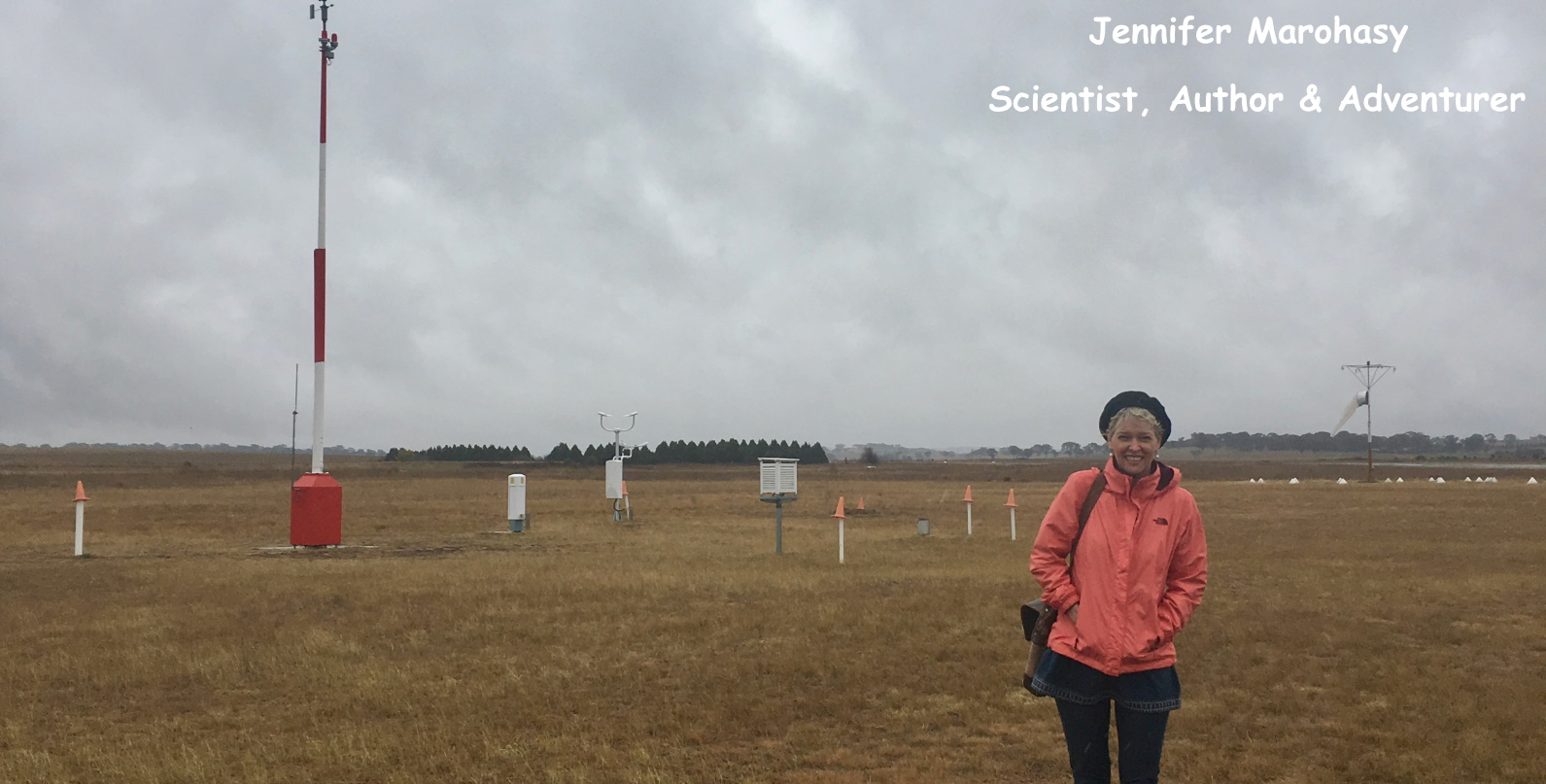
 Jennifer Marohasy BSc PhD has worked in industry and government. She is currently researching a novel technique for long-range weather forecasting funded by the B. Macfie Family Foundation.