• Skip to primary navigation
  • Skip to main content
  • Skip to primary sidebar
  • Skip to footer
Jennifer Marohasy

Jennifer Marohasy

a forum for the discussion of issues concerning the natural environment

  • Home
  • About
  • Publications
  • Speaker
  • Blog
  • Temperatures
  • Coral Reefs
  • Contact
  • Subscribe

Opinion

Brown Leaves Greens

April 15, 2012 By jennifer

ON Friday, the leader of the Australian Greens, Senator Bob Brown, announced he was stepping down and also retiring from Australian federal politics.

Miranda Devine has a piece in today’s Herald Sun that begins:

“THE intergalactic phones still didn’t ring on Friday after the earth-shattering news that Greens Leader Bob Brown had resigned.

Was that nutty speech to his ‘Fellow Earthians’ in Hobart last month a sign that he was on his way out the door?

Was it a final mad explosion of pent-up hubris that had him calling for a one-world government, an ‘all-of-the-Earth representative democracy’?

It was certainly time to go, Brown told a press conference on Friday, flanked by his successor, Christine Milne, and his handsome, bearded partner Paul Thomas.

People had taken to stopping him in Hobart’s Salamanca Place to say, ‘Thank God for the Greens’.

With a desperate Labor minority government belatedly turning on its Greens partners, and the Greens vote going backwards in state elections, Brown, 67, had passed the zenith of his career.

Best to get out while the going is good, with his legacy intact and before anyone notices the decline of the party he has led as a senator of 16 years.

As usual, a woman is left to clean up after the party, formidable and not to be underestimated though Christine Milne is.

In her first comments at Brown’s farewell press conference, Milne, 58, made a pitch to rural and regional voters, claiming “the Greens and the bush” simply misunderstood each other.

‘I’m going out there as a country person to say to other country people it is time that the Greens and country people worked together.’

Good luck with that, considering greenies are the chief cause of grief to the bush.

Let us count the ways. Forestry towns destroyed by irrational green tree worship. Uncontrollable bushfires caused, not by global warming, but by green opposition to hazard reduction.

National parks left to feral animals that rampage though neighbouring farms. Dams never built thanks to greenie protests. Wind turbines plonked all over bucolic hillsides. A live cattle industry brought to its knees…

Read the entire article here: http://www.heraldsun.com.au/opinion/greens-country-girl-christine-milne-is-no-friend-of-the-bush/story-e6frfhqf-1226326602622

I’ve written many blog posts cranky with Mr Brown for being such a hypocrite and for so often telling made-up stories and trying to pass them off as ‘saving the environment’.   Remember my blog post of June 2009 ‘The Already Bankrupt Brown Green’ about the pristine forest that was once a thriving timber town known as Wielangata…

Read more here:  https://jennifermarohasy.com.dev.internet-thinking.com.au/2009/06/the-already-bankrupt-brown-green/

Filed Under: Information, News, Opinion Tagged With: People

Why the Lower Lakes are Important to the Proposed Basin Plan

April 13, 2012 By jennifer

OVER the last decade, the Wentworth Group of Concerned Scientists, and other groups, have successfully lobbied for the environmental needs of Australia’s river systems to have a guaranteed first priority call on water. This became reality with the Water Act 2007 that not only gives environmental needs priority over industry and community, but within this category, environments listed under international conventions are given particular priority.

The Water Act 2007 imposes a legal limit on the amount of water that can be diverted for non-environmental purposes and, through implementation of the Proposed Basin Plan, will result in a significant transfer of water from food production to the environment.

The Proposed Basin Plan does not specify where the new environmental water recovered under the plan will be used i.e. which environments will benefit most. However, it is generally acknowledged that most of the water will be sent to the Lower Lakes in South Australia. This is because the legislation specifies that the new diversions limit must preserve the environmental values of key sites within the Murray Darling Basin in accordance with international conventions (i.e. these environments are first priority). The Lower Lakes are vast coastal lagoons at the termination of the Murray River that are listed as freshwater lakes under the international Ramsar convention. According to key reports the lakes are currently suffering from inadequate freshwater flows.[1]

According to the Proposed Basin Plan the Murray Darling Basin, presumably including the Lower Lakes, can be returned to ecological health if 2,750 GL is returned to the environment. But South Australian Premier Jay Weatherill has signalled that unless this figure is increased to somewhere between 3,500 and 4,000 GL South Australia will launch a High Court challenge because this is how much water is needed to preserve key environments just in South Australia.

Such a legal challenge from South Australia would likely be prefaced on the Proposed Basin Plan failing to met the objectives of the Water Act 2007; in particular that the Basin Plan must be prepared to give effect to the relevant international conventions.

Indeed, given current arrangements and despite relatively large volumes of water being channelled down to these lakes, including during the recent drought, they are an ecological disaster. However, the solution is not more fresh water.

Because the Lower Lakes are Ramsar listed, the Australian government is obliged to report on their ecological health at regular intervals. In the last report the Australian government acknowledged that ‘the site’ had been in ecological decline for at least 20 to 30 years prior to listing in 1985, with the rate of decline increasing since listing in part due to drought conditions. In particular the Australian government acknowledged that nearly half of 53 key functions were described as being ‘of alarm’ and a further third ‘of serious concern’.

A key issue for the ecological health of the Lower Lakes is the sea dykes (the barrages), that have dammed the estuary. To quote Bob Bourman from the University of Adelaide and coworkers [2]:

“Originally a vibrant, highly productive estuarine ecosystem of 75,000 ha, characterised by mixing of brackish and fresh water with highly variable flows, barrage construction has transformed the lakes into freshwater bodies with permanently raised water levels; freshwater discharge has been reduced by 75% and the tidal prism by 90%.”

Peter Gell from the University of Ballarat writing in the recently published The Sage Handbook of Environmental Change has commented that the natural state of the Lower Lakes was tidal, that the lakes have been incorrectly listed as freshwater in the International Ramsar Convention, and that until their natural estuarine character is recognised it will be difficult to reverse the long-term decline in their ecological health.[3]

*******

[1] See in particular ‘The Murray Futures Lower Lakes and Coorong Recovery: Securing the Future: a long-term plan for the Coorong, Lower Lakes and Murray Mouth’. According to the plan ecological values of the Coorong, Lower Lakes and Murray Mouth can only be maintained if there are adequate freshwater end-of-system flows and thus the key long term management action is to secure adequate freshwater. The planning document does not specify the specific amount of water required but suggests a mean total end of system flow of 5,550 GL would result in improved management.
[2] Marine Geology 170:141-168
[3] See Chapter 27. Human Impacts on Lacustrine Ecosystems, page 595

Filed Under: Information, Opinion Tagged With: Murray River

Murray Darling Carbon Tax Link: Josephine Kelly

April 13, 2012 By jennifer

TWO of the most controversial issues that will face the Gillard government in the coming months — the allocation of water in the Murray-Darling Basin and the carbon tax — have something in common. They arise from legislation based on the commonwealth’s foreign affairs powers and international environmental conventions entered into under that power.

The Lower Lakes and the Coorong that lie landward of the mouth of the Murray River in South Australia were listed as a wetland of international significance under the Ramsar international convention on wetlands in 1985. Until Dr Jennifer Marohasy presented a paper to the Sydney Institute in February this year demonstrating the Lower Lakes formed part of the Murray River estuary before the construction of 7.6km of barrages in the 1930s, the barrages had been conveniently ignored in the debate about the allocation of water from the Murray-Darling Basin for the Lower Lakes.

There had also been no reference to the consequential destruction of a native mulloway fishery and the creation of a terrific environment for the notorious pest the European carp as the environment changed from estuarine to predominantly freshwater. The Australian government website about the Ramsar listing acknowledges the Lower Lakes, Alexandrina and Albert, are comprised of fresh to brackish-saline waters and were part of the estuary before the construction of the barrages.

“The ecological characteristics of the area have been altered significantly since extensive water extraction from the Murray-Darling Basin commenced in the 1800s and barrages were constructed to separate the lakes from the estuary in the 1930s,” it says.

The Murray Darling Basin Commission’s Living Murray discussion paper stated: “The barrages have also changed the ecology of the lower lakes, reducing the estuarine area of the Murray to 11 per cent of its natural size.”

Read more here
http://www.theaustralian.com.au/business/legal-affairs/historic-link-shared-by-murray-darling-basin-and-carbon-tax/story-e6frg97x-1226325273552

Historic link shared by Murray-Darling Basin and carbon tax
BY: JOSEPHINE KELLY From: The Australian April 13, 2012

Filed Under: Information, Opinion Tagged With: Murray River

But Jonathan Holmes: Your Report Has Not Been Peer-Reviewed and It’s Wrong

March 26, 2012 By jennifer

LAST Monday on ABC TV’s Media Watch the sniggering Jonathan Holmes suggested that there was something wrong with Peter Ridd peer-reviewing my technical report ‘Plugging the Murray’s Mouth: The Interrupted Evolution of a Barrier Estuary’.

Today I was interviewed on ABC Radio National’s Counterpoint and Michael Duffy commented that Professor Peter Ridd said he might have not seen flaws in it.

I replied that Peter Ridd told me a Media Watch research person had phoned him. Apparently she spent a lot of time talking with him about the flaws in peer review. Peer review is a process in which suitably qualified scientists are invited to comment on articles prior to publication. Peter is a scientist from James Cook University who is qualified to comment on the report I wrote.

The bottom line is Professor Ridd and I are colleagues. The paper was not sent to a journal. It was a technical report for the Australian Environment Foundation and Professor Ridd was asked to review it. Had he found errors I am sure that he would have told me and I would have corrected them before it was published.

I was also asked on radio today if anyone else had peer-review the technical report. I comment that I have sent the report to other estuary expert and they have told me it is sound. But they have not been prepared to have their named attached to it because of the politics.

Mr Duffy also commented on national radio today that two scientists who wrote papers I quoted have since said they disagree with me. I was asked to comment on this and I replied that Media Watch sent me specific written questions. The first question was: Do you accept that the vast majority of recognised experts on the natural history and hydrology of the Lower Lakes disagree with your conclusion that they were estuarine immediately prior to the erection of the Murray Mouth barrages, or at any time in the past 2000 years?

I replied: No. The relevant scientific literature, as published in peer-reviewed journals by recognised experts, indicates that the Lower Lakes were estuarine prior to the erection of the Murray Mouth barrages. I then provide the names of experts and quoted some of them.

Listen to the complete interview here: http://www.abc.net.au/radionational/programs/counterpoint/murray-mouth/3908760

[Read more…] about But Jonathan Holmes: Your Report Has Not Been Peer-Reviewed and It’s Wrong

Filed Under: Information, Opinion Tagged With: Australian Broadcasting Corporation

Time to Investigate ‘Green’ Media Spin: Mark Poynter

March 26, 2012 By Mark Poynter

BIASED media coverage of natural resource use issues should be fertile ground for the ABC’s Media Watch, but despite efforts to draw their attention to this have displayed little or no inclination to cover it in the past. Then again, as some of the worst examples of biased coverage of environmental issues have emanated from the ABC, this is perhaps not so surprising.

Most notably, the double-episode of the ABC’s Australian Story – ‘Something in the Water’ in February 2010 – springs to mind. It claimed that eucalypt plantations occupying just 4% of a Tasmanian town’s water catchment were toxic to humans, animals, and marine life. Screened just 3-weeks before the Tasmanian state election, the program sparked a controversy that was not backed by credible science yet resulted in the unseating of the government’s Health Minister and quite likely contributed to the formation of the current Labor-Greens minority government which has a distinctly anti-forestry agenda.

If the ABC is to ever rid itself of the perception that it caters to a primarily Green-Left audience, its supposedly independent investigative journalists need to start examining the excesses of mainstream environmentalism and the damage it is doing both to the wider environment and regional and rural communities. A good start would be for Media Watch to investigate arguably the most prominent form of media spin which is seen on an almost daily basis – that is the coverage of natural resource usage promulgated at the behest of mainstream environmental groups.

Read more here: http://www.onlineopinion.com.au/view.asp?article=13417

Filed Under: Information, Opinion Tagged With: Australian Broadcasting Corporation, Fishing, Forestry

Honest Politician Needed to Champion Removal of Murray Mouth Barrages

March 23, 2012 By jennifer

For years now I’ve been writing about the barrages, really sea dykes, that block inflows from the Southern Ocean making the vast shallow coastal lagoons at the end of the Murray River completely dependent on Murray River inflows. Without the dykes the sea would push in each autumn and for longer periods during drought.[1]

Somewhat disappointingly for me there is not one state or federal politician who will take up this issue of the Lower Lakes and in particular how the current management of Lake Alexandrina as an artificial freshwater oasis is unsustainable.

That was my message to Labor, Liberal, National and Greens Senators and MPs representing voters from across the Murray Darling when I visited Canberra in July last year. My trip was funded by Johnny Kahlbetzer from Twynam Agricultural Group. My message was that:

1. The health of a river system is more than the quantity of water flowing downstream;
2. Current management of Lake Alexandrina as an artificial freshwater oasis is unsustainable; and
3. Restoring the Murray River’s estuary must be a priority in any Murray Darling Basin Plan.

[Read more…] about Honest Politician Needed to Champion Removal of Murray Mouth Barrages

Filed Under: Good Causes, History, Information, Opinion Tagged With: Murray River

  • « Go to Previous Page
  • Go to page 1
  • Interim pages omitted …
  • Go to page 12
  • Go to page 13
  • Go to page 14
  • Go to page 15
  • Go to page 16
  • Interim pages omitted …
  • Go to page 132
  • Go to Next Page »

Primary Sidebar

Recent Comments

  • Ian Thomson on Vax-ed as Sick as Unvax-ed, Amongst My Friends
  • Dave Ross on Vax-ed as Sick as Unvax-ed, Amongst My Friends
  • Dave Ross on Vax-ed as Sick as Unvax-ed, Amongst My Friends
  • Alex on Incarceration Nation: Frightened of Ivermectin, and Dihydrogen monoxide
  • Wilhelm Grimm III on Incarceration Nation: Frightened of Ivermectin, and Dihydrogen monoxide

Subscribe For News Updates

  • This field is for validation purposes and should be left unchanged.

December 2025
M T W T F S S
1234567
891011121314
15161718192021
22232425262728
293031  
« Jan    

Archives

Footer

About Me

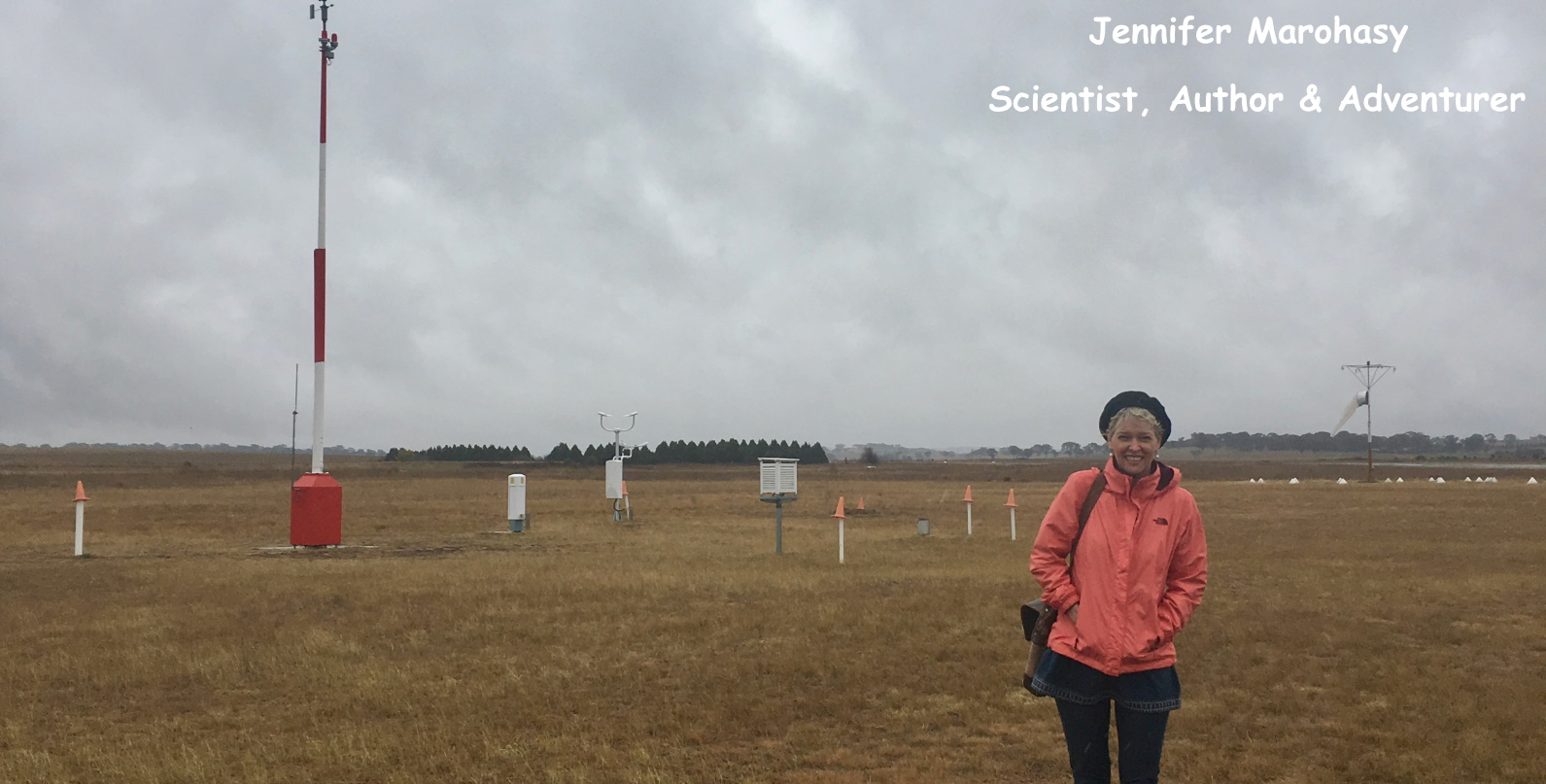
Jennifer Marohasy Jennifer Marohasy BSc PhD has worked in industry and government. She is currently researching a novel technique for long-range weather forecasting funded by the B. Macfie Family Foundation. Read more

Subscribe For News Updates

Subscribe Me

Contact Me

To get in touch with Jennifer call 0418873222 or international call +61418873222.

Email: jennifermarohasy at gmail.com

Connect With Me

  • Facebook
  • LinkedIn
  • RSS
  • Twitter
  • YouTube

Copyright © 2014 - 2018 Jennifer Marohasy. All rights reserved. | Legal

Website by 46digital