The Greens reckon the Great Barrier Reef is a casualty of Labor’s lower-than-expected emissions reduction target, but for those who work among the corals, forecasts aren’t so bleak. Read more here.
Opinion
Climate Modellers Acknowledge Important Role of Oceans
IT is not a new paper, it was being discussed back in July by Roger Pielke Sr, but the paper by Compo and Sardeshmukhj was only recently brought to my attention and as an example of the use of the IPCC’s computer models to explain warming without reference to greenhouse gases. That’s right, a peer reviewed paper based on simulation modelling that generates the observed warming of the last half-century but without reference to the ever increasing levels of atmospheric carbon dioxide.
The paper, entitled ‘Oceanic Influences on Recent Continental Warming’, suggests that it is warming of the oceans that has driven warming of the land since the 1970s. But it does not tell us what has warmed the oceans!
The paper concludes: “In summary, our results emphasize the significant role of remote oceanic influences, rather than the direct local effect of anthropogenic radiative forcing [Greenhouse gases] , in the recent continental warming. They suggest that the recent oceanic warming has caused the continents to warm through a different set of mechanisms than usually identified with the global impacts of SST[sea surface temperature] changes. It has increased the humidity of the atmosphere, altered the atmospheric vertical motion and associated cloud fields, and perturbed the longwave and shortwave radiative fluxes at the continental surface.”
Well known Australian sceptic, Bill Kininmonth, has made this point many times: that the tropical oceans are the main source of energy in the form of latent heat in the evaporation of water vapour and as the tropic oceans warm they exchange more energy with the atmosphere; more energy is transported pole ward to warm the middle and high latitude land areas.
So, it seems, the climate modellers are at last catching on.
***************
Oceanic Influences on Recent Continental Warming by Gilbert P. Compo and Prashant D. Sardeshmukh, Climate Dynamics, 2008. http://www.cdc.noaa.gov/people/gilbert.p.compo/CompoSardeshmukh2007a.pdf
More Scepticism in the Mainstream Media
Folks,
As you might expect, Australia’s Canberra Times is a conformist newspaper that mostly goes along with the capital’s political fashions, and has long run the alarmist AGW line. Over the weekend there has been a turn-around. Their economics editor, a well respected David Alexander, has written a long opinion piece plus a news item, in which amongst other things to concedes that some of the climate critics are highly qualified and (based on the NZ precedent) suggests the possibility of a parliamentary enquiry into the ETS, about which he says “Much would be learnt, the public would be enthralled. Surely there is nothing to be afraid of?”.
This, and especially the understated rhetorical question, is a stunning development.
On top of which, retired ANU economics professor Richard Mulgan has an editorial in today’s Times that sings the praises of scepticism in general!
Finally, at the same time, our ABC has run an article about “carbon baggers” (lovely term!) chasing aboriginal interests, about which the blog response is almost entirely “a plague on the ETS house”.
http://www.abc.net.au/news/stories/2008/12/15/2446106.html
Things are moving, and by the sweetest irony that on the very day that the Rudd government has plumped for a timorous (though still silly, because it won’t have the faintest possible influence on future
temperature) 5% ETS rate.
Cathy
Australian Government Commits to an Emissions Reduction Target
THE big news in Australia at the moment is yesterday’s Prime Ministerial announcement that Australia will cut its greenhouse gas emissions by 5 per cent of 2000 levels by 2020, but could cut up to 15 percent if other countries also sign up to stronger reductions.
In response to criticism that the target is too low, the Prime Minister, Kevin Rudd, has said this is really equal to a 27 percent reduction in “carbon pollution” for each Australian from 2000 to 2020 or a 34 percent reduction for each Australian from 1990 because of population growth.
I find it somewhat amusing that the government can get away with committing to something that won’t be achieved for 12 years – a few full parliamentary terms there – and something that can be explained away as just 5 percent or, as the audience changes, a significant 34 percent!
But what the average Australian would probably like to know is how much this economic intervention will push up prices, in particular the price of basics like the home electricity bill.
[Read more…] about Australian Government Commits to an Emissions Reduction Target
Climate Conference Ends, Time to Consider Alternatives
THE big climate change conference in Poznan, Poland, ended yesterday with a recognition that the United Nations was “softening its tone” and acknowledging that the meeting would not come to final decisions on any major issues on “fighting climate change”.
Perhaps now is the time to move away from the idea that the solution to “fighting climate change” lies with a cap on emissions – an idea that has been pushed so hard by the United Nations.
Perhaps now is the time to consider alternatives?
On Thursday the ‘Civil Society Coalition on Climate Change’ launched a report* by London-based economist Julian Morris imploring governments to recognise that instead of capping emissions they should be looking to adapt to climate change and also provide incentives to develop lower-carbon technologies.
[Read more…] about Climate Conference Ends, Time to Consider Alternatives
New Papers from ‘Science & Public Policy Institute’
YOU may find these new papers of interest:
http://scienceandpublicpolicy.org/originals/climate_action_plans_fail_to_deliver.html
We update this paper periodically.
http://scienceandpublicpolicy.org/commentaries_essays/obama_on_the_urgency_of_combating_global_warming_.html
http://scienceandpublicpolicy.org/originals/arizona_climate_change.html
http://scienceandpublicpolicy.org/commentaries_essays/saving_the_planet_.html
http://scienceandpublicpolicy.org/scarewatch/bank_of_america.html
http://scienceandpublicpolicy.org/scarewatch/coolest_year_for_decade.html
http://scienceandpublicpolicy.org/scarewatch/global_warming_spreads_malaria_.html
Let us hear from you about our site and papers.
Regards,
Bob Ferguson, President SPPI
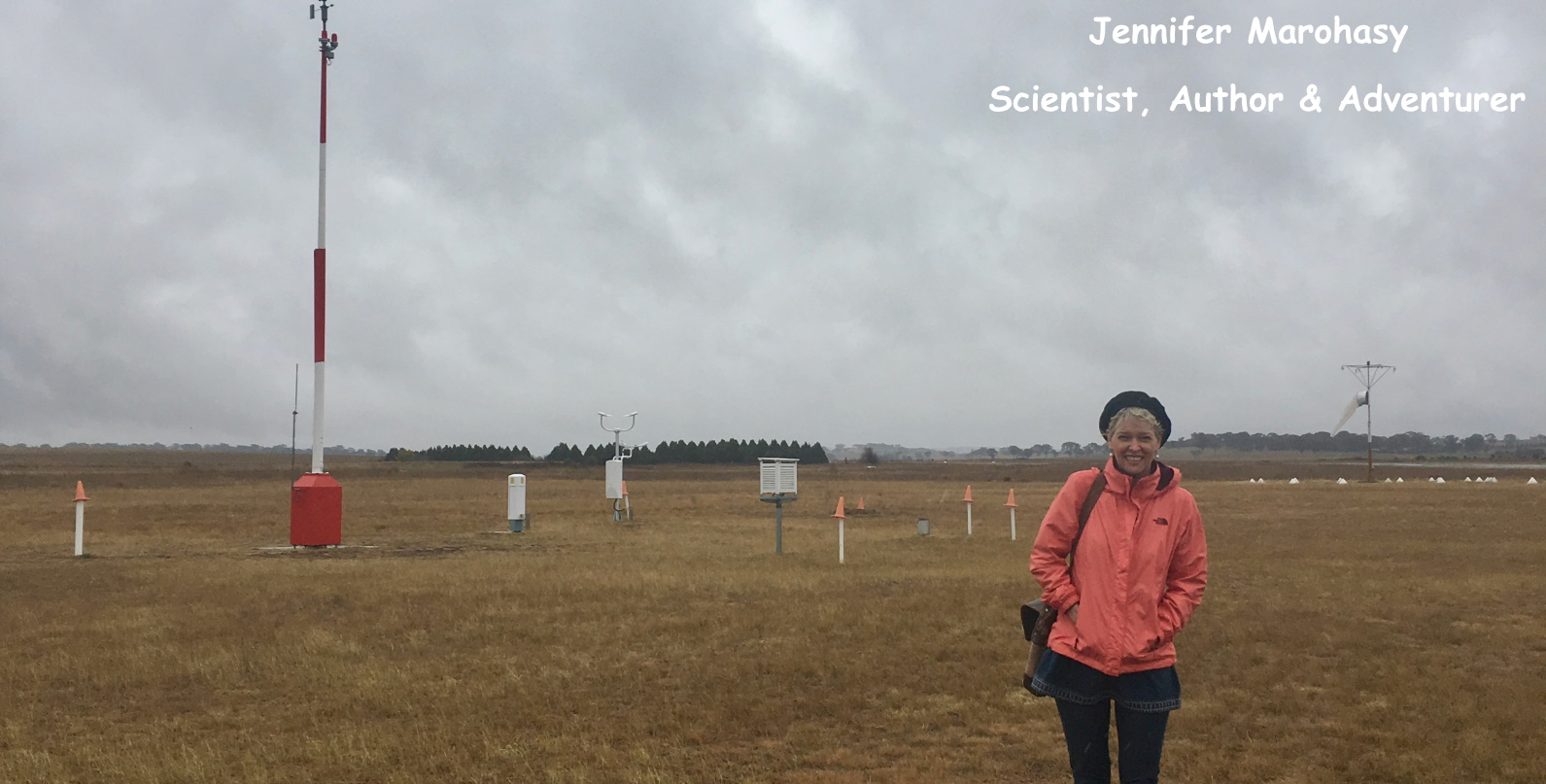
 Jennifer Marohasy BSc PhD has worked in industry and government. She is currently researching a novel technique for long-range weather forecasting funded by the B. Macfie Family Foundation.