• Skip to primary navigation
  • Skip to main content
  • Skip to primary sidebar
  • Skip to footer
Jennifer Marohasy

Jennifer Marohasy

a forum for the discussion of issues concerning the natural environment

  • Home
  • About
  • Publications
  • Speaker
  • Blog
  • Temperatures
  • Coral Reefs
  • Contact
  • Subscribe

jennifer

Patrick Moore has Nothing New to Offer

October 25, 2014 By jennifer

HIS greatest claim to fame is that he co-founded Greenpeace. Not something I would be proud of. Of course, I’m referring to Patrick Moore. He is touring Australia at the moment and every other day I get a request from someone asking I promote the tour here, at this web blog.

Steve Kates heard Moore speak last night and wrote at Catallaxyfiles.com today that it was very “rewarding”. Kates also wrote that you may have heard it all before.

People generally have favourite stories that they like to hear repeated. These tend to be stories that give comfort, provide an escape – even make us feel smug.

Image from The Barnes & Noble Book Blog at http://www.barnesandnoble.com/blog/10-reasons-we-reread-our-favorite-books/

I suspect that’s why people on our side of the global warming divide like to hear Moore: he cleverly articulates their prejudices even if he doesn’t actually say anything particularly new, or provide any real solutions.

If this was the extent of the experience I may have been inclined to provide some free advertising here, but Moore actually optimises everything that I find increasingly frustrating about being a sceptic who is trying to achieve something positive.

In my opinion very little progress has been made towards a new theory of climate, an alternative to anthropogenic global warming, because most sceptics, and also the institutions that support scepticism of anthropogenic global warming, won’t invest in the same. They prefer to claim we are dealing with an essentially chaotic system, rather than consider what a new theory of climate might actually include. Indeed at the recent Heartland Institute climate change conference, Moore went as far as to suggest that it was impossible to forecast rainfall and always would be. The inference is that there is no scientific answer to the big questions in climate science. I disagree.

Of course John Abbot and I have spent much of the last three years showing that it is possible to make skilful monthly rainfall forecasts, and we are beginning to document how and why in the peer-reviewed literature. But there is no interest in this research by those who are promoting Moore’s tour of Australia – perhaps because it’s about science, while their interest is essentially in the politics.

What is missed in all of this, and was missed by Moore in his answer to one of Steve Kates’ question last night, is that there is a way to defeat “green policies” that are not scientifically-based, including policies derived from the theory of anthropogenic global warming. The answer is in promoting and supporting alternatives, because, as I wrote in the IPA Review last year, history shows that failed scientific paradigms are only ever replaced, they are never disproven until there is a replacement theory. [last six words added Sunday morning, following a comment from Pat Frank]


Filed Under: Information, Opinion

Open Thread

October 18, 2014 By jennifer

Lots of stories in the Weekend Australian about climate change and related issues… the editorial includes commentary about Graham Lloyd’s reporting on ‘the pause’. from The Weekend Australian

Also comment by John Ferguson, Victorian Political Editor, that:

“THE consumer bill for the nation’s largest desalination plant is set to rise to more than $2 billion, as heavy rain and soaring dam levels make redundant tremendously expensive facilities across the eastern seaboard.

New figures obtained by The Weekend Australian show the Victorian desalination plant, southeast of Melbourne, will have cost water users $1.2bn by the November 29 state election, rising to $2bn by the end of the next financial year.

The cost has soared, despite no water having been drawn from the facility since its opening in 2012 and dams being more than 80 per cent full.”

Of course another prolonged drought could hit Victoria shortly.

Filed Under: Information

The Secret is To Keep Thinking

October 11, 2014 By jennifer

ACCORDING to a Marxist, and good friend of mine, ‘the left’ has lost its way because too many adopt the ‘correct line’ on issues without any need to investigate first. In essence, they have stopped thinking. Screen Shot 2014-10-11 at 11.45.54 AM

All this is explained in his first post at ‘C21st Left’ with the slogan/subheading, ‘Sous les paves, la plage!’ (beneath the paving stones, the beach).

But it’s not just the left that has stopped thinking.

After I returned from the Heartland Climate Conference in Las Vegas I penned ‘Three facts most sceptics don’t seem to understand’, as I despaired the absence of critical thinking, and
enlightenment values, in the most popular keynote addresses. I suggested that scepticism should be of entrenched dogmas, while supporting ideas and research that can potentially contribute to human progress.

My favourite Marxist touches on similar themes in his first blog post:

Support Progress. I use a capital ‘P’ in order to stress that there is such a thing. It happens through human imagination, ingenuity and engineering. As Engels pointed out long ago, humans are distinguished from all other animals in that we can create what we can imagine.

Harmony with Nature – Sustainability – have never been part of the left’s lexicon. Marxists believe in unleashing the productive forces through the further mastery of Nature and through freeing research and production from the social relations imposed by capital. This is the opposite of the ‘green’ world outlook.

Here the Marxist is directly attacking the romantic vision that is now very much a part of correct thinking in Australia.

While this blog is normally focused on issues concerning the natural environment, I’m opening the following thread to thoughtful comments on the more general topic of ‘correct thinking’ with the addition of the following comment from ‘C21st Left’:

Internationalism: ‘they’ are ‘us’. Be ‘they’ oppressed people resisting a fascist regime in Syria or asylum seekers reaching our shores in unauthorised boats. Or ‘foreign workers’ arriving lawfully on special visas. In a globalising world, humanity is one, as never before.

The circles one mixes in too often dictate responses to such issues as sustainability and immigration, when what is perhaps needed is more critical thinking.

A problem, to quote C.G. Jung, is that, “Rational argument can be conducted with some prospect of success only so long as the emotionality of a given situation does not exceed a certain critical degree. If the effective temperature rises above this level, the possibility of reason’s having any effect ceases and its place is taken by slogans and chimerical wish-fantasies.”

Empty slogans and wish-fantasies can be found everywhere and on all sides. The secret is, perhaps, to check whether or not we are ‘thinking’, rather than just adopting ‘a correct line’ dictated by someone who stopped thinking long ago.

Filed Under: Information, Philosophy

Opera House Still Above Sea Level: Despite Homogenisation

October 5, 2014 By jennifer

ONE of the longest continuous sea level measuring gauges is not far from the Sydney Opera House at Fort Denison. The mean sea level trend is 0.65 millimetres per year based on monthly sea level data from 1886 to 2010.

Except that sea levels haven’t trended consistently up each year but rather follow 50-60 year cycles, then there is the impact from El Nino events, and of course the moon is responsible for the neap tides and the king tides.

To be clear, that is NOT 0.65 centimetres per year, but rather MILLImetres per year. Tiny. Particularly given much of the New South Wales coastline has sustained an approximate 2 metre drop in sea levels over the last few thousand years. Not a 2 centimetre drop, but a 2 metre drop. This is not controversial, but rather a well-established fact in the technical literature. The arguing is not that the fall has been of this approximate magnitude, but whether the approximate 2 metre fall in sea levels has been more-or-less continuous or through step changes.

In the scheme of things the rise since 1886 is but a blip in an otherwise falling trend. Of course go back just 16,000 years and sea levels were rising, and significantly faster than at present. Yes. The climate changes.

But, what about Tuvulu, I hear someone ask? It’s an atoll in the Pacific that is sinking. Add to this pressure from a growing population resulting in the depletion of aquifers, and saltwater intrusion can give the false impression of sea level rise.

But none of this is new information to readers of this blog. What is new, is that Bob Carter and colleagues have just written a long report pointing out that there are wide variations in rates of tectonic uplift and subsidence (sinking) around the world at particular times and that any coastal management plan for New South Wales should be based on a good understanding of the local geology, as well as long-term rates of sea level rise. Professor Carter’s new report also suggests that in order to create an impression of sea level rise, rather than just plot raw data, there is a good amount of homogenization. In particular, the high sea-level rise figure of 3.3 mm per year reported for the Fort Denison tide gauge in the report does not represent the original data measurements, but results from computer modeling combined with the selection of a short and atypical section of the available sea-level record.

All this as rebuttal to what might appear to be an innocuous report by Whitehouse and Associates entitled ‘South Coast Regional Sea Level Rise Policy and Planning Framework’. But apparently it could become something of a blue print for the further erosion of the property rights of coastal residents more generally.

Bottom-line: we are unlikely to lose the South Coast or the Opera House to sea level rise from climate change, but it doesn’t hurt to have your own plan in case of a tsunami. According to Ted Bryant, recently retired from the University of Wollongong, six big tsunamis have hit Sydney during the last 10,000 years, the most recent in 1491.

I’m adding this youtube on a bad moon rising for fun.

Filed Under: Humour, Information Tagged With: sea level change

Open Thread

September 30, 2014 By jennifer

Sophie C. Lewis and David J. Karoly have just had a paper published by the American Meteorological Society.

crabs are real, homogenised data is not

Its starts on page 31 of a special edition, ‘Explaining Extreme Events of 2013: From a Climate Perspective’ that is a special supplement to the Bulletin of the American Meteorological Society, Volume 95, Number 9, September 2014.

In this peer-reviewed paper I see that the homogenised ACORN-SAT data is labelled “Observations”.

Stupid is as stupid does.

Filed Under: News

Sydney Morning Herald not balanced, not fair, not factual

September 28, 2014 By jennifer

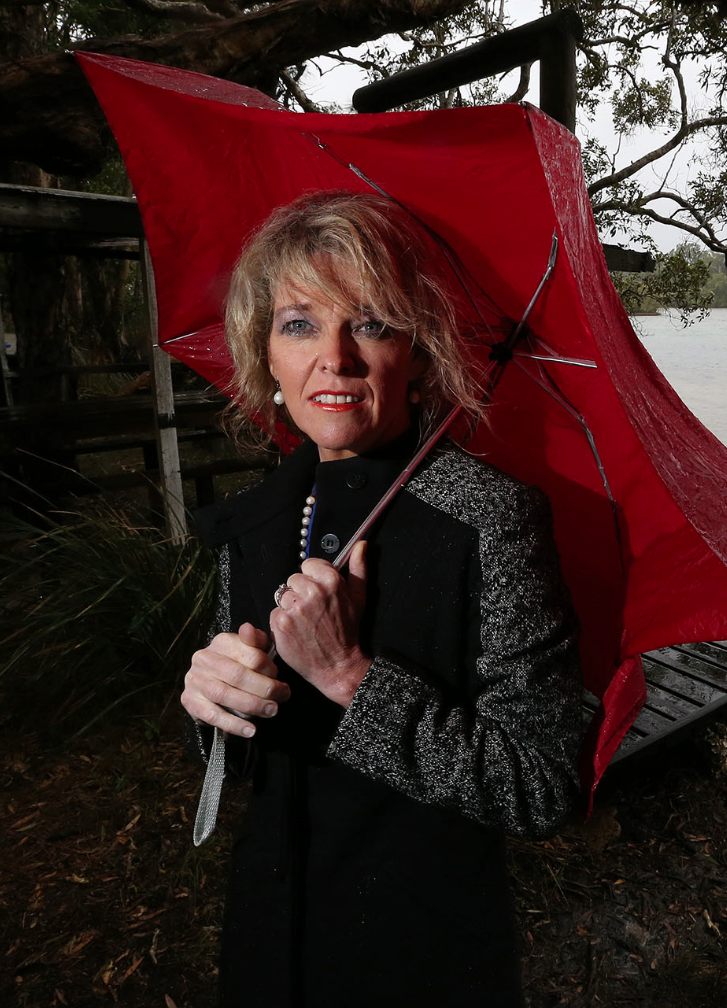
ON 10th September 2014, the Sydney Morning Herald published an article suggesting that I was an amateur, hostile to climate science and in denial. When I attempted to respond by way of an opinion piece, I was told there was no space. That I would not be published. Jen rain

I’ve just lodged a complaint with the Australian Press Council. They only allow 400 words by way of ‘reason for complaint’. I’ve provided the following reasoning:

Michael Brown’s article ‘Pseudoscience and nonsense reign once science is left behind in climate debate’, published by the Sydney Morning Herald on 10th September 2014, is in breach of the Australian Press Council’s General Principles 1 and 3. In refusing to provide Jennifer Marohasy with an opportunity for reply The SMH is in breach of Principle 4.

There are four key errors of fact that combine to mislead the reader. Dr Brown claims Dr Marohasy has found “a few potential errors” in the homogenisation process as implemented by the Bureau. In fact Dr Marohasy has shown that the homogenisation process as implemented by the Australian Bureau of Meteorology is flawed because it can result in changes to both the direction and magnitude of temperature trends. Dr Brown claims Dr Marohasy has cherry-picked a few unrepresentative examples. The examples provided by Dr Marohasy are real, valid, and illustrate the potential impact of homogenisation, which is to mislead the public on climate change. Dr Brown claims that Australia continues to warm and the warming temperature trend is clear in raw and homogenised data for 100 years. In fact Australian and global average surface air temperature has remained more or less steady since 2001 (e.g. Nature Climate Change, volume 4, pages 222-227).

Dr Brown describes Jennifer Marohasy as a “plucky amateur”. Dr Marohasy is not an amateur. Indeed Dr Brown has also omitted key facts in particular that Dr Marohasy is an adjunct research fellow at Central Queensland University with several recent peer-reviewed publications in climate science.

Dr Marohasy submitted an opinion piece correcting some key errors of fact on 15th September 2014. On 16th September she was advised that it would not be published.

In publishing Dr Brown’s opinion, but refusing to publish Dr Marohasy’s rebuttal, the Sydney Morning Herald is continuing to withhold important information from the Australian public, in particular most Australians remain ignorant of the fact that all the data used to calculate national temperature trends is homogenised, that this can have an impact on both the magnitude and direction of temperature trends. Furthermore in publishing an article that suggests Dr Marohasy is “hostile” to climate science, practices “pseudoscience”, is in “denial”, and performs “sloppy” work, the Sydney Morning Herald is not only misleading its readers, but also defaming Dr Marohasy.

I would have thought that in the interests of balance, fairness and keeping their readership across the issue that the Herald could have simply published the opinion piece that I submitted. This article follows:

Evidence and transparency is important in science

If some technocrats had their way, it would be accepted practice to routinely alter historical temperature records, particularly if those records did not accord with global warming theory.

I have complained for some time about the practice of homogenisation undertaken by the Australian Bureau of Meteorology. My concerns were mostly ignored until I gave a lecture at the Sydney Institute in July. There, I described how cooling trends at RAAF Base Amberley in Queensland and the post office at Bourke in New South Wales have been changed into warming trends through homogenisation.

More recently, I provided The Australian with an example from an agricultural research station outside Rutherglen in north-eastern Victoria. Since 1912, a weather station there has observed an overall cooling trend. Rather than incorporate this cooling into the official record, the Bureau has applied algorithms that have flipped the cooling trend of 0.35 degrees Celsius into a warming trend of 1.73 degrees Celsius.

Homogenisation may legitimately be used in climate science to correct for anomalies in data when stations are relocated from one site to another. The Bureau claims that the Rutherglen station was moved in the 1960s or 1970s. Yet there is no evidence to suggest it was ever moved. Even if it were so, this does not explain why the record for, say, 1913 is a full 1.8 degrees Celsius cooler in the modified and homogenised data than in the original.

The overall effect of manmade global warming is estimated to be 0.8 degrees Celsius over the last century. If so, homogenisation has the potential to create a highly distorted impression of temperature trends.

That is only the start. When the entire instrumental record is considered, the very hottest years in Australia occurred in the late 1800s. Indeed the hottest year on record is perhaps 1878, and the hottest January was in 1896. This is not what we have been conditioned to believe, but it is what the data shows. The Sydney Morning Herald itself documented the heatwave of January 1896, reporting on the mass evacuation of affected residents by train from inland regions.

The Bureau believes that data prior to 1910 is unreliable for the purposes of the national record. The same Bureau, however, is happy to use that data for reporting global temperatures.

If we take those early records into account, it is clear that New South Wales experienced cooling from the late 1800s to about 1960. After 1960, temperatures across the state and the nation started to increase. This warming continued until it reached a plateau in 2002. Because the warming of the late twentieth century never completely negated the cooling of the early twentieth century, the overall net trend is actually one of cooling.

Peer-reviewed literature supports my contention that early twentieth century cooling was real and significant and that homogenisation creates an artificial warming trend in the official temperature record for Australia.

Yet last Wednesday in the opinion pages of the Sydney Morning Herald (Pseudoscience and nonsense reign once science is left behind in climate debate) Michael Brown, an astronomer from Monash University, argued that I had found merely “a few potential errors” in the data “while ignoring the fact that warming across Australia is seen in both raw and homogenised data”.

I have always been of the opinion that anyone who doesn’t take truth seriously in small matters cannot be trusted in large ones either. Insisting on precision and transparency is not, as Dr Brown suggests, quackery, pseudoscience or “plucky amateurism”. It is the very essence of scientific method.

Unfortunately, we have reached a stage where consensus is driving the science, rather than science shaping the consensus.

It is often said that global warming is the greatest moral issue of our times. If so, the truth surely matters. Upholding the truth means respecting dissent. It requires careful and public scrutiny of information which does not conform to received wisdom.

____________________________

Dr Jennifer Marohasy is an Adjunct Research Fellow at Central Queensland University with six recent peer-reviewed publications in climate science focused on the application of artificial intelligence to rainfall forecasting. This research required Dr Marohasy to compile long temperature series for different locations as arrays for a neural network model, in the process she became interested in the methodology used by the Bureau of Meteorology in the compilation of an annual average temperature for Australia.

Sources, if required, for para beginning “The peer-reviewed literature”:
Deacon, E.L. 1952, Climatic Change in Australia since 1880, Australian Journal of Physics, Volume 6, Pages 209-218, see especially Figure 1 showing the ten-year running averages of mean summer maximum temperature for Bourke, Alice Springs Narrabri and Hay)

Trewin, B. 2013, A daily homogenized temperature data set for Australia, International Journal of Climatology, Volume 33, see especially page 1524)

Source, if required for para beginning “That is only the start”:

‘Excursion to Cool Climates’, January 25, 1896 and Extraordinary Heat at Wilcannia, January 18, 1896.

Filed Under: Information, News, Opinion Tagged With: Temperatures

  • « Go to Previous Page
  • Go to page 1
  • Interim pages omitted …
  • Go to page 29
  • Go to page 30
  • Go to page 31
  • Go to page 32
  • Go to page 33
  • Interim pages omitted …
  • Go to page 445
  • Go to Next Page »

Primary Sidebar

Recent Comments

  • Ian Thomson on Vax-ed as Sick as Unvax-ed, Amongst My Friends
  • Dave Ross on Vax-ed as Sick as Unvax-ed, Amongst My Friends
  • Dave Ross on Vax-ed as Sick as Unvax-ed, Amongst My Friends
  • Alex on Incarceration Nation: Frightened of Ivermectin, and Dihydrogen monoxide
  • Wilhelm Grimm III on Incarceration Nation: Frightened of Ivermectin, and Dihydrogen monoxide

Subscribe For News Updates

  • This field is for validation purposes and should be left unchanged.

December 2025
M T W T F S S
1234567
891011121314
15161718192021
22232425262728
293031  
« Jan    

Archives

Footer

About Me

Jennifer Marohasy Jennifer Marohasy BSc PhD has worked in industry and government. She is currently researching a novel technique for long-range weather forecasting funded by the B. Macfie Family Foundation. Read more

Subscribe For News Updates

Subscribe Me

Contact Me

To get in touch with Jennifer call 0418873222 or international call +61418873222.

Email: jennifermarohasy at gmail.com

Connect With Me

  • Facebook
  • LinkedIn
  • RSS
  • Twitter
  • YouTube

Copyright © 2014 - 2018 Jennifer Marohasy. All rights reserved. | Legal

Website by 46digital