The American Geophysical Union (AGU) recently released a statement on climate change which began, ”The Earth’s climate is now clearly out of balance and is warming.”
Implicit in this sentence, and implicit in the concept of ‘sustainability’, is the idea that there is such a thing as a steady state …nature in balance. But as Aynsley Kellow wrote way back in 2002:
“There is no clear consensus on what sustainability means, but there are some fundamental questions inherent in all this. Sustainable for how long? Are ecosystems to be sustained? Or should the emphasis be on the sustainability of human societies? If so, should it be all humanity? Nation-states? Or subgroups, including traditional societies, threatened by development activities? (see Sneddon, 2000).
“Many of the conceptions which aim to settle this matter rest – as eventually did the ESD [Ecologically Sustainable Development] process in Australia – on a notion of ecological sustainability. But how helpful is this? Ecologists once thought that nature left free of human interference would eventually reach a steady state, but over the past 30 years ecological disturbance has replaced the climax community among most ecological scientists – a revolution to which Australian Ralph Slatyer made a significant contribution.
“It is a point of some interest that in the popular imagination, the stability of the climax community is probably still the dominant ‘myth of nature’, sustained by constant repetition by political ecologists and, like sustained yield in Germany, no doubt offering the promise of stability in uncertain and rapidly changing times.
“An ecological science in which perturbation, turbulence, disturbance, succession and flux are the norm creates insurmountable problems for ecocentric philosophical positions. While we are not reduced to seeing nature in purely utilitarian terms, it does place the emphasis back on human choice – in Botkin’s (1990) terms, we must choose among the discordant harmonies of nature those elements we wish to retain. We must reject nature as providing norms which guide how we must live and accept instead that we are part of a living, changing system; we can chose to accept, use, or control elements to make for a habitable existence, both singly and individually.
“An emphasis on disturbance and chaos also suggests we need to be cautious about assuming we can manage resources at sustained yield …
Read more here: http://www.science.org.au/sats2002/kellow.htm
from: SCIENCE AT THE SHINE DOME 2002: ANNUAL SYMPOSIUM. Transition to sustainability . 3 May 2002. Social aspects of sustainability. by Professor Aynsley Kellow

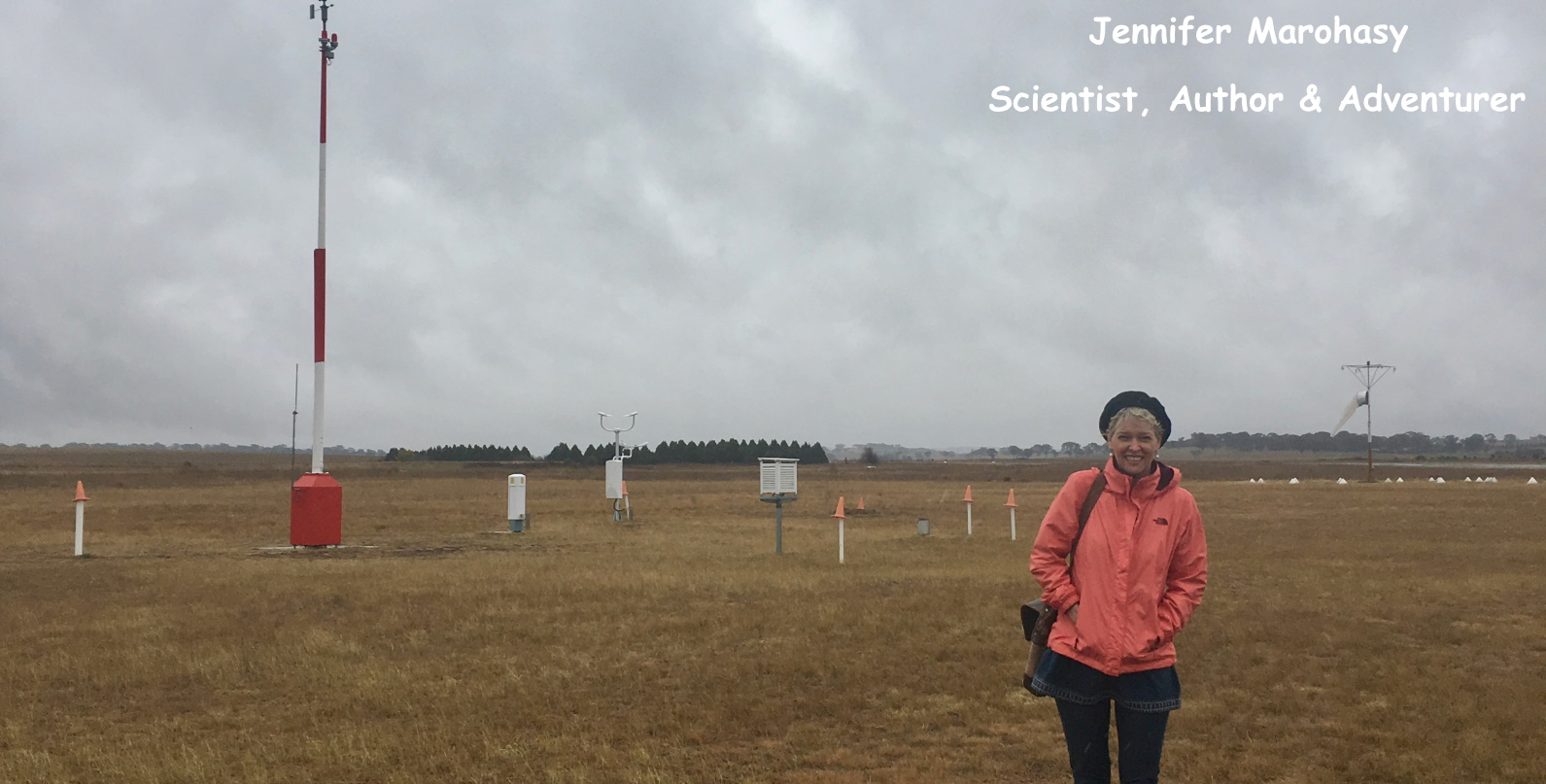
 Jennifer Marohasy BSc PhD has worked in industry and government. She is currently researching a novel technique for long-range weather forecasting funded by the B. Macfie Family Foundation.