• Skip to primary navigation
  • Skip to main content
  • Skip to primary sidebar
  • Skip to footer
Jennifer Marohasy

Jennifer Marohasy

a forum for the discussion of issues concerning the natural environment

  • Home
  • About
  • Publications
  • Speaker
  • Blog
  • Temperatures
  • Coral Reefs
  • Contact
  • Subscribe

Archives for June 8, 2006

Counting Energy Efficiencies: Wooden Verus Cement Floors

June 8, 2006 By jennifer

At the recent Timber Communities Australia national conference, prominent federal Labor politician Martin Ferguson called for a rethink of the national energy efficiency standards for residential buildings in Australia. He told conference delegates:

“Whilst we would all support practical measures that increase energy efficiency, it seems to me that the new building standards are underpinned by too many questionable assumptions and too little scientific evidence.

So does the Productivity Commission which reported its concerns about the analytical basis for the standards last October.

The key issue is the focus on reducing household energy running costs and the thermal performance of the building shell.

And, at least at the time the Productivity Commission was undertaking its investigations the Australian Greenhouse Office’s (AGO) home design manual noted that true low energy building design will consider embodied energy and take a broader life-cycle approach to energy assessment – merely looking at the energy used to operate the building is not really acceptable.

Because timber framed construction is lightweight in nature, it does not fit the thermal performance philosophy.
The analytical basis used also means that concrete slab-on-ground comes up trumps for efficiency over suspended timber flooring.

Consequently, $70 million worth of sales a year have been lost in the Victorian timber flooring market since the Victorian rating system was introduced.

This is despite the fact that a 1999 study undertaken for the AGO found it would take 62 years to get a net greenhouse benefit from a concrete floor over a timber floor.

And recent research indicates a concrete slab produces a net increase in CO2 emissions of 15 tonnes per house compared to a timber floor.

The problem is the standards ignore the fact that cement is highly energy intensive to produce while timber is a renewable resource, grown using direct sunlight and processed using relatively little energy in sawmills.
And sometimes, the energy in sawmills is produced using biomass from wood waste itself.

The Productivity Commission has recommended the Australian Building Codes Board commission an independent evaluation of energy efficiency standards to determine how effective they have been in reducing actual – not simulated – energy consumption and whether the financial benefits to individual producers and consumers have outweighed the associated costs.

And the sooner the government ensures this is done, the better because in the meantime the timber industry is suffering and it may well be doing so for no good reason.

I am pleased to see that the industry has successfully lobbied the Victorian government for an amnesty on wooden floors in new homes until April 2007 to allow time to address this issue.

But it is clear that the greens are now much more sophisticated in their attack on the forest industries, directly targeting industry markets to achieve their ends.

The Wilderness Society responded to the Victorian amnesty saying it was a “cynical attempt by the industry to maintain market share” rather than improve energy ratings or environmental sustainability.”

My house is cold in winter, it is wooden, with old wooden floors. But its my choice and I can’t understand why environmental groups don’t support the Australian timber industry so other home owners can appreciate the beauty of wood… wooden floors, wooden furniture, wooden window frames. And as Martin Ferguson said at the conference:

“Australia has 164 million hectares of native forests – 4% of the world’s forests – and 1.7 million hectares of plantations.

About 10% of our native forests are managed for wood production with less than 1% being harvested in any one year. That small proportion of forests harvested annually is regenerated so that a perpetual supply of native hardwood and softwood is maintained in this country.

Australia’s rigorous forestry standard, the AFS, has global mutual recognition under the Programme for the Endorsement of Forest Certification, the largest international sustainability recognition framework for forestry in the world.

But the greens are running a duplicitous campaign around the globe to undermine the status of the standard.”

Filed Under: Uncategorized Tagged With: Energy & Nuclear, Forestry, Housing & Building

It’s Raining Now in Southern Sudan, And the Climate Models Tell Us?

June 8, 2006 By jennifer

There is an article at the Science and Development Network Website indicating that some climate models predict Africa’s Sahel region will get wetter, while others predict it will get drier given global warming:

“Scientists initially believed that the decline in rainfall was caused by overgrazing and people clearing vegetation to make way for more farming and herding. But since the mid-1980s, several computer models have suggested that changes in the surface temperature of the oceans have changed the dynamics of the West African monsoon and are therefore to blame.

This hypothesis has gained widespread support but there still some disagreement. Different models point the finger at different oceans — some say the influence of the Indian Ocean is most important, others the difference between the North and South Atlantic.

Most scientists agree that the greenhouse gases and aerosols that human activities release into the atmosphere are partially to blame for changing ocean temperatures.

The question, then, is how this will affect future rainfall. Again, the answers depend on the models used.

… Understanding why the models predict such widely divergent futures “is a scientific priority that requires really getting into the bowels of the models” says Alessandra Giannini, a climate expert at Columbia University in the United States.

“There must be something in the models’ physics that is causing them to respond differently.”

For instance, several researchers have pointed out that many of the models show cooler present-day sea temperatures near the Americas and warmer ones close to Africa when the reality is the other way around — suggesting that the models are flawed.

Hurrell attributes the difficulties in modelling future Sahel rainfall to the “multiple competing influence of [factors that have] comparable importance”.

His research with Hoerling suggests that global sea-surface temperatures play a strong, and possibly dominating, role in determining how much rain falls in the Sahel — more so than, for instance, temperatures above Africa.”

The semi-arid Sahel stretches across North Africa south of the Sahara and is well know for its droughts and famines.

I have a friend currently working as a nurse in war torn southern Sudan, in a recent email she told me it was raining:

“It is Sunday and I have some computer time at last. And I am not on call, so hopefully will have some time to myself. After saying last Sudanmail how awful the heat and the dust was, we are now experiencing heat and mud. It has bucketed down for three days now, and the soil has turned to thick, black mud which builds up on the bottoms of your sandals till you are walking on platforms.

Great excitement for the distribution of gum-boots and raincoats last week, so now we all clomp around in boots, but the raincoat is too much of a sauna.

… The rain means the computers don’t charge as there is no solar energy, so we have been short of power. I think there is another 4 months of rain ahead, so I had better get used to power shortages and mud.”

So solar is not so good, when its raining nonstop.

Filed Under: Uncategorized Tagged With: Climate & Climate Change

Primary Sidebar

Recent Comments

  • Ian Thomson on Vax-ed as Sick as Unvax-ed, Amongst My Friends
  • Dave Ross on Vax-ed as Sick as Unvax-ed, Amongst My Friends
  • Dave Ross on Vax-ed as Sick as Unvax-ed, Amongst My Friends
  • Alex on Incarceration Nation: Frightened of Ivermectin, and Dihydrogen monoxide
  • Wilhelm Grimm III on Incarceration Nation: Frightened of Ivermectin, and Dihydrogen monoxide

Subscribe For News Updates

  • This field is for validation purposes and should be left unchanged.

June 2006
M T W T F S S
 1234
567891011
12131415161718
19202122232425
2627282930  
« May   Jul »

Archives

Footer

About Me

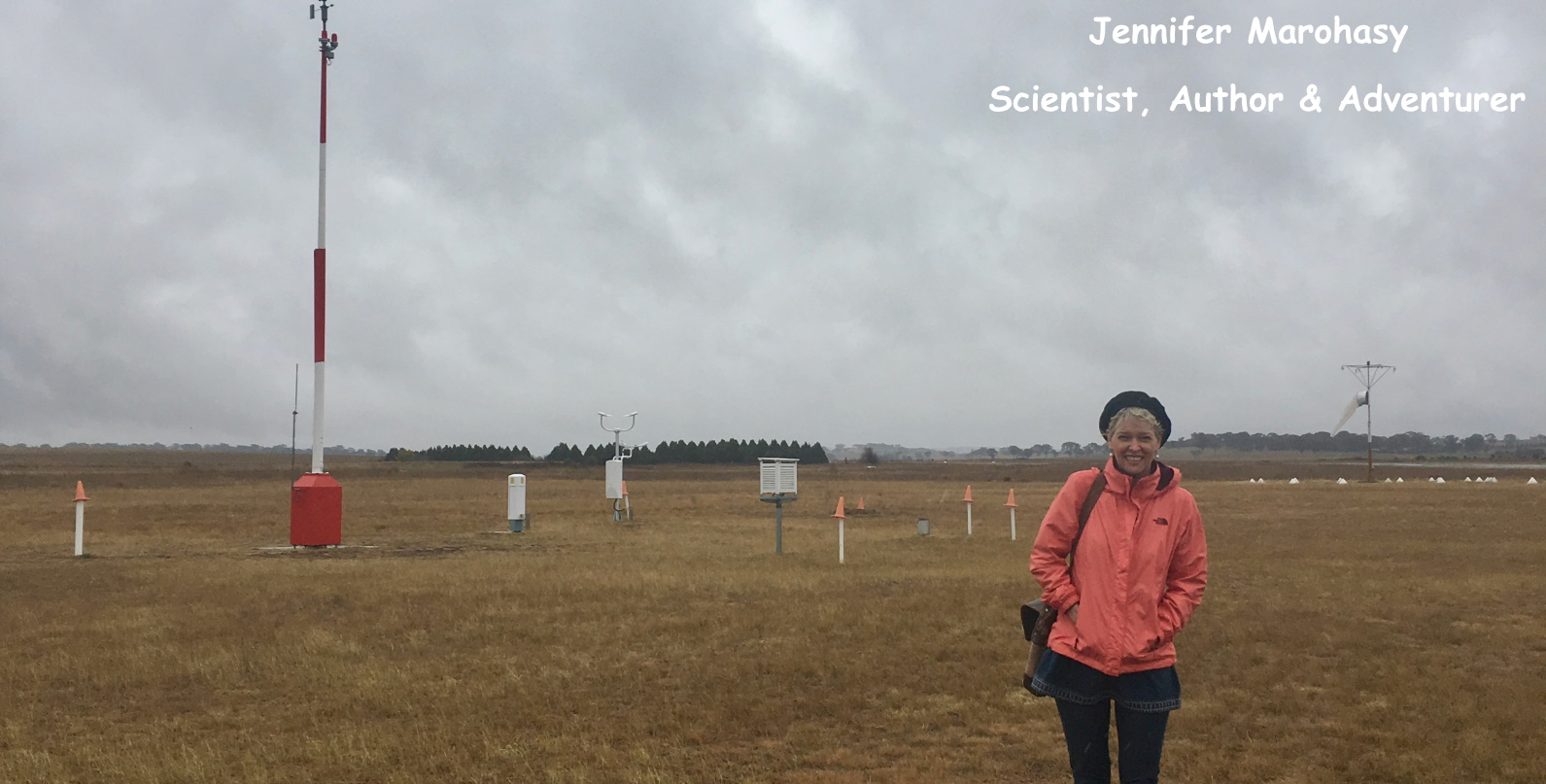
Jennifer Marohasy Jennifer Marohasy BSc PhD has worked in industry and government. She is currently researching a novel technique for long-range weather forecasting funded by the B. Macfie Family Foundation. Read more

Subscribe For News Updates

Subscribe Me

Contact Me

To get in touch with Jennifer call 0418873222 or international call +61418873222.

Email: jennifermarohasy at gmail.com

Connect With Me

  • Facebook
  • LinkedIn
  • RSS
  • Twitter
  • YouTube

Copyright © 2014 - 2018 Jennifer Marohasy. All rights reserved. | Legal

Website by 46digital